

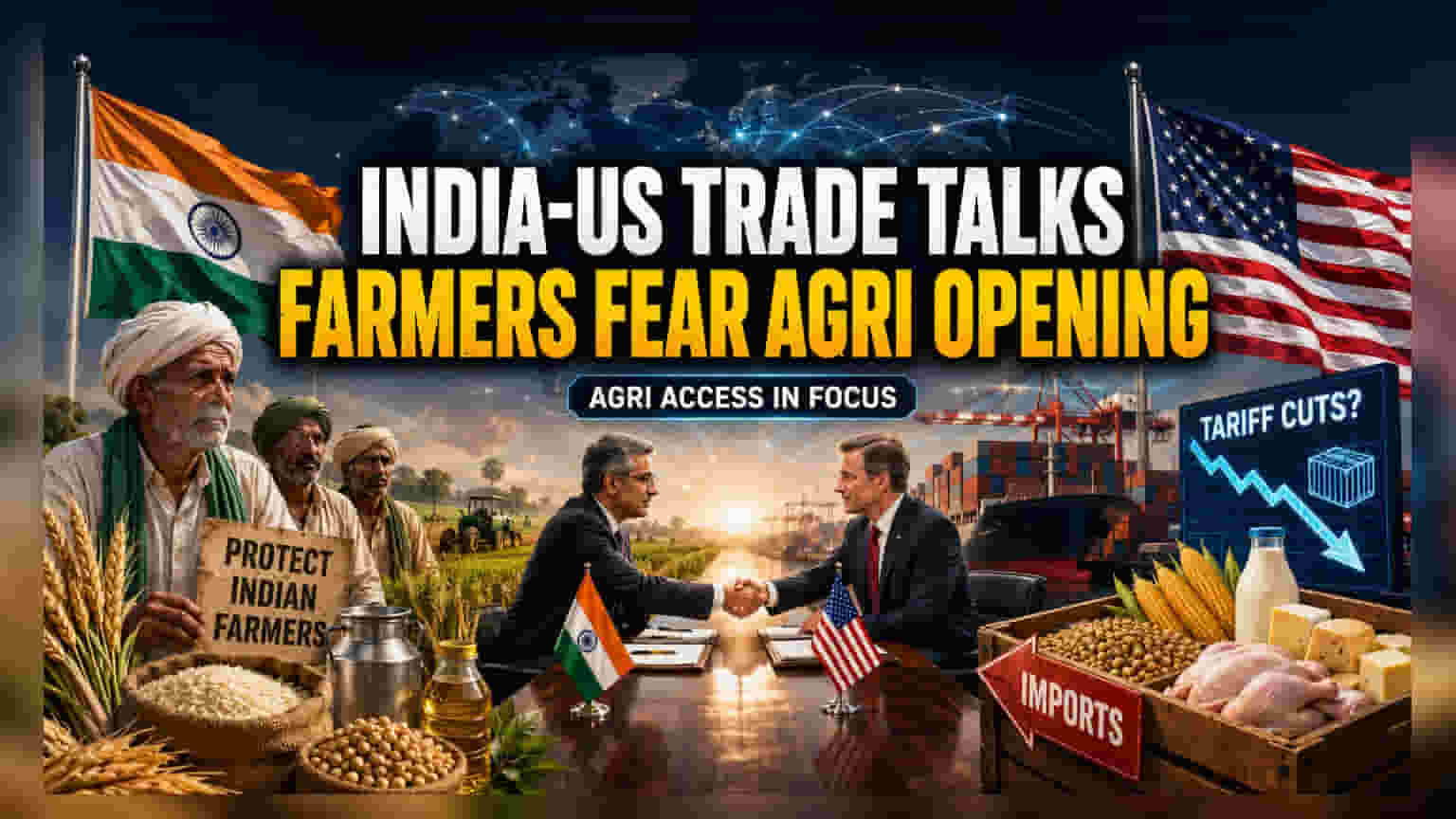
India and the US have started high-level trade negotiations, but the talks face pushback from Indian farmer groups. The primary concern is that increased market access for US agricultural goods, supported by heavy American subsidies, could threaten domestic producers. Investors are watching for potential shifts in import duties and agricultural policies.
What Happened
High-level trade discussions between the United States and India began on Tuesday, led by U.S. Trade Representative Jamieson Greer and Indian Commerce Minister Piyush Goyal. The two-day talks are focused on reaching an interim trade deal. However, the dialogue has drawn significant attention from Indian farmer organizations, who have expressed strong concerns regarding US demands for greater market access in India.
Washington is seeking broader opportunities for its exporters, focusing on lower tariffs and easier entry for various agricultural products. Indian farmer groups, including the Rashtriya Kisan Mahasangh and the Bharatiya Kisan Union, have formally raised objections, fearing that cheaper, heavily subsidized US goods could hurt the livelihoods of local farmers and domestic producers.
Why It Matters For Agri-Stocks
For investors, trade talks of this nature can signal shifts in import policies and duty structures. If the government agrees to lower tariffs on specific agricultural items to secure a deal, companies in the dairy, poultry, edible oil, and spirits sectors may face increased competition from imported products. A change in duty rates often impacts the pricing power and margins of domestic players, especially those that rely on price competitiveness against global brands.
The Subsidy Disparity
A major point of contention highlighted by farmer groups is the difference in financial support for agriculture between the two nations. According to data mentioned in recent representations, US agricultural policy, often linked to the Farm Bill, provides substantial support to its producers.
OECD data from 2024 shows a significant gap: the US has a Producer Support Estimate (PSE) of +7.1%, while India’s PSE stands at -14.5%. This negative figure in India acts as an implicit tax on farmers. Farmer groups argue that this disparity makes it difficult for Indian produce to compete on price if market barriers are removed, as US imports may be artificially cheaper due to government support.
Key Sectors In Focus
The negotiations have identified several specific agricultural and food product categories where the US is seeking easier market access. These include:
- Dried Distillers Grains (DDGs) and red sorghum
- Tree nuts and various fruits
- Soybean oil
- Wine and spirits
- Dairy and poultry products
Companies involved in the processing, production, or distribution of these commodities within India may see varying impacts depending on the final policy outcome. Increased competition in these segments could force domestic players to adjust their pricing strategies or focus on premium, non-commodity product lines.
What Investors Should Track Next
The immediate monitorable is the outcome of the ongoing trade talks and any official announcements regarding tariff or policy concessions. Investors may want to track the government's stance on protecting sensitive agricultural sectors and whether any interim agreement specifies phased tariff reductions or quota-based imports. Official exchange filings or government press releases will provide the most accurate details on which sectors might be affected and the timeline for any policy implementation.