 Whalesbook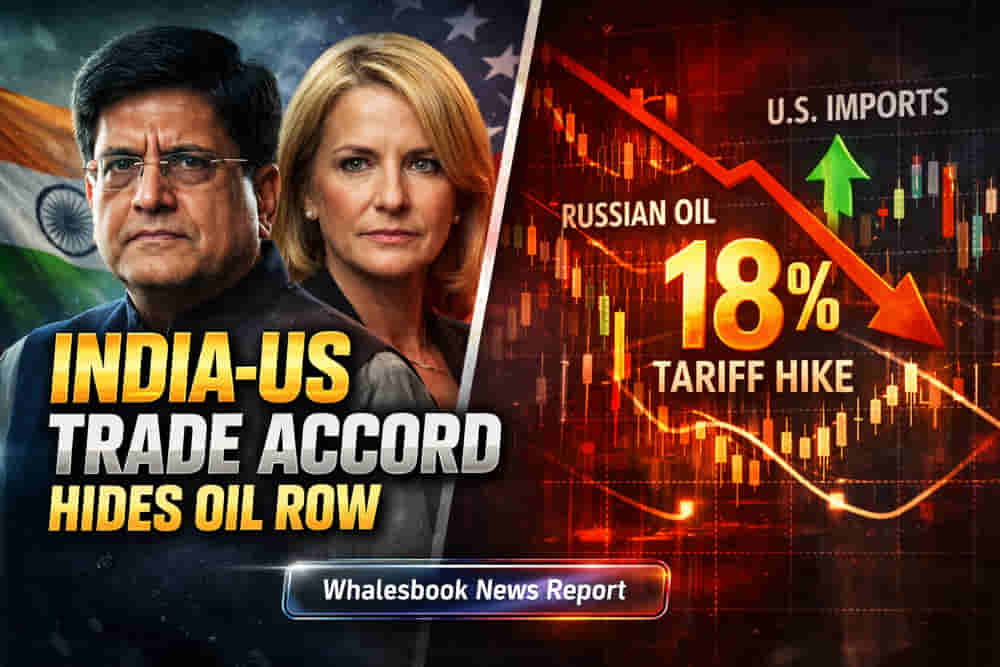


The Dual Nature of the Interim Accord
The recently established framework for an interim trade agreement between India and the United States aims to resolve long-standing tariff disputes, with markets signaling initial optimism. This accord mandates India to eliminate or reduce tariffs on a broad spectrum of U.S. industrial and agricultural products, while the U.S. will apply a reciprocal tariff rate of 18% on originating Indian goods, a significant reduction from previous levels of up to 50%. This move is anticipated to alleviate pressure on Indian exporters and restore competitiveness, particularly in sectors like textiles, apparel, and certain machinery. The commitment also includes India agreeing to purchase $500 billion worth of U.S. energy products, aircraft, and other goods over the next five years, a figure that notably exceeds India's total goods imports from the U.S. in the 2024-25 fiscal year, which stood at $45.6 billion. The U.S. trade deficit with India was recorded at $45.8 billion in 2024, a 5.9% increase from the prior year.
Coking Coal Dependency vs. Self-Reliance
A key area of concern revolves around coking coal imports. India's coking coal imports surged 6% in fiscal year 2023-24 to 57.89 million tonnes, with Australia remaining the dominant supplier. However, the United States is increasingly supplying this critical industrial input, with its shipments to India rising 18% in FY'24 to 8.39 million tonnes. This shift is partly driven by U.S. producers redirecting volumes to India as Chinese demand for Australian coal resumes. India's notification of coking coal as a critical material under the Mines and Minerals Act signaled a strategic intent to reduce import dependency, a goal that may now face challenges as the trade deal potentially pressures India to prioritize U.S. sourcing.
Agricultural Concessions and Farmer Livelihoods
While Union Commerce Minister Piyush Goyal has asserted that sensitive agricultural sectors like meat, dairy, rice, and wheat are excluded and farmer interests safeguarded, specific concessions have been made. India will reduce tariffs on a range of U.S. food and agricultural products, including dried distillers' grains (DDGS), red sorghum for animal feed, tree nuts, fresh and processed fruit, soybean oil, and wine. This has ignited concerns among farmer unions, who warn of potential price erosion for domestic crops such as maize and soybeans, used for animal feed. The structure of Indian agriculture, characterized by small farm holdings, makes it difficult to compete with heavily subsidized U.S. agricultural exports. Farmer groups have labeled the deal a "total surrender" and are contemplating nationwide protests, highlighting the political sensitivity of these sectors.
The Analytical Deep Dive
The U.S.-India trade agreement, while providing immediate tariff relief, is viewed by some analysts as a "harm reduction tool" primarily mitigating the impact of U.S. tariffs rather than fostering mutual growth. The narrative suggests India has made concessions that may hinder its long-term 'Viksit Bharat' (developed India) vision for self-reliance. The deal's structure, which entails significant import commitments from India without reciprocal commitments from the U.S. to increase imports to a similar level, raises questions about its fairness given the substantial disparity in economic size between the two nations. India's historical trade surplus with the U.S. may be impacted by the new framework, despite projections of a continued widening of bilateral trade to $300 billion by 2026-27.
The Forensic Bear Case
This interim agreement is fraught with risks that could undermine India's strategic autonomy and economic interests. The commitment to reduce tariffs on a broad array of U.S. industrial and agricultural goods, including those that could compete with domestic produce like soybean and maize, runs counter to the stated goal of strengthening indigenous production. The potential redirection of U.S. coking coal exports to India, while beneficial for steel production, directly challenges the government's recent efforts to curb import dependency on this critical resource. Furthermore, the ambiguity surrounding India's commitment on Russian oil imports, a point insisted upon by U.S. negotiators but absent from the joint statement, highlights a divergence in narratives that could signal future friction. Some analyses suggest the deal could lead to a reduction in India's GDP, emphasizing that it represents an "unequal and unfair" arrangement.
The Future Outlook
Despite the underlying concerns, analysts at Morgan Stanley maintain a bullish outlook on India, forecasting it to remain the fastest-growing major economy through 2026, supported by strong domestic fundamentals and policy reforms. The resolution of tariff overhangs is expected to provide a boost to Indian equities, with firms like ICICI Direct anticipating market gains. However, this positive sentiment is tempered by acknowledgments that trade-related uncertainties stemming from U.S. policy shifts could influence global economic growth. The broader U.S.-India Bilateral Trade Agreement (BTA) negotiations will continue, aiming for further market access and supply chain resilience, but the current framework sets a complex precedent.