

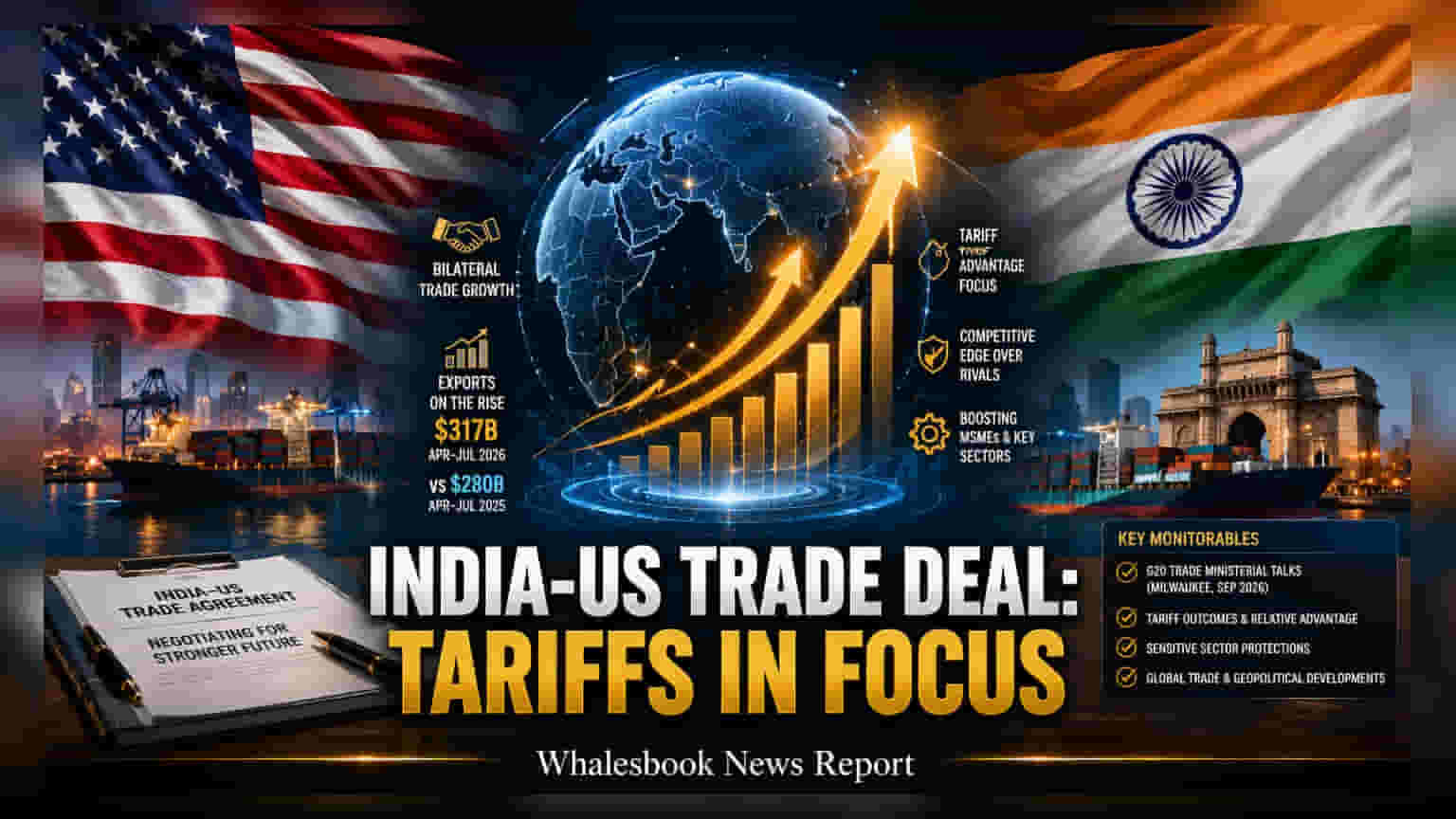
Commerce Minister Piyush Goyal confirmed that India will not finalize a trade deal with the US unless it secures a tariff advantage over rivals like Vietnam and Bangladesh. As export growth hits $317 billion for the April-July 2026 period, the government aims to prioritize competitive market access while protecting sensitive domestic sectors.
The Indian government has clarified that a bilateral trade agreement with the United States will proceed only if India can secure a clear tariff advantage over key manufacturing rivals. Commerce and Industry Minister Piyush Goyal stated on September 3, 2026, that simply signing a trade deal is not the priority. Instead, the government is focused on ensuring that Indian exporters gain a distinct pricing edge over competitors like Vietnam, Bangladesh, and Thailand, which have historically captured global market share through favorable trade pacts.
The government's trade strategy is currently centered on revitalizing key sectors such as textiles, gems, and jewellery, and supporting MSMEs. The minister emphasized that while the absolute tariff rate is important, the relative advantage—ensuring Indian goods face lower entry barriers than their international peers—is the primary objective of these ongoing negotiations. This approach marks a shift from past policies, with the government now urging the private sector to leverage this potential market access by focusing on product quality, scale, and reliable supply chains.
India’s export performance provides a solid backdrop for these negotiations. Cumulative exports, covering both merchandise and services, reached approximately $317 billion for the period between April and July 2026. This figure shows significant growth compared to the $280 billion recorded during the same period in 2025. This performance keeps the government on track to meet its ambitious $1 trillion annual export target, which requires sustained, long-term growth.
However, the path to a final agreement remains complex. While a trade framework was initially announced in February 2026, negotiations have faced delays due to shifts in the US tariff landscape and legal scrutiny. Domestically, the government faces pressure to protect sensitive sectors, particularly agriculture and dairy, from increased foreign competition that might arise under a free trade deal. Additionally, broader geopolitical issues, including US concerns over India's energy trade and ongoing discussions regarding visa policies, continue to influence the pace of talks.
Market watchers and industry stakeholders will now look toward the G20 Trade Ministerial meeting, scheduled for late September 2026 in Milwaukee, where Minister Goyal is expected to hold further bilateral discussions. The progress of these meetings, along with updates on how the government balances the protection of sensitive domestic industries with the push for competitive export access, will be the next major monitorable.