

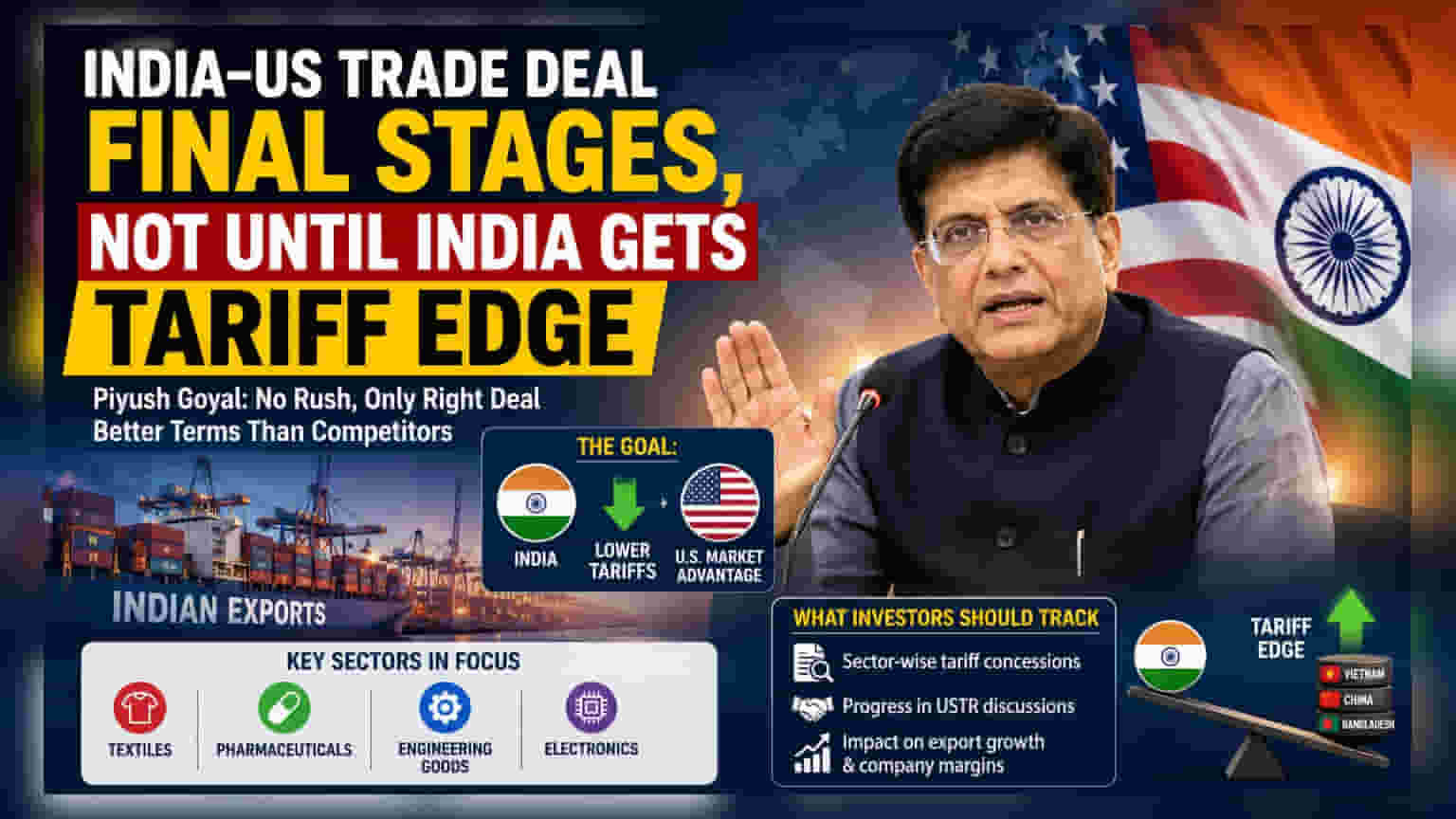
Commerce Minister Piyush Goyal stated that the India-US trade agreement will proceed only once India secures a clear tariff advantage over key manufacturing rivals like Vietnam and China. This strategic move aims to protect Indian export competitiveness in the US market.
What Happened
Union Minister for Commerce and Industry Piyush Goyal has confirmed that while the long-awaited trade agreement between India and the United States is in its final stages, it will not be activated until India achieves a specific tariff edge over its competitors. The Minister noted that India is not negotiating against a hard deadline, despite ongoing discussions surrounding the potential expiration of temporary US tariffs on imports. The core of the negotiation is ensuring that Indian products gain preferential pricing and market access, placing them in a stronger position than those from rival manufacturing hubs such as Vietnam, China, and other Asian economies.
Why The Tariff Edge Matters
For Indian exporters, this strategic stance is about leveling the playing field. In global trade, even a small difference in tariffs can change the final landed cost of goods, making them either more or less attractive to US buyers. By insisting on a tariff advantage, the government aims to prevent Indian manufacturers from losing ground to countries like Vietnam or Bangladesh, which already compete aggressively for US market share in sectors like textiles and electronics. The focus is on securing structural, long-term trade terms rather than a quick deal that might leave Indian businesses at a price disadvantage compared to regional peers.
Sector Impact and Competition
Investors are closely watching this because the agreement covers key sectors where India is aiming to expand its global footprint. Sectors like textiles, pharmaceuticals, engineering goods, and electronics are the most likely to be affected. If India secures lower tariff rates than its rivals, it could boost export volumes and improve profit margins for companies in these industries. However, the negotiations are complex, as they also involve broader trade issues such as digital trade policies, data localization, and agricultural market access. Any outcome will likely force a reassessment of competitive dynamics for companies with high exposure to the US market.
The Negotiating Context
While there has been market speculation about a potential deal deadline related to the expiration of certain temporary US tariffs in late July 2026, officials have emphasized that India is prioritizing a "balanced and commercially meaningful" outcome over speed. The negotiating teams have reported substantial progress on various technical issues, but the final tariff architecture remains the primary hurdle. The government is balancing its desire for export-led growth with the need to protect domestic interests in sensitive areas like agriculture and dairy, making the final agreement a delicate balancing act.
What Investors Should Track
Investors monitoring the potential deal should look for updates on specific sector-wise tariff concessions rather than just the headlines about the deal’s finalization. Important factors to track include the progress of the US Trade Representative’s ongoing discussions, any specific changes to tariff barriers for key export categories, and management commentary from listed companies in the textile, pharmaceutical, and electronic component sectors. The ultimate impact on corporate earnings will depend on whether India can achieve the desired tariff parity, which would support long-term export growth and margin stability.