

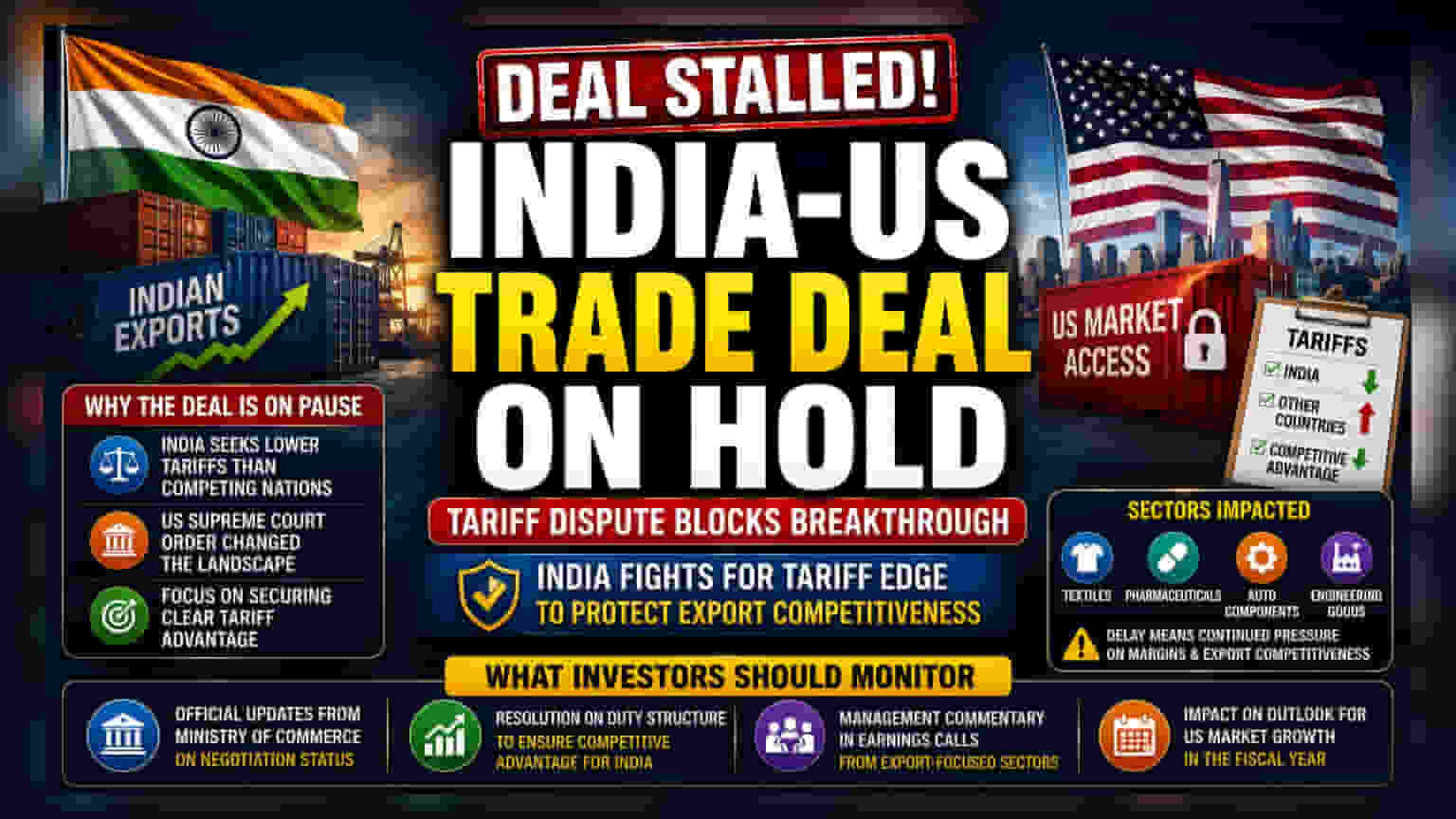
Commerce Minister Piyush Goyal stated the proposed India-US trade agreement is delayed as India seeks a competitive tariff advantage over rival exporters. This follows a US legal development affecting trade duties. For investors, this pause adds uncertainty for export-heavy sectors like textiles, pharmaceuticals, and auto components, where margins and market access depend on favorable duty structures.
What Happened
The proposed trade agreement between India and the United States has hit a roadblock. Union Commerce and Industry Minister Piyush Goyal announced that the deal is on hold as India is working to secure a competitive edge in tariff rates. While both nations had finalized the framework for the pact in February, the implementation is now pending resolution of these specific duty-related issues.
Why The Deal Is On Pause
The delay centers on the need for India to ensure its goods have lower tariff rates compared to other nations competing for the US market. According to Minister Goyal, a US legal development—specifically an order involving the US Supreme Court—occurred after the framework was set. This has created a situation where New Delhi is now prioritizing a clear tariff advantage before moving forward. The goal is to ensure that Indian exporters are not at a disadvantage compared to competitors from other countries.
Impact On Export-Oriented Sectors
For investors, the timeline of this trade agreement is a key factor for several sectors that rely on exports to the United States. Indian companies in sectors like textiles, pharmaceuticals, automotive components, and engineering goods often operate on thin profit margins. Favorable tariff treatment is often a catalyst for these companies to expand market share or improve margins by reducing the cost of their goods in the US market.
When a trade deal is delayed, companies that were banking on easier access or lower costs may face continued pressure on their export competitiveness. Until a clear resolution is reached, the uncertainty regarding duty structures might influence management commentary in upcoming earnings calls for these export-heavy businesses.
What Investors Should Monitor
Investors should keep an eye on official updates from the Ministry of Commerce regarding the status of these negotiations. The key factor to watch is whether the two nations can agree on a duty structure that satisfies India's requirement for a competitive advantage. Additionally, investors may observe how management teams in export-dependent sectors respond to the current status of the trade pact during quarterly analyst calls. The focus will be on whether they see this as a temporary delay or if it changes their outlook on US market growth for the fiscal year.