

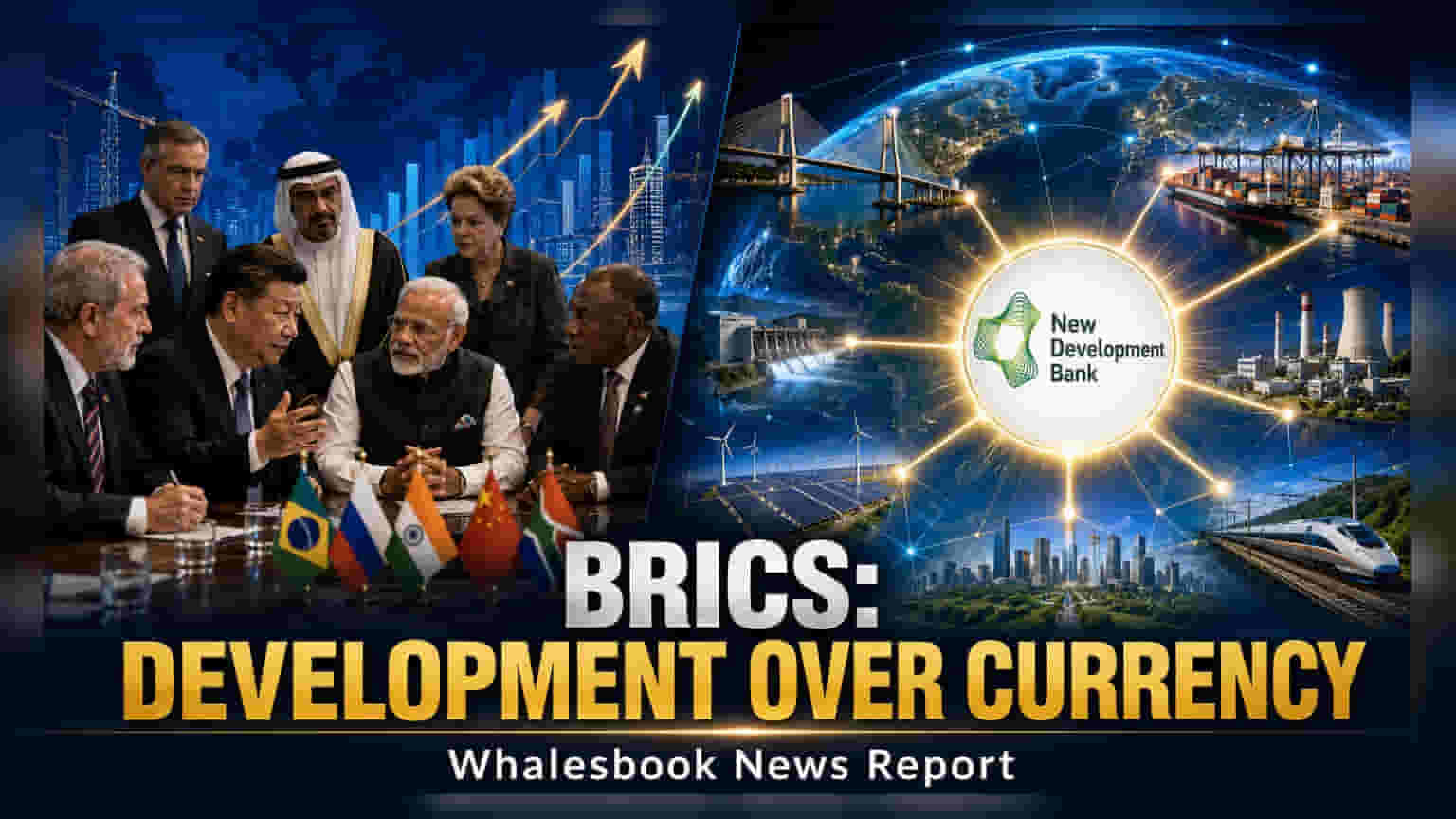
India will host the 18th BRICS Summit in New Delhi on September 12–13, 2026, prioritizing development finance and sustainable infrastructure. While the government has rejected plans for a common BRICS currency, the bloc will focus on increasing local currency trade and strengthening payment systems through the New Development Bank.
India is set to host the 18th BRICS Summit in New Delhi on September 12–13, 2026. Under the theme 'Building for Resilience, Innovation, Cooperation and Sustainability,' the summit will center on the development needs of emerging economies rather than aggressive monetary shifts. The Indian government has explicitly ruled out discussions on a common BRICS currency, providing clarity to markets that such a scheme is not on the agenda.
Focus on Development and Infrastructure
A primary goal for this summit is to strengthen the development finance architecture, with the New Development Bank (NDB) at the core. The NDB is critical for mobilizing private capital to fund large-scale infrastructure and sustainable development projects across member nations. For investors and businesses, the focus will be on whether the summit produces concrete plans to increase the NDB's lending capacity or improve its ability to de-risk investments in emerging markets. Enhancing this institution is seen as a more practical step than creating a new currency.
Shifting Trade Payment Methods
While a common currency is off the table, the summit will explore practical alternatives to reduce reliance on the U.S. dollar in international trade. Discussions are expected to focus on two main areas: increasing the use of local currencies for cross-border trade and developing interoperable payment systems using Central Bank Digital Currencies (CBDCs). By linking digital currency systems, member nations aim to facilitate trade and payments more efficiently without needing to displace the dollar entirely from the global financial system.
Managing Complexity and Risk
The 11-member bloc, which includes nations like Brazil, Russia, India, China, South Africa, Egypt, Ethiopia, Iran, Saudi Arabia, the UAE, and Indonesia, faces significant structural challenges. The primary risk remains the difficulty of achieving a consensus among such a diverse group of countries, each with different geopolitical alignments and economic priorities. Furthermore, global finance is heavily tied to U.S. dollar-based payment rails and debt markets. Shifting these established systems is a long-term challenge that requires immense regulatory and technical coordination. Investors should also monitor geopolitical tensions, as trade policies and tariff threats from Western nations remain a pressure point for the bloc’s collective economic strategies.
The key monitorable for market participants will be any announcements regarding the expansion of the NDB’s funding capacity or successful pilot projects for cross-border digital payments. These developments could offer more immediate benefits to trade and infrastructure investment than the highly debated and currently dismissed idea of a common currency.