

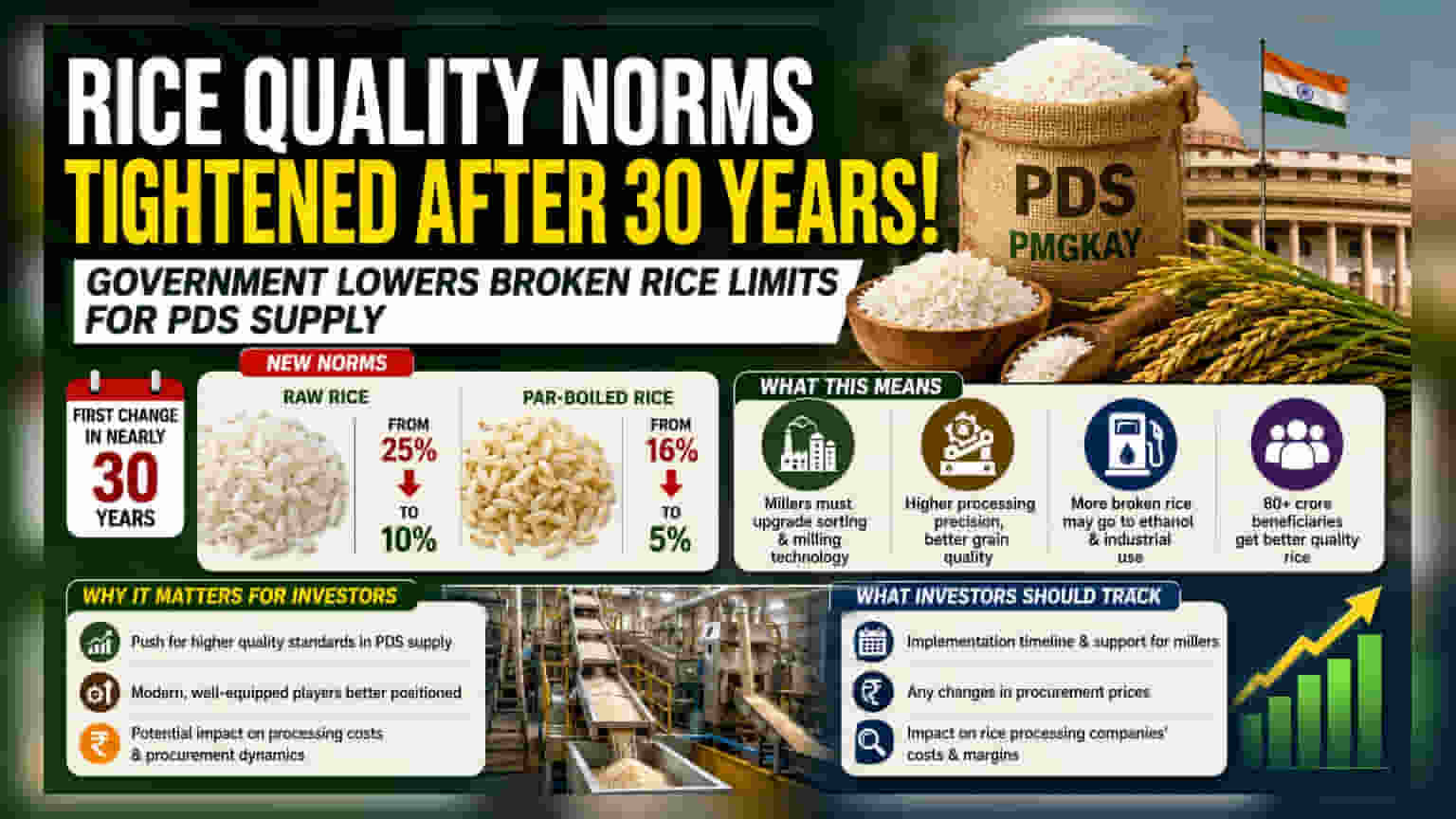
The government has approved stricter quality norms for rice distributed through ration shops, reducing the permissible limit for broken rice to 10% for raw rice and 5% for par-boiled rice. This marks the first major upgrade in nearly three decades, aimed at improving food quality for 80 crore beneficiaries. The move may require rice millers to upgrade processing standards to meet the new requirements.
What Happened
The Union Cabinet has announced a significant change to the quality standards for rice distributed under the public distribution system (PDS). For the first time in nearly 30 years, the government has tightened the rules regarding the amount of broken rice allowed in government-supplied grains. Under the new norms, the limit for broken rice in raw rice has been lowered to 10%, down from the previous 25%. For par-boiled rice, the limit has been reduced to 5% from 16%. These changes apply to rice distributed under the Pradhan Mantri Garib Kalyan Anna Yojana (PMGKAY), which serves over 80 crore beneficiaries.
Impact on Rice Processing and Suppliers
For companies and millers that supply rice to the Food Corporation of India (FCI) and state agencies, this policy change means their processing must become more precise. To meet these stricter limits, suppliers will likely need to ensure better sorting and cleaning of their produce. This may involve investing in advanced color sorters and more efficient milling technology to separate broken grains more effectively. While this improves the final product quality, it could also increase the operational costs for those supplying to the government.
The Ethanol Connection
Broken rice is a widely used ingredient for ethanol production in India, which the government is actively promoting for fuel blending. By tightening the limits for rice meant for human consumption, the volume of broken rice separated during the milling process might increase. Since this broken rice is often redirected for industrial use, such as animal feed or ethanol manufacturing, this policy could indirectly influence the availability of feedstock for the ethanol industry. The exact impact will depend on how millers adjust their processing lines to comply with the new norms.
Why This Matters For Investors
For investors tracking companies in the agricultural processing and food sector, this move signals a push for higher quality standards. Companies that are already equipped with modern milling and sorting technology may find it easier to adapt to these new regulations. On the other hand, smaller or less-equipped players might face cost pressure as they upgrade their facilities to remain eligible for government procurement contracts. The government has stated that beneficiary entitlements remain unchanged, meaning the core demand volume should stay stable, but the compliance requirements have shifted.
What Investors Should Track
Investors may want to monitor the implementation timeline and whether the government introduces any support mechanisms for millers to upgrade their technology. The key monitorables include any changes in procurement prices that might be adjusted to cover these higher processing standards, and how this policy shift affects the supply chain dynamics for the wider rice processing industry. Future exchange filings or management commentary from companies involved in rice processing may provide more clarity on how these stricter norms impact their operational costs and business planning.