 Whalesbook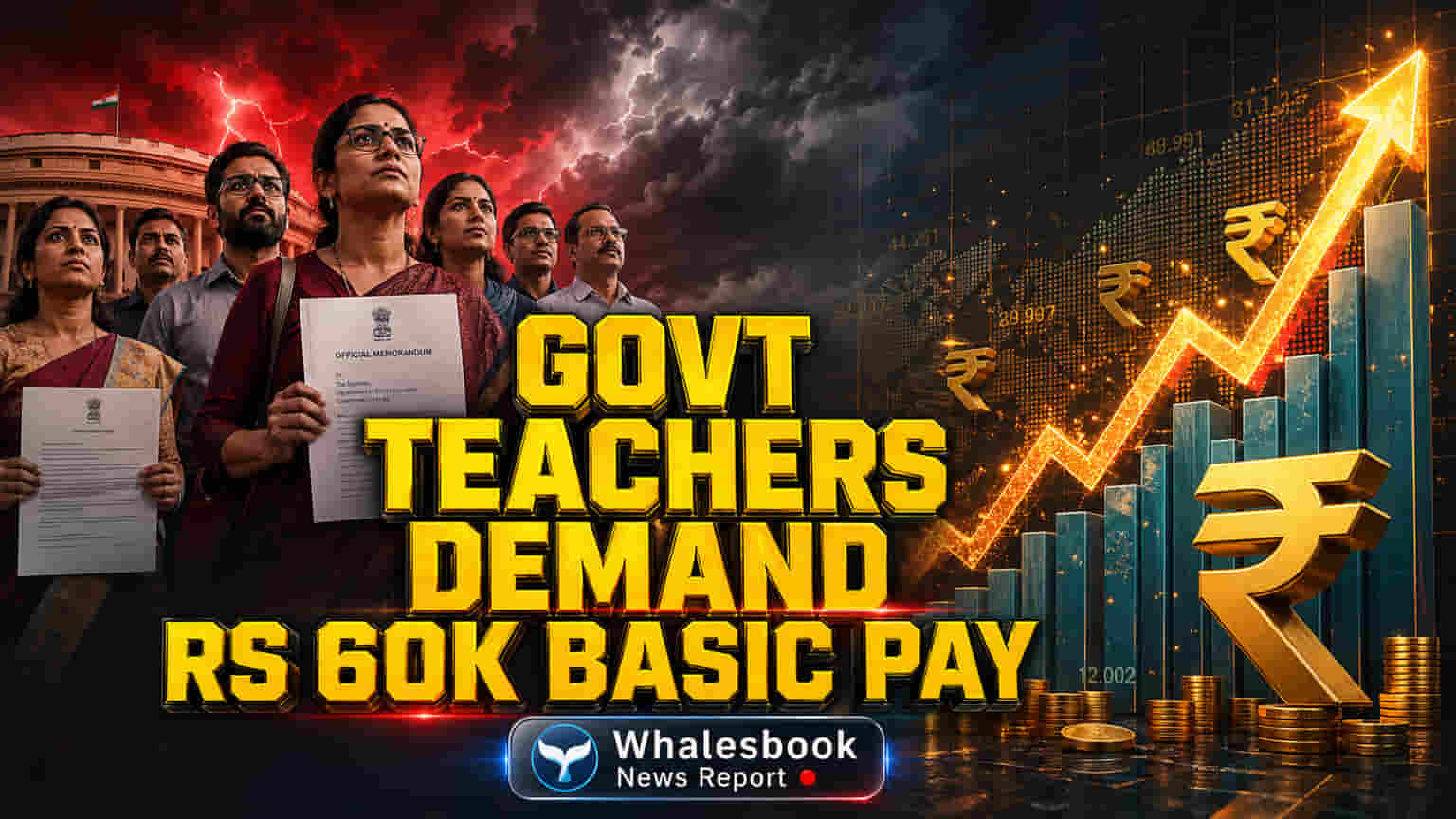


Teachers' Union Demands Major Pay Hike
The Pragatisheel Shikshak Nyaya Manch (PSNM), which represents central government teachers, has submitted a request to the 8th Pay Commission proposing major changes to public sector pay. Their main demand is to increase the minimum basic pay for Level 1 employees from the current ₹18,000 to between ₹50,000 and ₹60,000. This is an increase of over 200%, based on a proposed fitment factor of 3.83, much higher than the 2.57 factor used in the 7th Pay Commission. The union also wants annual increments doubled to 6-7%, higher House Rent Allowance (HRA) and transport allowances, and the Children Education Allowance nearly tripled. They also propose fixed-interval promotions and the return of the Old Pension Scheme (OPS).
Government Faces Budgetary Limits
These demands come as the government aims to maintain fiscal discipline. For fiscal year 2025-26, the government targets a fiscal deficit of 4.4% of GDP, down from 4.8% in the prior year. Central government debt is projected at 56.1% of GDP for 2025-26, with a target to lower it to about 50% by 2031. Even without these extra demands, the 8th Pay Commission is expected to cost ₹3.7 to ₹3.9 lakh crore annually, or 1.1-1.2% of India's GDP. This alone could push the deficit to 5% of GDP for FY26, hindering consolidation efforts. If the PSNM's full proposal were accepted, it would create a much larger fiscal shock, needing more borrowing and potentially raising the debt-to-GDP ratio beyond targets.
Pension and Past Pay Commission Impacts
Previous pay commissions, like the 7th CPC which raised pay and allowances by 23.5%, also led to higher government spending and inflation. These hikes aimed to boost spending and morale but increased government salary costs as a share of GDP. The PSNM's demand to bring back the Old Pension Scheme (OPS) poses a major long-term fiscal challenge. Unlike the National Pension System (NPS), OPS is a guaranteed benefit scheme funded by the government. This creates significant fiscal risks as people live longer. Switching back to OPS could raise government liabilities 4.5 times more than NPS, potentially costing the budget an extra 0.9% of GDP annually by 2060. This clashes with the government's goals for fiscal stability and sustainable pension costs.
Experts Predict Modest Outcome
Experts believe the PSNM's ambitious demands are unlikely to be fully met. They expect the government to be more conservative, possibly approving a fitment factor between 2.57 and 2.86, closer to the 7th Pay Commission's levels. Currently, a Primary Teacher (PRT) earns around ₹35,400 (Level 6) under the 7th CPC. The PSNM's request for Level 1 employees to reach ₹50,000-60,000 is a large departure from current pay structures. Meeting such demands would have serious fiscal consequences, risking higher inflation, greater interest payments from increased borrowing, and less money for essential capital spending crucial for economic growth. Additionally, the PSNM's push to replace NPS with OPS overlooks OPS's long-term fiscal unsustainability, a concern already raised by the Reserve Bank of India. The Union government's fiscal deficit targets for FY26 and FY27 show there's little room for major pay increases beyond historical levels.
Outlook for the Pay Commission
The 8th Pay Commission's report, due for implementation by January 1, 2026, will likely try to balance employee needs with fiscal sustainability. While some increases in pay, allowances, and pensions are expected, the PSNM's large demands point to a big difference between their hopes and the government's financial ability. The focus will likely stay on measures aligning with FRBM Act targets and the broader economic plan, rather than accepting proposals that could harm public finances or increase inflation. Negotiations are expected to be lengthy, with the final outcome likely showing smaller adjustments, similar to previous pay commission cycles.