

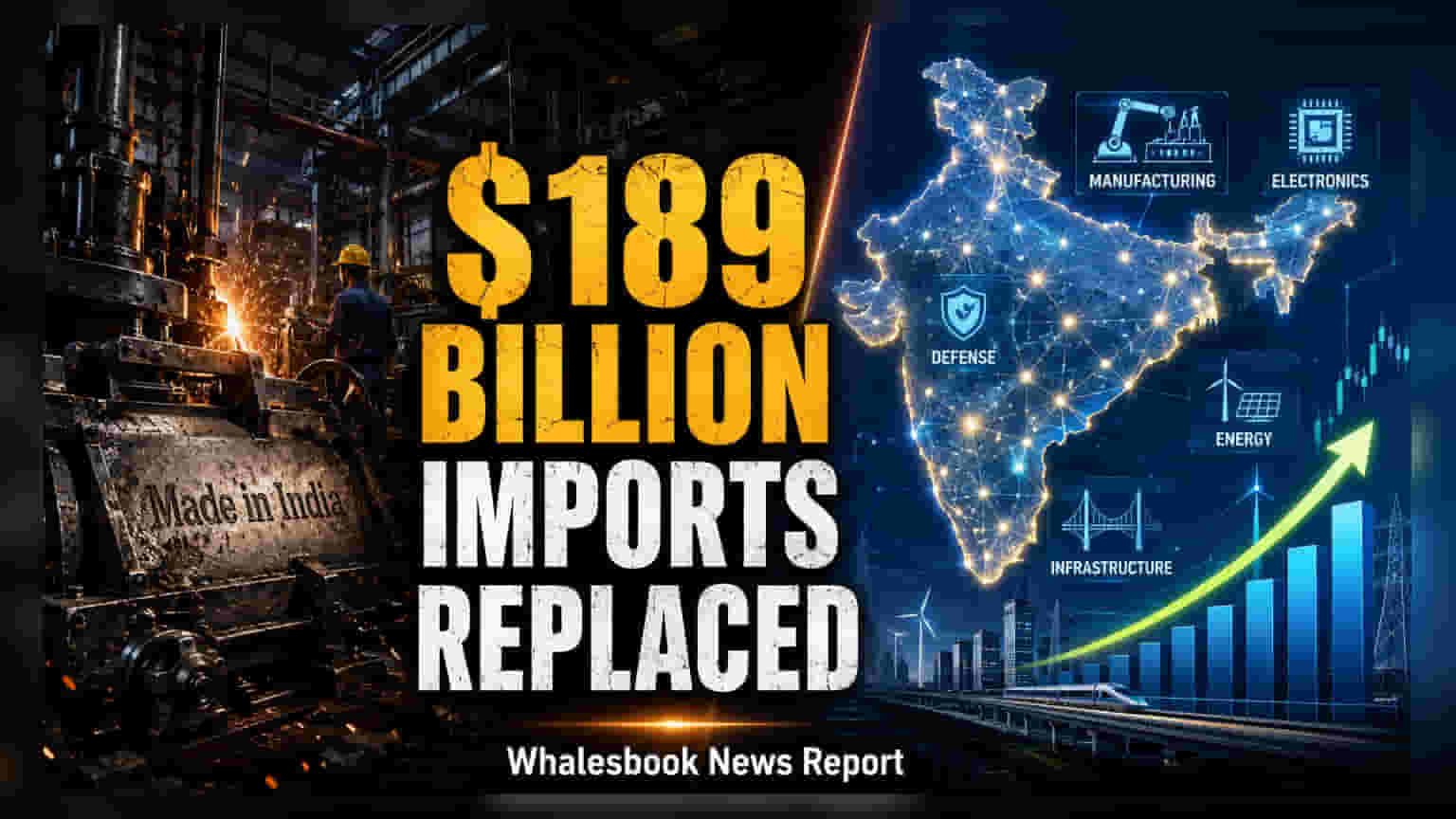
The government has identified 1,272 products, worth $189 billion in annual imports, for a new domestic manufacturing drive. The plan aims to strengthen local capacity in chemicals, electronics, and machinery to lower import dependence. States will manage land acquisition and approvals to speed up the process.
The Indian government has launched a strategic initiative aimed at reducing the country's reliance on foreign goods by boosting domestic manufacturing for 1,272 specific products. These items currently account for $189 billion in annual imports and were selected because they are either not produced within India or are manufactured in volumes too small to meet demand. The scope of this initiative includes critical industrial sectors such as electronics, chemicals, machinery, and specialty steel.
State-Led Execution and Industrial Clusters
Unlike centralized industrial policies of the past, this framework places state governments at the center of execution. States are now responsible for facilitating land acquisition, streamlining industrial approvals, and offering targeted investment incentives to attract manufacturers. The government has recommended that states develop sector-specific manufacturing clusters to create an ecosystem that supports these new production units. This approach is intended to make it easier for both domestic and foreign investors to set up factories by reducing the time required for regulatory clearances.
Assessing Realistic Substitution
Not all imports are currently targeted for replacement. Official assessments for fiscal year 2026 indicate that only 26 percent of India's total import basket is realistically replaceable through domestic manufacturing. A large portion of imports, about 46 percent, consists of essential commodities like crude oil and gold, which cannot be produced locally. Another 28 percent of products are already being manufactured in India, but are currently imported due to specific price or quality preferences. The government aims to bridge this gap by encouraging local firms to improve quality standards and cost competitiveness.
Economic Drivers and Trade Challenges
This move comes as India faces a rising import bill and a widening trade deficit. Data for the April-June quarter of fiscal year 2027 shows merchandise imports hit $216.18 billion, marking a nearly 20 percent increase from the previous year. This has resulted in a trade deficit of $86.86 billion and created downward pressure on the rupee. For investors, the success of this initiative will depend on how effectively the government can help companies overcome hurdles related to raw material availability, skilled labor, and the creation of a reliable supply chain. Future monitorables include the announcement of specific sector-wise incentives, the speed of state-level policy alignment, and the ability of private companies to scale production for these identified high-import categories.