

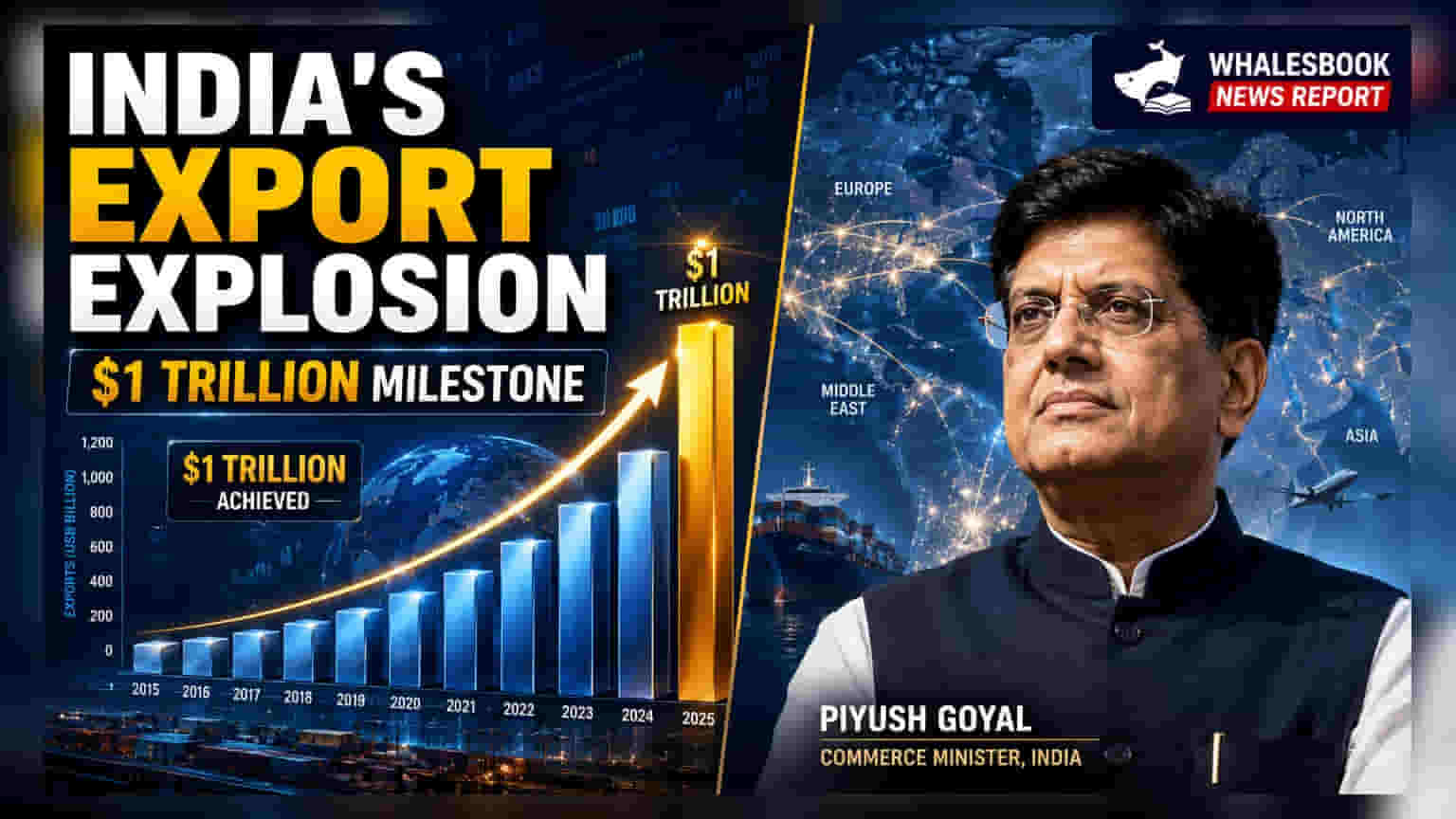
India’s exports grew 15% in the first quarter of FY27, setting the stage for a $1 trillion annual target. The government plans to support this goal through new trade pacts, overseas warehousing, and expanded testing facilities.
What Happened
India is aiming for a major milestone in its external trade, with the government setting a target of $1 trillion in total exports for the current financial year (FY27). This ambitious goal follows a strong start to the year, with total exports recording a 15% increase during the first three months. Commerce Minister Piyush Goyal, addressing the Board of Trade, indicated that goods exports are targeted to reach $530 billion, while services exports are expected to contribute $470 billion to the overall figure.
The Growth Strategy
To reach these figures, the government is encouraging domestic companies to expand their international footprint. The central government has committed to facilitating the setup of overseas warehouses to help Indian firms store and distribute products closer to global customers. Furthermore, the Centre has pledged to fully fund testing facilities in various states to help products meet global quality standards, addressing a common hurdle for domestic exporters looking to enter developed markets.
Impact of Trade Agreements
The government expects recent and upcoming trade deals to play a pivotal role. The India-UK free trade agreement, which becomes effective on July 15, is seen as a major gateway for goods exports. India currently has operational trade pacts with countries including the UAE, Australia, and Mauritius. These agreements are part of a broader push to increase India's coverage of the global economy, with negotiations for further pacts with the EU, the US, and New Zealand currently in progress.
Addressing Import Competition
A significant part of the government's strategy involves the Directorate General of Trade Remedies (DGTR). The minister noted that the DGTR is actively supporting domestic industries against unfair pricing from foreign competitors. This is linked to a larger focus on import substitution, where the government aims to encourage local manufacturing to reduce dependency on foreign supplies for critical components and raw materials.
What Investors Should Track
Investors with exposure to export-oriented sectors—such as engineering goods, textiles, pharmaceuticals, and IT services—may observe how these policy supports influence company-level margins and revenue growth. Key monitorables include the actual utilization of new warehousing facilities, the speed of trade pact implementation, and whether domestic manufacturers can successfully capitalize on the increased market access. Additionally, the impact of import substitution policies on domestic input costs will be important for understanding the profitability of manufacturing firms in the coming quarters.