

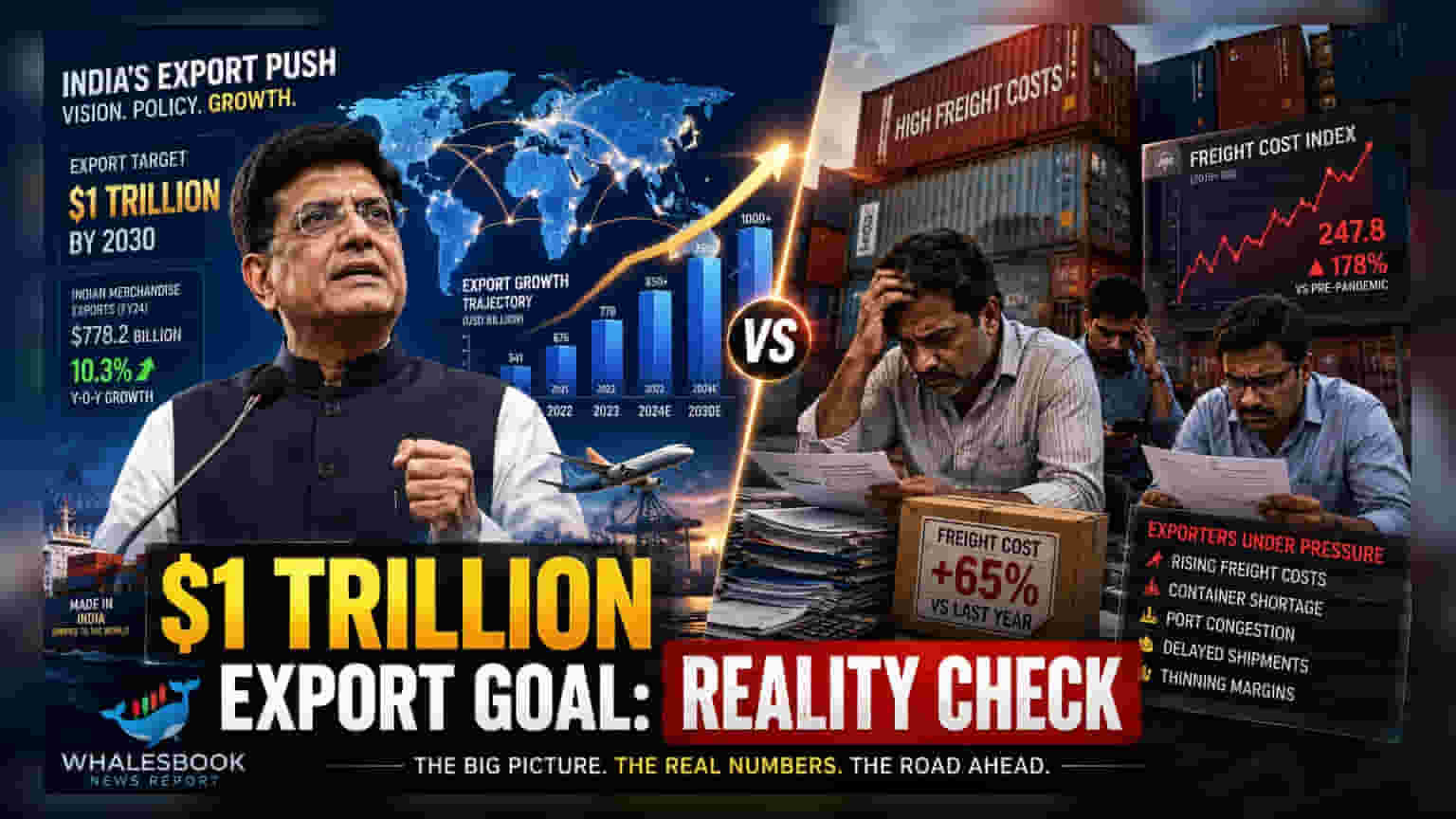
The Commerce Ministry has unveiled a roadmap aiming for $1 trillion in annual exports, backed by a ₹25,000-crore mission for MSMEs. However, industry bodies warn that high shipping costs and a 14% drop in available credit are hurting competitiveness. Success now depends on reducing logistics expenses and improving credit access for exporters.
The Ministry of Commerce and Industry has laid out an ambitious seven-point roadmap to reach $1 trillion in exports for the current fiscal year. To support this goal, the government plans to leverage the 'Districts as Export Hubs' initiative, which focuses on 120 priority districts, and a new ₹25,000-crore Export Promotion Mission designed to help micro, small, and medium enterprises (MSMEs) gain international certifications and better market access.
Logistic and Credit Hurdles for Exporters
While the government's long-term plan aims to strengthen India's global trade footprint, industry representatives have raised immediate concerns regarding operational costs. Exporting firms are facing pressure from rising ocean freight rates and container shortages, which are significantly increasing the cost of shipping goods. Exporters have requested a formal monitoring mechanism to keep shipping costs transparent and under control.
Access to capital remains another major friction point. The Federation of Indian Export Organisations (FIEO) has pointed to a nearly 14% contraction in export credit. This reduction in available funding is creating cash flow problems for businesses, especially as they face longer wait times for payments from international buyers. Without easier access to working capital, many exporters may find it difficult to scale production to meet the government's aggressive growth targets.
Sustainability and Regulatory Bottlenecks
Indian exporters are also preparing for stricter environmental standards, such as the European Union’s Carbon Border Adjustment Mechanism (CBAM). Meeting these green transition requirements often involves significant investment in carbon accounting and new technology. Industry bodies have proposed the creation of a dedicated green transition fund to provide financial and technical support, particularly for smaller firms that may struggle to afford the necessary upgrades on their own.
Additionally, the industry is calling for the government to implement long-standing policies that could boost retail export growth. For instance, the provision for GST refunds for foreign tourists, which has been part of the IGST Act since 2017, remains largely unimplemented. Addressing these specific regulatory gaps and reducing the burden of compliance are seen as critical steps to improve the ease of doing business for export-oriented companies.
For investors monitoring the broader economy, the key monitorable will be whether the government shifts from consultative planning to direct policy execution. The ultimate impact on export-heavy sectors—such as textiles, engineering goods, and handicrafts—will depend on how quickly authorities can lower logistics costs and resolve the credit crunch affecting MSME exporters.