

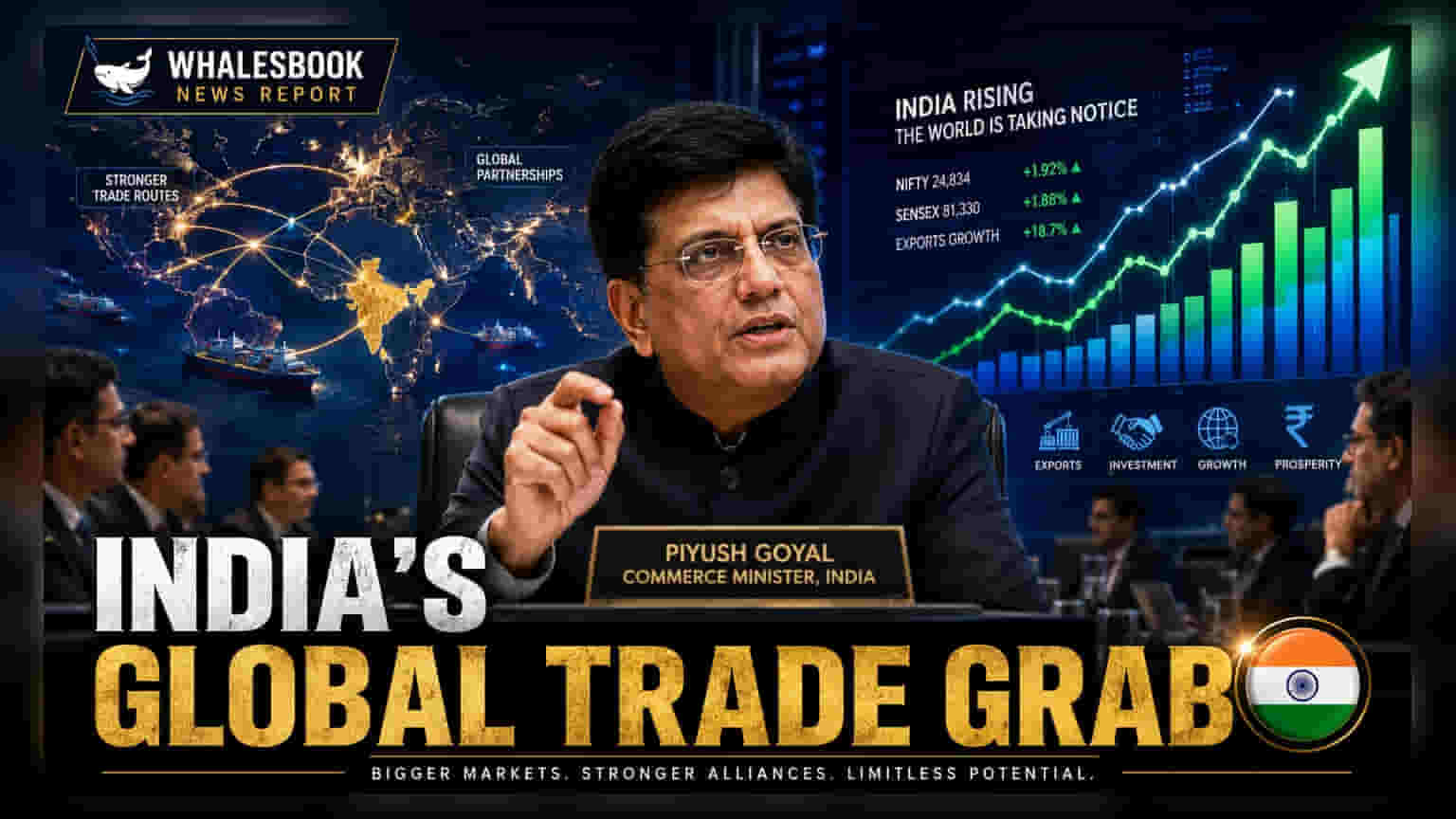
India plans to finalize trade agreements with Canada, Mexico, and Brazil within the next six months to expand its global export network. These deals aim to lower trade barriers, though timelines depend on successful negotiations. Investors may track these agreements as they could impact sectors like pharmaceuticals, agriculture, and textiles by opening new markets.
What Happened
The Indian government has set an ambitious six-month timeline to conclude negotiations for Free Trade Agreements (FTAs) with Canada, Mexico, and Brazil. Commerce Minister Piyush Goyal confirmed the government's focus on accelerating these partnerships to strengthen India’s global trade presence. As part of this push, an Indian delegation is scheduled to visit Canada starting July 6, 2026, to conduct the next round of formal trade discussions. Separately, the government expects the trade agreement with New Zealand to become fully operational within the 2026 calendar year.
Strategic Importance For Industry
Free Trade Agreements are designed to reduce or eliminate customs duties on goods traded between partner countries. For Indian companies, successful deals can make exports more price-competitive in international markets. This is particularly relevant for sectors where India has a strong export footprint, such as pharmaceuticals, information technology services, textiles, and agricultural products. By securing preferential market access, businesses may be able to increase their export volumes and reduce reliance on a limited number of existing trade partners.
Challenges In Trade Negotiations
While the government is targeting a six-month window, trade negotiations are often complex and subject to delays. Past experiences show that reaching a consensus on market access, sensitive product lists, and regulatory standards can take longer than anticipated. For instance, discussions regarding a potential FTA with Peru have faced roadblocks over product-specific market access issues, highlighting that government intentions alone do not guarantee a quick conclusion. Investors should note that these agreements are subject to rigorous legislative and diplomatic processes in all participating nations.
The EU Diplomatic Engagement
In addition to the three countries mentioned, India continues to work toward a comprehensive trade agreement with the European Union. Key ministers, including the commerce and external affairs ministers, are set to attend the India-EU Trade and Technology Council meeting in Brussels on July 13, 2026. This meeting is expected to serve as a platform to advance discussions on trade and digital technology cooperation. European officials have previously indicated that an agreement with the EU could potentially be finalized by the end of 2026, which remains a key long-term monitorable for export-oriented sectors.
What Investors Should Track
The primary monitorable for investors is the progress of these specific negotiations in the coming months. Market updates regarding the signing of official documents, the list of sectors covered by lower tariffs, and any specific exclusions will be critical. Additionally, investors may look for company-level commentary during quarterly results, as management teams in export-heavy sectors often disclose how changes in trade policy and tariff structures could influence their future revenue growth and operating margins.