

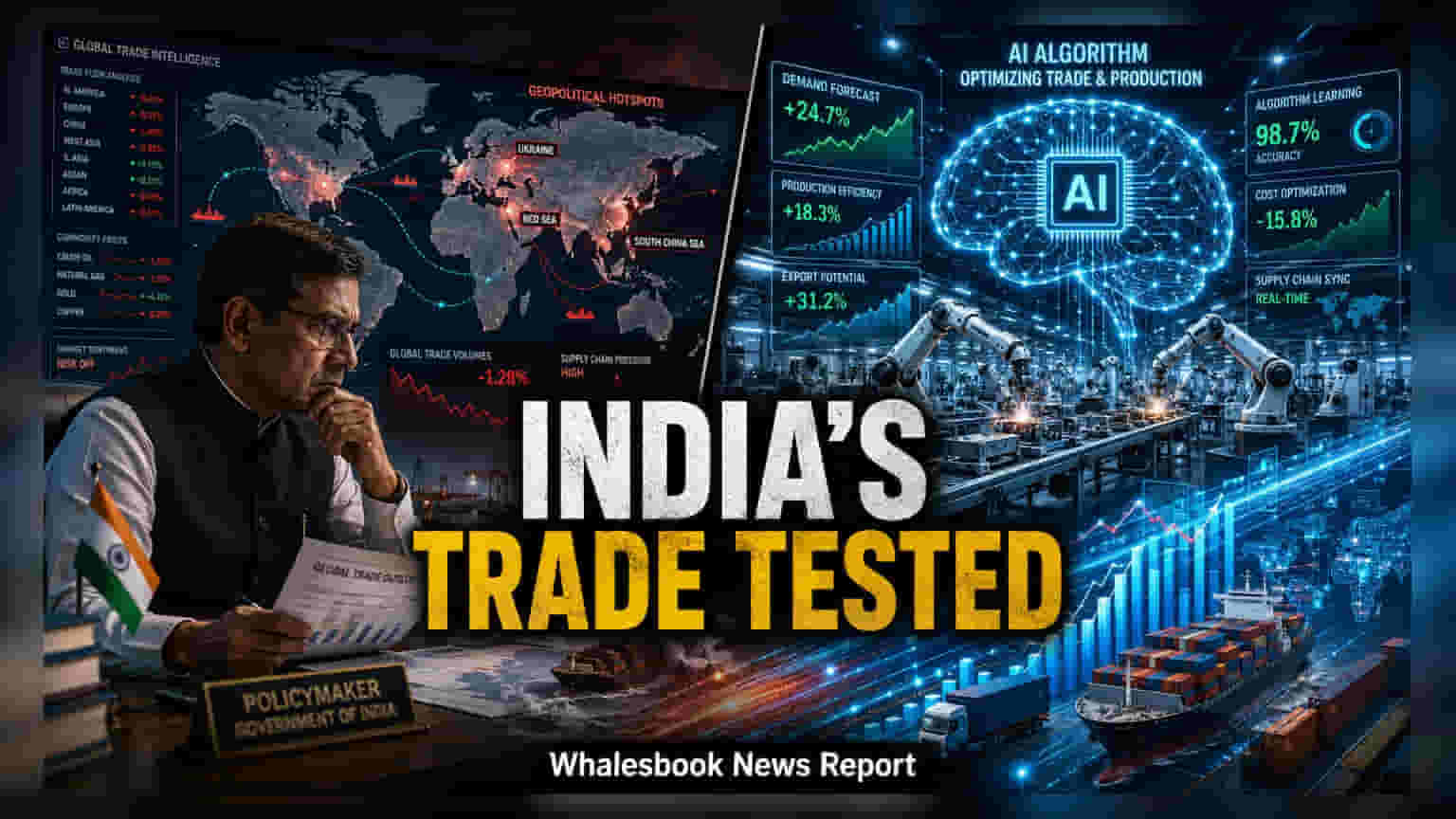
India is managing global trade headwinds and tariff risks through strategic export diversification and central bank measures. While the economy remains stable, investors are focused on the rising threat of AI-driven job displacement in the IT sector and the need for stronger manufacturing output.
India’s external sector is currently navigating a complex global environment marked by protectionist trade policies, geopolitical tensions, and the rapid rise of automation. While the economy has displayed resilience against these external shocks, the path forward requires balancing short-term financial stability with long-term structural adjustments in manufacturing and employment.
Strategic Trade Diversification
To counter the unpredictability of traditional export markets, particularly as countries like the United States move toward more protective trade policies, India has aggressively pursued trade diversification. This strategy involves shifting reliance away from single-country dependency by securing free trade agreements with key partners, including the United Kingdom, the European Union, and ongoing talks with various other nations. This broad-based approach acts as a buffer against potential tariff escalations, ensuring that Indian exports have a wider footprint in the global market despite changing geopolitical landscapes.
Financial Management and Trade Deficit
While the national trade deficit remains a focal point, reaching approximately $32 billion in July, the Reserve Bank of India has implemented proactive financial measures to maintain stability. By utilizing schemes such as the concessional deposit facility for banks, the central bank has effectively encouraged inflows of foreign currency. These measures have helped support the currency and manage the current account deficit, which is projected to remain between 1.5% and 2% of GDP for the 2027 fiscal year. The influx of foreign currency deposits, expected to reach significant levels by September, serves as a financial backstop against potential shocks to the trade balance.
The Structural Challenge of AI and Manufacturing
Beyond immediate trade figures, the economy faces long-term challenges in manufacturing and technology. While sectors like petroleum exports have performed well, the overall share of Indian manufacturing in global exports remains stagnant. Policy initiatives, such as production-linked incentive schemes, have primarily driven growth in the mobile phone sector but have yet to see broad-based success across other industries.
Furthermore, the rapid development of Artificial Intelligence presents a structural risk to the Information Technology sector, which is a major pillar of India’s service exports. The potential for AI to displace entry-level roles creates a pressing need for a workforce shift toward higher-skilled labor. Without significant policy intervention to bridge this skills gap, the IT sector may face headwinds regarding job creation and wage growth.
Investor Monitorables
For investors, the key area to track remains the transition of the labor market in response to automation and the actual realization of manufacturing exports. While current financial and trade policies have successfully shielded the economy from immediate volatility, the long-term outlook depends on the country's ability to boost manufacturing competitiveness and manage the workforce transition in the digital service sector.