 Whalesbook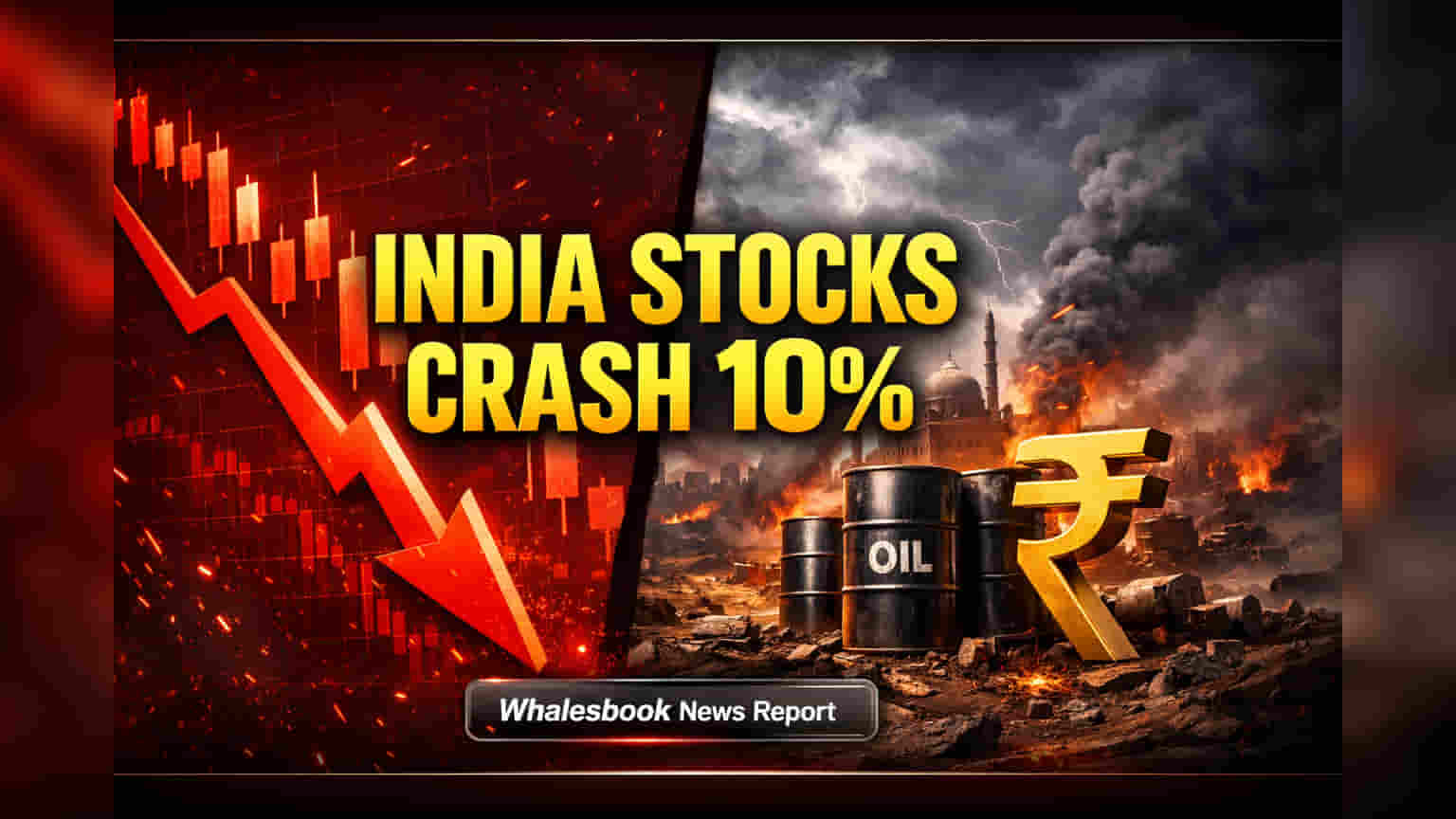
Indian Equities Reel From Oil Shock
Indian equity markets ended the first quarter of 2026 with a sharp sell-off. Escalating geopolitical tensions in West Asia and their impact on commodity prices triggered a wide market drop. Benchmark indices suffered their steepest monthly loss since the pandemic-driven crash of March 2020, showing how sensitive markets are to global instability and energy price shocks.
Oil Prices Surge on Geopolitical Fears
Uncertainty from the U.S.-Israel-Iran conflict, particularly around the Strait of Hormuz, pushed Brent crude oil prices above $110 per barrel by late March 2026. This surge, a nearly 47.68% increase from the previous month, directly affected India, which imports about 85-90% of its oil. The BSE Sensex dropped 10.5%, losing 8,665 points from its February high to close at 73,583.22 on March 27, 2026. The Nifty 50 also fell 10.5%, ending at 22,819.60. The broader market correction saw Nifty Midcap and Smallcap indices decline by 9.5% and 8.7%, respectively. Investor wealth worth roughly ₹41 lakh crore was lost in March alone. The market capitalization of BSE-listed companies decreased by Rs 8.97 lakh crore in the final week of March, reaching Rs 422.04 lakh crore. The Nifty 50 Price-to-Earnings ratio was around 20.1-20.4 as of March 25, 2026, while the Sensex P/E ratio stood at 20.690 on March 27, 2026.
Sectors Show Mixed Performance Amid Economic Slowdown
The market downturn shows different trends across sectors. The energy sector could see higher revenues from elevated crude prices, but faces higher costs and possible government taxes like windfall taxes. In contrast, India's manufacturing sector is slowing down. The HSBC India Manufacturing PMI fell to 53.8 in March 2026, down from 56.9 in February, indicating reduced factory activity despite earlier strong growth. Core sector growth slowed to a three-month low of 2.3% in February 2026, mainly due to drops in crude oil, natural gas, and refinery products. India's IT sector has also performed poorly since February 2026, possibly facing challenges from slower global demand, though a weaker rupee could help exporters. The banking sector faces new challenges from tighter liquidity and rising bond yields after central bank actions. Consumer price index (CPI) inflation increased to 3.21% in February 2026, raising fears of inflation from imports and potentially delaying interest rate cuts.
Foreign Investors Exit as Rupee Falls
Geopolitical risks have caused foreign investors to pull money from India. Outflows have exceeded ₹1.18 lakh crore year-to-date in 2026, with about ₹1.11 lakh crore leaving in March alone. This selling, along with a stronger US dollar, pushed the Indian rupee to record lows, trading near ₹94-94.50 against the dollar in late March 2026. Analysts at UBS downgraded Indian equities to 'neutral,' warning about India's heavy reliance on imported energy and vulnerability to high oil prices. They noted MSCI India is trading at 19.9 times forward earnings, still above previous crisis lows. Historically, Indian markets have shown strength after oil shocks, but the current mix of prolonged conflict, supply chain issues, and currency weakness poses significant near-term risks to company profits and the current account balance. Analysts suggest a move to ₹100 per dollar is unlikely, but the currency could weaken towards ₹96-97 in worst-case scenarios.
Market Outlook Remains Volatile
Market experts expect continued volatility in the short term, driven by high crude prices, ongoing foreign investor outflows, and currency depreciation. Some analysts, like those at ICICI Direct, believe the market may have seen the worst of its decline and could recover in April, but the outlook depends heavily on de-escalation in West Asia. Investors now need to adjust their strategies, focusing on specific sectors and risk management rather than broad market bets. Companies that can manage energy security, imports efficiently, and have strong domestic demand may perform better. Changes in global supply chains and energy sources also create opportunities in areas like defense, renewables, and infrastructure development, where India is seen as well-positioned.