 Whalesbook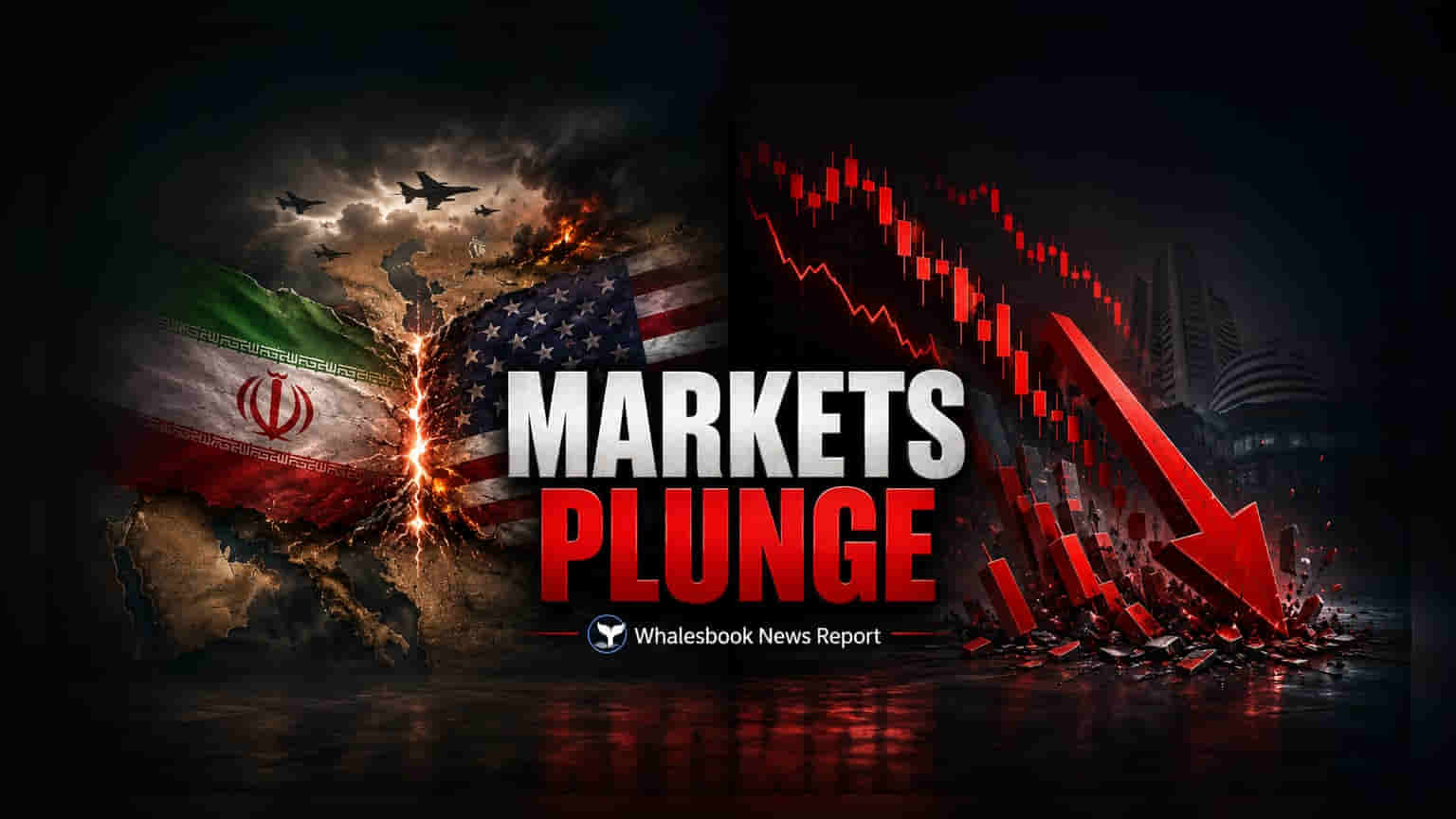


Global Jitters Drive Indian Market Lower
Geopolitical friction between Iran and the United States is directly impacting Indian markets, overshadowing domestic factors and signaling a subdued opening with potential for volatility.
Oil and Currency at Risk
Escalating tensions in the Middle East are reviving fears of instability in global energy supplies, expected to keep crude oil prices volatile. For India, higher oil prices mean increased import costs, a wider current account deficit, and pressure on the Indian Rupee against the U.S. Dollar. A weaker rupee can also fuel inflation and hurt companies reliant on imports.
Analyst Outlook and Valuation Concerns
Despite a long-term positive view, Emkay Global Financial Services has highlighted a significant downside risk. The firm projects the Nifty could fall to 21,000 in a prolonged energy crisis, a level well below its five-year average price-to-earnings ratio. This suggests current market valuations might be stretched if severe geopolitical and energy price shocks materialize. Investors are watching the P/E ratio closely, as it is currently above its historical average.
Derivative Market Signals
Options data shows significant call writing at the 23,800-24,000 strike prices, acting as an immediate cap on upside. Conversely, substantial put writing near the 23,500-23,300 levels indicates support. The put-call ratio hovers around 1.03, suggesting options traders are cautiously balanced or awaiting a clearer market direction.
Trading Strategy and Key Levels
The current market setup suggests a period of consolidation, favoring stock-specific trades. A 'buy on dips' approach targeting the 23,300 support level is a possible strategy, with potential for a rebound towards 23,770-24,000. A strong move above 23,850 could signal further upside. However, a break below 23,300 might lead to a decline toward 23,000-22,900, underscoring the market's sensitivity to geopolitical events and oil price swings.
Vulnerability to Energy Shocks
India's high dependence on oil imports makes it particularly susceptible to sustained high crude prices resulting from an escalated Iran-U.S. conflict. This could worsen inflation and widen the trade deficit. Unlike nations with domestic energy production, India's economic stability is closely tied to global energy markets. A weakening rupee, exacerbated by geopolitical risks and capital outflows, would increase import costs and could potentially lead to a sovereign credit rating downgrade if it persists. The market's current P/E ratio might not fully reflect the risk of a prolonged geopolitical crisis if earnings growth falters.