 Whalesbook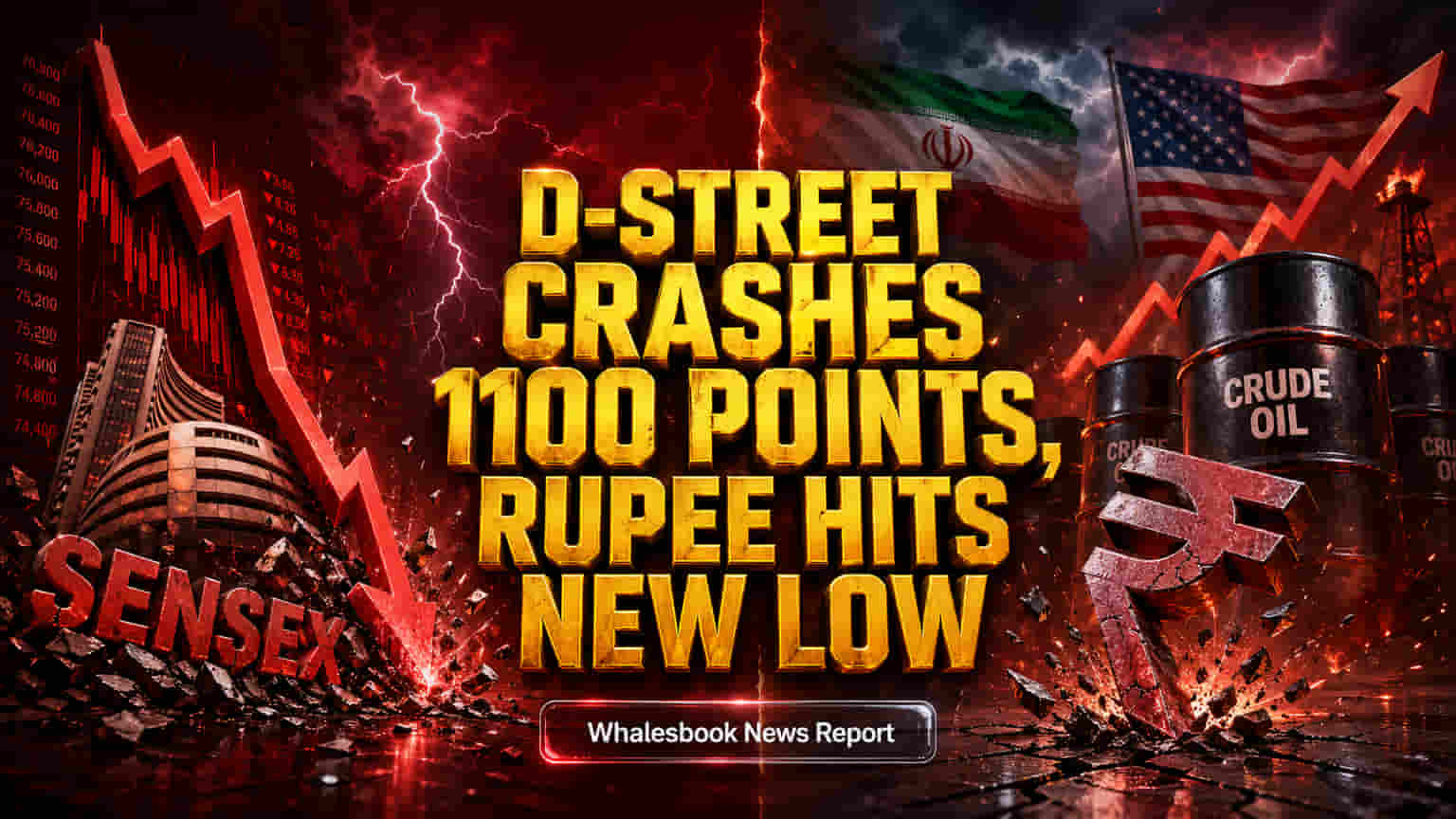


Oil Shock Sends Markets Down
Indian equity markets suffered a sharp decline on Thursday. The benchmark Sensex index lost over 1,100 points, and the Nifty 50 fell below 23,820. This sell-off was triggered by rising geopolitical tensions that pushed Brent crude oil prices past $125 per barrel. Fears of supply chain disruptions in the Strait of Hormuz fueled the oil price spike. Such increases in oil costs often lead investors to reduce risk, especially impacting countries like India that rely on oil imports.
The Indian Rupee also weakened significantly, reaching a new record low of 95.27 against the US dollar. This was due to foreign investors pulling money out and the higher cost of importing oil. The market's strong reaction highlights its sensitivity to global stability and commodity prices.
AI Boom, Major Deals, and Investor Shifts
In contrast to the market's retreat, the artificial intelligence sector saw significant valuation activity. Anthropic PBC is reportedly exploring funding that could value the AI developer at over $900 billion. This valuation would be substantially higher than its competitor OpenAI, which has been valued around $80-100 billion.
Companies were also active in restructuring and expansion. Renault India has asked the National Company Law Tribunal (NCLT) for approval to restructure its operations, aiming to simplify its structure and boost exports. Separately, Sun Pharmaceutical Industries announced its largest acquisition yet, agreeing to buy Organon for $11.75 billion. This deal is notable because it's the first time Sun Pharma founder Dilip Shanghvi has used debt financing for a major acquisition, moving away from his typical low-debt strategy. Competitors have mostly focused on organic growth or smaller deals.
Meanwhile, India's exchange-traded funds (ETFs) recorded record annual inflows of ₹1.81 lakh crore in fiscal year 2026. Commodity-focused ETFs outperformed equity ETFs, suggesting investors are shifting capital toward assets seen as hedges against inflation and market volatility.
Underlying Risks Remain
Despite positive developments in AI and large acquisitions, significant risks persist. Sun Pharmaceutical Industries' $11.75 billion acquisition adds substantial debt, raising concerns about its ability to manage increased loan payments, especially if market conditions or integration plans falter. Past acquisitions by large pharmaceutical companies have often faced integration issues that delay expected benefits and profits.
Renault India has historically struggled to gain significant market share against major players. The success of its restructuring and export goals remains uncertain and depends heavily on execution.
The Reserve Bank of India's (RBI) new Expected Credit Loss (ECL) framework, starting April 1, 2027, could challenge the banking sector. While intended to align with global prudential standards, the rules may require banks with weaker loans to set aside more money, potentially impacting their profits and capital. Smaller banks might be more affected than larger ones.
Additionally, a whistleblower letter alleged that Union Bank of India used short-term deposits to inflate its Current Account Savings Account (CASA) figures. This raises concerns about reporting accuracy and oversight in public sector banks.
Market Outlook
The market's split between economic pressures and sector opportunities is likely to continue. Geopolitical events and oil price swings may pressure Indian equities in the short term. However, ongoing interest in AI and large pharmaceutical deals indicates investors are still seeking growth assets.
Analysts expect the RBI's regulatory actions, including the ECL framework and earlier tightening on unsecured lending (which has already halved credit card growth), will lead to changes in how banks assess risk and lend. How commodity investments perform against equities will likely remain a key indicator of investor risk appetite and inflation hedging strategies.