 Whalesbook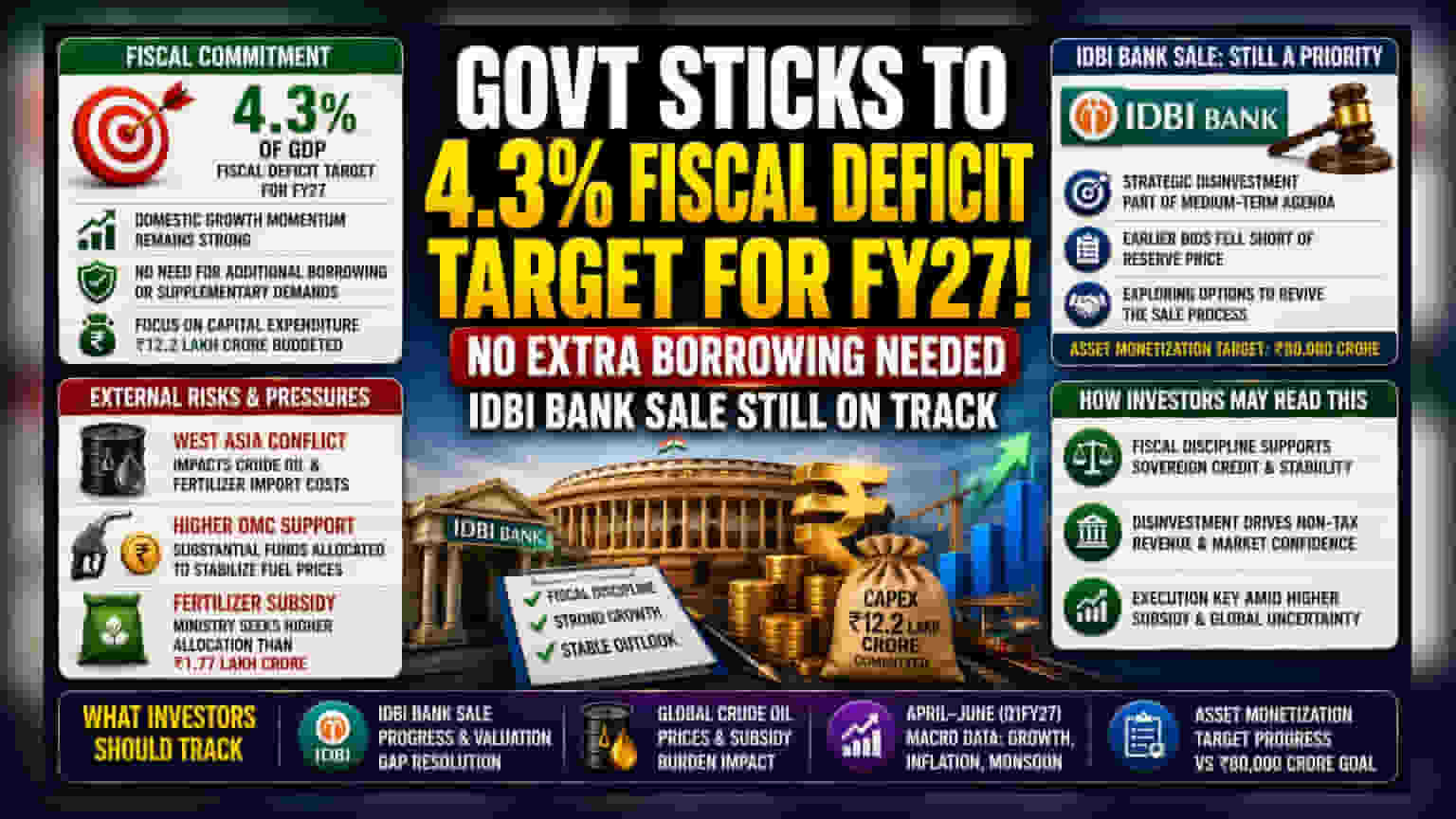


What Happened
The Government of India has reaffirmed its commitment to maintaining the fiscal deficit target of 4.3% of GDP for the current financial year (FY27). Despite emerging global pressures, particularly from the ongoing conflict in West Asia, government officials stated that domestic growth momentum remains strong, and there is currently no requirement for additional borrowing or supplementary expenditure demands. The administration continues to prioritize its strategic disinvestment program, specifically emphasizing that the sale of IDBI Bank is still part of the government's medium-term agenda.
Why This Matters For Investors
For investors, the government’s adherence to fiscal targets is a key marker of economic discipline. A consistent fiscal deficit target helps in maintaining sovereign credit profiles and influences interest rate expectations in the bond market. By signaling that it does not need to increase borrowing to manage current geopolitical challenges, the government aims to reassure markets about its financial stability. Furthermore, the commitment to capital expenditure—which was budgeted at ₹12.2 lakh crore for the year—is viewed as a vital driver for sustaining infrastructure growth and overall economic productivity.
The IDBI Bank Sale Status
The strategic disinvestment of IDBI Bank remains a central component of the government's asset monetization efforts, which have a target of ₹80,000 crore for FY27. While the process has encountered valuation-related hurdles, with earlier financial bids falling short of the reserve price, the government continues to treat the transaction as active. Policymakers are reportedly exploring various procedural options to revive the sale. This process is important to monitor as it represents a significant step in the government's broader objective to reduce its footprint in the banking sector and improve the operational efficiency of state-backed entities.
External Risks and Macro Challenges
The most significant external risk acknowledged by the authorities is the geopolitical situation in West Asia, which directly impacts crude oil and fertilizer import costs. To stabilize fuel prices and support consumers, the government has already allocated substantial funds to Oil Marketing Companies (OMCs). Additionally, the Fertilizer Ministry has requested a higher subsidy allocation than the budgeted ₹1.77 lakh crore to address rising import costs. These subsidies represent a potential pressure point on the fiscal math, which is why market observers are closely watching oil price trends and their impact on government spending.
How Investors May Read This
The government's focus on non-tax revenue through asset monetization and disinvestment is intended to balance the need for infrastructure spending without breaching fiscal limits. While the commitment is clear, the actual execution will depend on how successfully the government navigates these external cost pressures. Investors are likely to focus on whether the government can meet its asset monetization targets and how it manages the fiscal impact of higher subsidy requirements if oil prices remain elevated.
What Investors Should Track
Moving forward, the primary monitorables for investors include the progress of the IDBI Bank stake sale and whether the government can navigate the valuation gap reported in the previous bidding process. Other key factors include the trajectory of global crude oil prices, which directly influence the subsidy burden, and the upcoming macroeconomic data for the April-June quarter, which will provide a clearer picture of growth momentum against the backdrop of potential monsoon and inflationary challenges.