 Whalesbook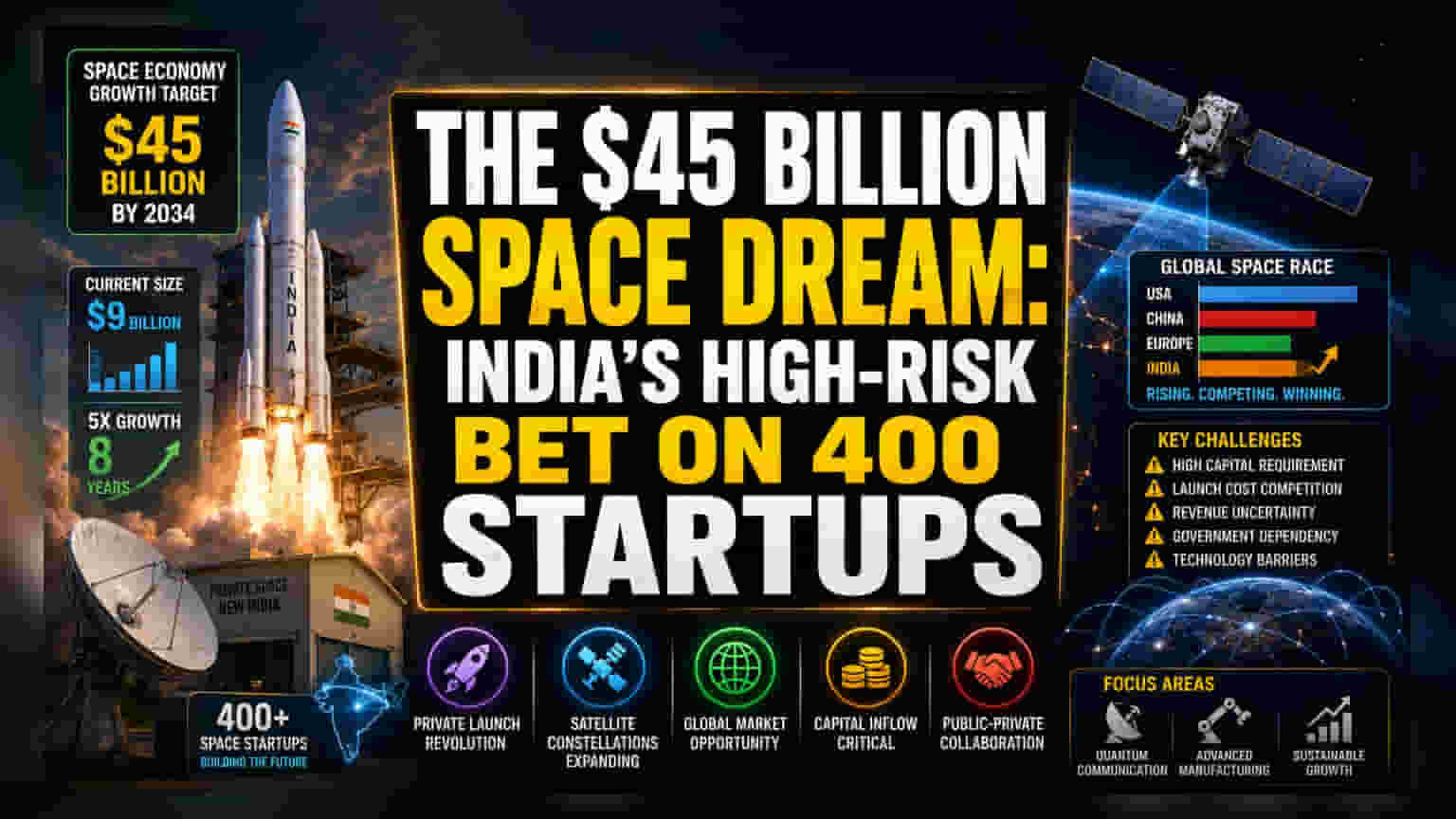


The Capitalization Gap
While the objective of reaching a $45 billion valuation within the next eight years reflects significant policy momentum, market analysts often contrast this goal with the reality of commercial space infrastructure. The current $9 billion figure includes state-led expenditures and downstream services like satellite television and navigation, which provide stable cash flows but differ fundamentally from the high-risk, high-reward nature of space manufacturing and launch services. Achieving the projected fivefold increase requires a massive shift toward upstream dominance, specifically in launch vehicle frequency and satellite constellation management, areas where India currently faces stiff competition from established international heavyweights and low-cost global providers.
Scaling Against Global Peers
The pivot toward private participation—moving from a state-monopoly model under the Indian Space Research Organisation (ISRO) to an open-market ecosystem—mirrors the commercialization trajectories seen in the United States and, more recently, across the European Union. However, institutional hurdles remain regarding intellectual property transfer and the synchronization of global launch standards. Unlike traditional sectors where domestic consumption fuels growth, the space economy relies on global export demand for satellite data and launch capacity. India's ability to capture this market share hinges not just on the number of startups, but on their capacity to achieve launch cost parity with international incumbents. Recent shifts in the regulatory framework, designed to streamline approvals and private land use, are necessary, yet they must be coupled with sustained venture capital interest in long-cycle hardware development to meet the 2034 timeline.
The Forensic Bear Case
Investors viewing this trajectory should approach the $45 billion forecast with caution, particularly regarding the commercial sustainability of the 400 newly formed entities. A significant portion of this ecosystem relies on government-led contracts or collaborative ventures with ISRO rather than independent, market-driven revenue streams. This reliance creates a structural vulnerability; should government budget allocations for space exploration stagnate or shift toward defense-specific projects, the commercial viability of these startups could collapse. Furthermore, the barrier to entry in deep-space technology remains exceptionally high, and history shows that capital-intensive sectors often suffer from 'valuation bubbles' when optimistic growth projections outpace actual technical execution and revenue realization. The lack of a mature secondary market for these private space equities further complicates liquidity for early-stage backers.
Strategic Outlook
Future growth rests on the maturation of private launch providers and the integration of quantum communication technologies. As the sector moves toward a more mature phase, expect consolidation among the 400 identified startups, with larger conglomerates likely absorbing smaller, niche technology players to build competitive vertical stacks. The ultimate indicator of success will not be the total number of entities, but the volume of private commercial contracts secured against international competitors.