 Whalesbook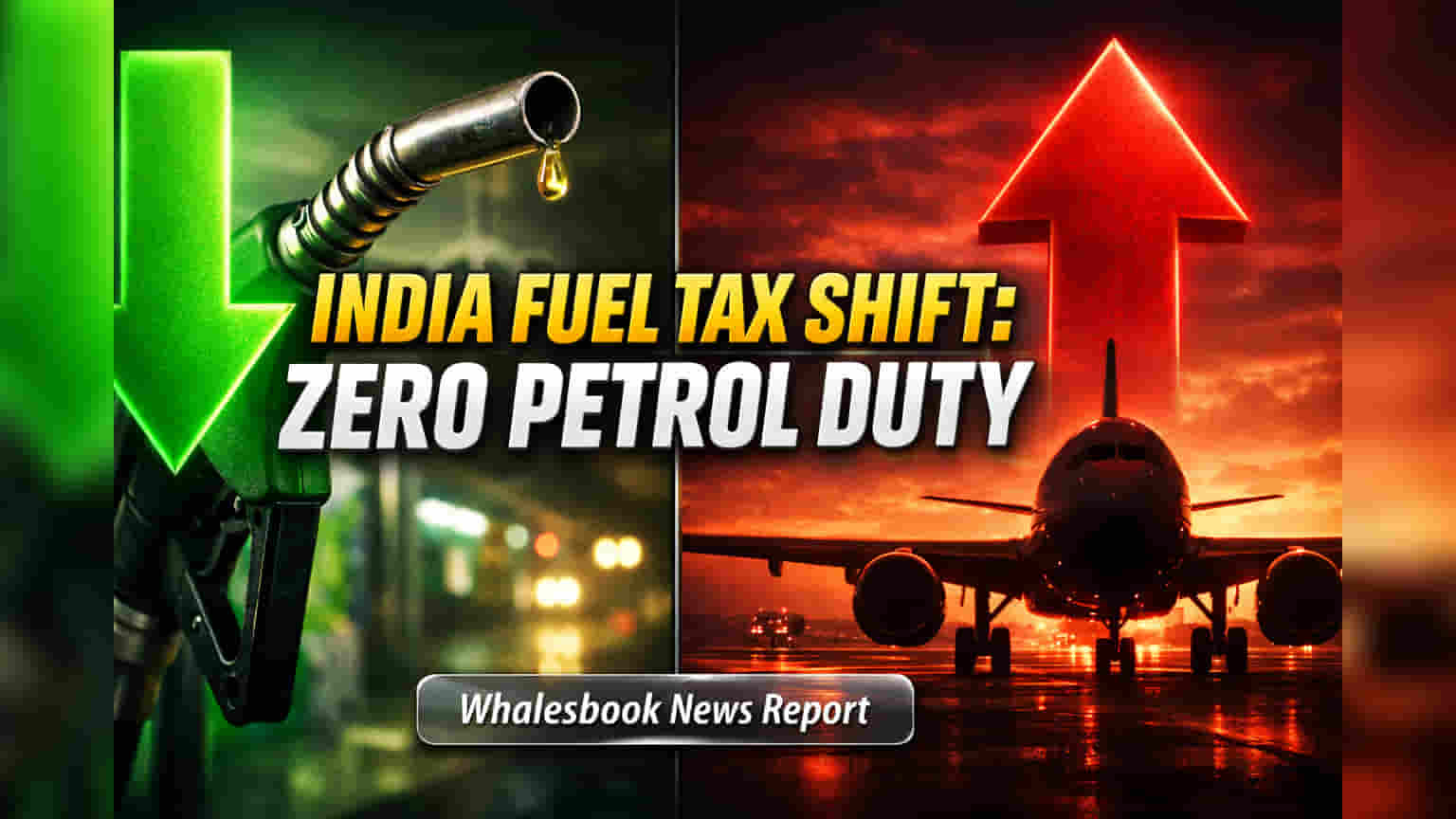
Fuel Tax Cuts Amid Global Oil Volatility
India's government has sharply cut fuel taxes. Excise duty on petrol is now zero (down from Rs 13/litre), and on diesel it's Rs 3/litre (down from Rs 10/litre). This aims to give consumers immediate relief as global oil prices swing wildly. Brent crude has neared $100 per barrel, with forecasts pointing to sustained high energy costs due to ongoing supply problems in the Middle East. The situation is heightened by the US-Israel Iran conflict, which has already sent fossil fuel prices up and raised worries about key shipping routes like the Strait of Hormuz.
New Jet Fuel Tax and Export Rules Tightened
A key change is a new tax structure for Aviation Turbine Fuel (ATF). A special additional excise duty (SAED) of Rs 50 per litre is now in place, but exemptions mean the effective rate is about Rs 29.5 per litre. This adds costs for airlines already struggling with high jet fuel prices due to global tensions. Countries like South Korea are also adjusting fuel taxes to manage prices amid conflict. India has also tightened export exemptions for petrol, diesel, and ATF. Broad relief for exports is gone, except in specific cases. This stricter approach signals a policy shift to balance export benefits with domestic supply needs, especially with high global oil price swings. Exemptions for Nepal, Bhutan, Bangladesh, and Sri Lanka continue, but the overall changes focus on boosting India's refining capacity and energy security.
Impact on Airlines, Oil Companies, and Economy
The petrol and diesel tax cuts should increase demand, which usually benefits Oil Marketing Companies (OMCs) like Indian Oil Corporation, Bharat Petroleum, and Hindustan Petroleum by improving their profits. These companies have seen good marketing margins recently, partly from buying cheaper Russian crude. However, high crude oil prices—the Indian basket averaged $125.7/bbl in March 2026—are straining refiners' profits, even though global refining margins were strong in late 2025. The aviation sector faces more immediate pressure. Jet fuel (ATF) costs, a major expense for airlines (40-45% of operating costs in India, vs. 20-30% globally), are set to increase further. Airlines such as Air India and IndiGo are already adding fuel surcharges, with more expected by April 1st. The new ATF tax adds to this burden, likely raising ticket prices and affecting airline profits. The Federation of Indian Airlines has warned that high ATF taxes and other costs impede the industry's growth.
Risks: Government Revenue and Global Conflicts
While the tax cuts help consumers, they mean a substantial revenue loss for the government, possibly affecting its FY2027 budget deficit targets, even with current buffers. Global conflict in West Asia is a major factor, pushing crude prices higher. This makes budget planning difficult and threatens to significantly raise India's import bill if crude averages $100 per barrel. Constantly high oil prices could also push inflation above the Reserve Bank of India's target, slowing any interest rate cuts and keeping loan costs high. The tighter export rules, though meant for domestic security, come amid major global supply shortages. With key shipping routes like the Strait of Hormuz under pressure, India's position as a refining hub and its ability to compete on exports could suffer. Refiners, already dealing with high crude costs, might see their profits shrink further. Forecasts for the oil and gas sector depend heavily on geopolitical events, although some expect better performance in fuel sales and distribution to support companies that refine and sell fuel.
Looking Ahead
The government's approach seems to be a balancing act: offering domestic relief while navigating extreme global price swings and geopolitical risks. The higher ATF tax and revised export policies suggest a focus on improving energy security and domestic refining capacity. How these domestic policy changes interact with ongoing global oil price shocks will determine their impact on inflation, government finances, and industry profits.