

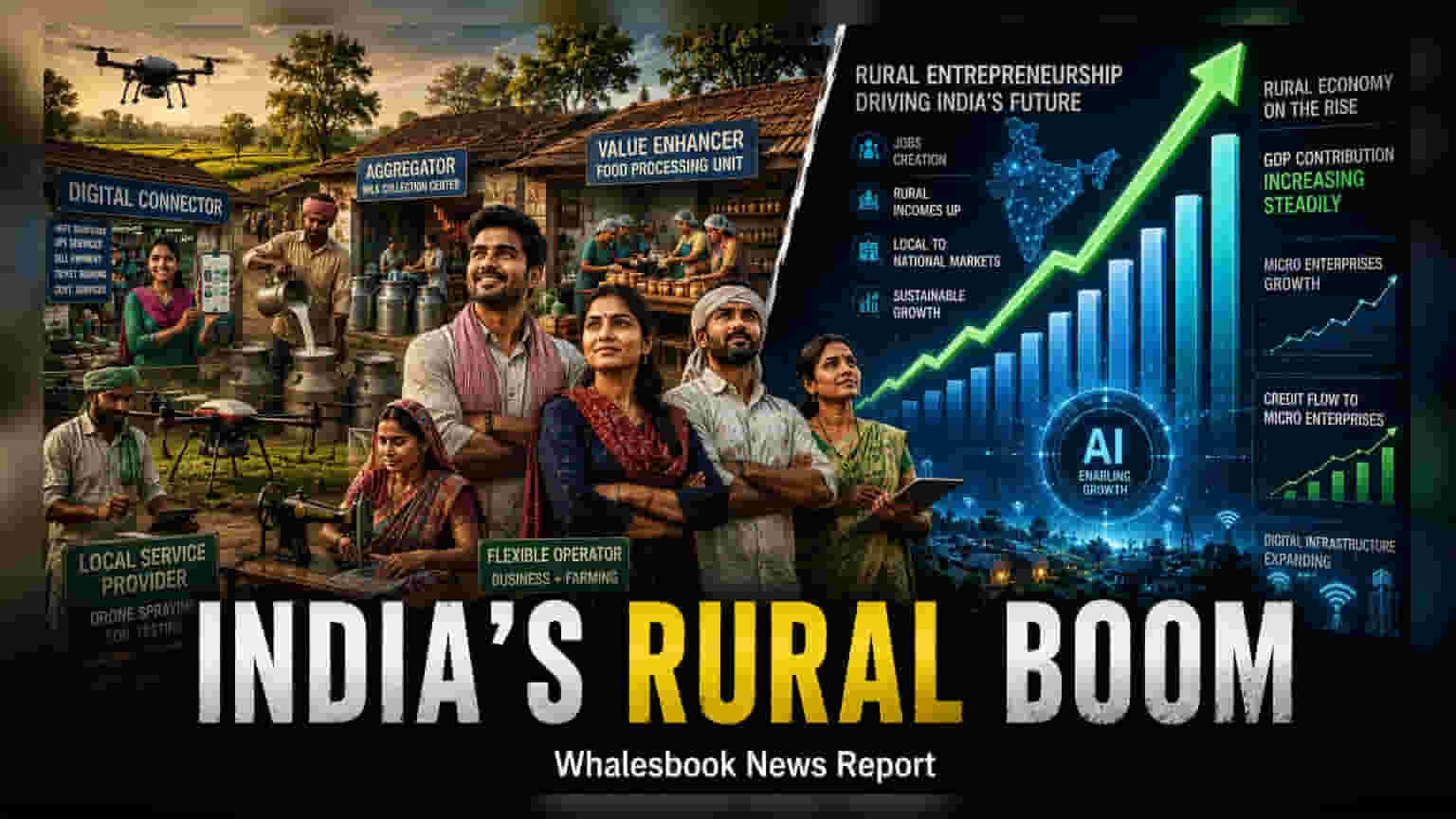
India is prioritizing a strategy for 'mass entrepreneurship' to boost rural economies and absorb its large working-age population. This policy shift aims to formalize small, replicable business models, potentially strengthening supply chains and local consumption. For investors, this represents a structural change in the rural landscape rather than a single corporate event, impacting sectors like banking, consumer goods, and logistics over the long term.
India is pivoting its economic policy to focus on 'mass entrepreneurship'—a strategy aimed at scaling small, replicable business models in rural and semi-urban areas. Unlike the high-profile, tech-heavy startup ecosystem that captures urban attention, this initiative seeks to unlock growth in the grassroots economy to support the nation's large working-age population. The goal is to move beyond traditional manufacturing and urban services, which have struggled to absorb the workforce at the necessary speed.
At the heart of this strategy is the recognition of distinct rural business models that can be standardized. These include 'digital connectors' who bring services to remote areas via smartphones, and 'aggregators' who manage local collection centers for commodities like milk or grains, effectively linking small producers to larger national markets. Other models include 'value enhancers' who process local goods for wider distribution, 'local service providers' who rent out high-utility assets like drones for agriculture, and 'flexible operators' who balance business activities with seasonal agricultural cycles.
For the Indian economy, the success of this push has broad implications. By formalizing these micro-enterprises, the initiative aims to optimize fragmented supply chains and reduce the costs of doing business in rural pockets. This could potentially drive up rural purchasing power and create more predictable demand for consumer goods, financial services, and logistics providers. Organizations like the Global Alliance for Mass Entrepreneurship (GAME) and government programs such as the Start-up Village Entrepreneurship Programme (SVEP) are already working to provide the necessary structure, training, and support.
However, the strategy faces significant hurdles. The primary challenge remains access to formal credit. Small entrepreneurs often struggle with the collateral requirements of traditional banking, making the development of innovative, cashflow-based financing mechanisms a critical monitorable for the success of this policy. Additionally, execution risk is high, as the government must standardize support mechanisms across diverse geographies while navigating external threats like climate change, which disproportionately affects rural livelihoods, and the rapid pace of technological disruption.
Investors should view this as a long-term structural trend rather than an immediate catalyst for any single stock. The focus for tracking will be on how effectively the government integrates fragmented policies across the Ministries of MSME, Rural Development, and Agriculture. Key indicators of progress include the expansion of digital public infrastructure in rural areas, the performance of credit flow into micro-enterprises, and the ability of these small-scale business models to successfully link into larger corporate supply chains.