 Whalesbook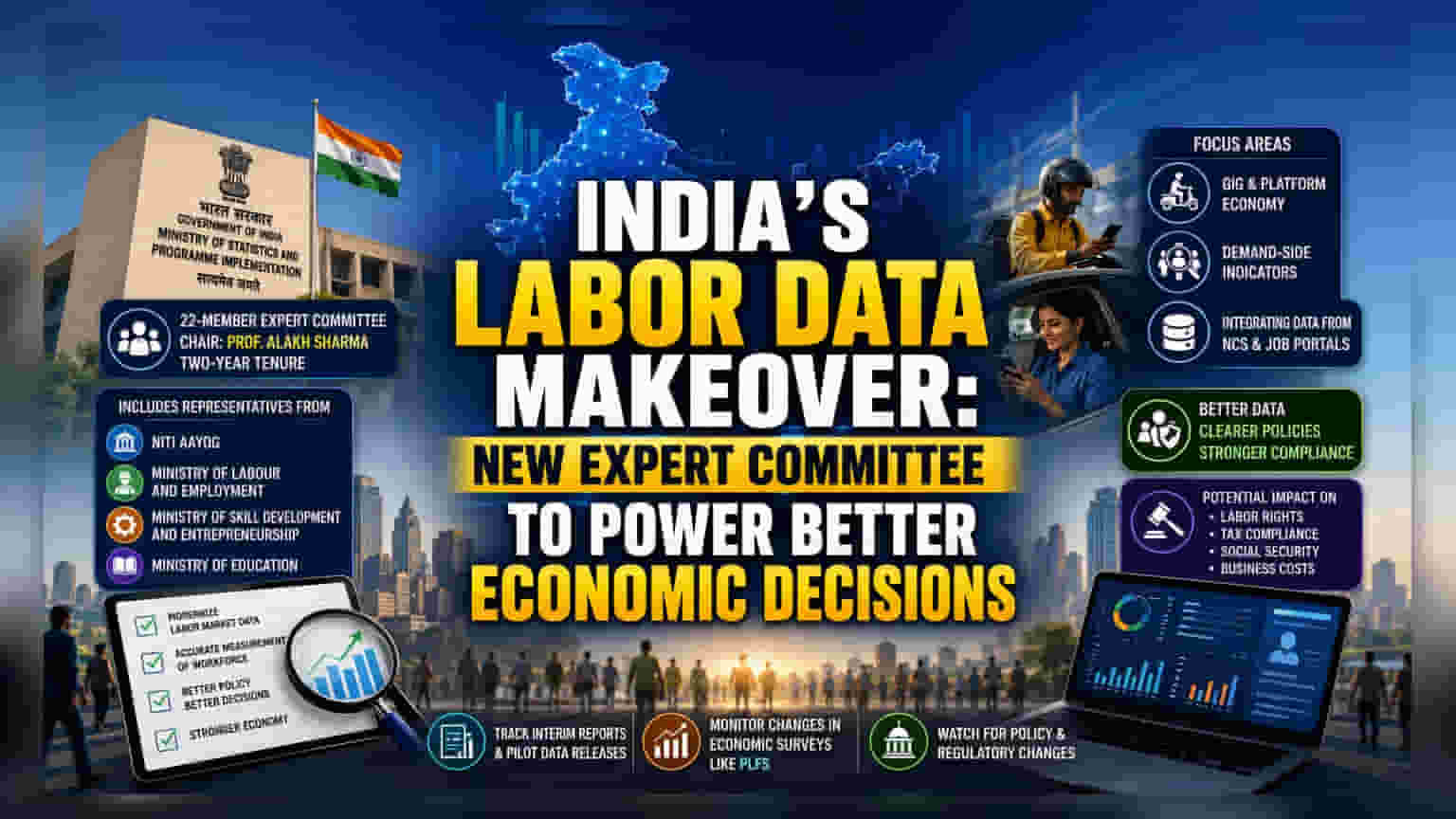


The Ministry of Statistics has formed a 22-member expert committee, led by Professor Alakh Sharma, to overhaul how India tracks labor data. The panel will study informal work, the gig economy, and job vacancy trends. This initiative is crucial for investors as better labor statistics lead to improved economic policy-making, interest rate decisions, and a clearer understanding of the business environment.
What Happened
India’s Ministry of Statistics and Programme Implementation has launched a new 22-member expert committee to modernize the country’s labor market data collection. The committee, inaugurated on June 9, 2026, is chaired by Professor Alakh Sharma, Director of the Institute for Human Development. The panel includes representatives from the NITI Aayog, the Ministry of Labour and Employment, the Ministry of Skill Development and Entrepreneurship, and the Ministry of Education. This group has been given a two-year tenure to conduct a comprehensive review of existing labor statistics and develop a framework that better reflects the evolving nature of work in India.
Why This Matters For Investors
For investors and market participants, economic data is the foundation for understanding growth, inflation, and future policy shifts. India’s labor market is vast, complex, and largely informal. Current data collection methods have sometimes struggled to capture the full picture of this workforce, which includes millions of workers in the informal sector, seasonal migrants, and the rapidly growing gig economy. By modernizing these metrics, the government aims to get a more accurate pulse of the economy. Better data leads to more informed policy decisions by the Reserve Bank of India (RBI) and the government regarding interest rates, fiscal spending, and social welfare, all of which directly impact market sentiment and business costs.
The Shift Toward Gig and Demand-Side Data
One of the most important aspects of this committee’s mandate is its focus on the "gig and platform economy"—workers associated with digital platforms like delivery services and ride-hailing apps. As this sector grows, traditional definitions of "employment" are becoming outdated. The panel is also tasked with developing "demand-side" indicators. While we often hear about the supply of labor (how many people are looking for work), tracking demand (how many jobs are actually being created, job vacancies, and employee turnover) provides a real-time view of economic health. If the government can successfully integrate administrative data from sources like the National Career Service (NCS) and job portals, it could provide a much sharper lens on economic activity than what is currently available.
Impact on Business and Regulatory Environment
Accurate data influences how regulations are shaped. As the government gains a better understanding of how the gig economy operates, policies regarding labor rights, tax compliance, and social security may become clearer. For businesses, especially those in the tech, retail, and service sectors that rely heavily on gig labor, having a structured regulatory environment can reduce uncertainty. Conversely, stricter data monitoring or new reporting requirements, if implemented based on these findings, could influence the operating costs for certain business models. Investors may watch for any changes in the way the government classifies and regulates different categories of workers.
What Investors Should Track
As the committee begins its two-year term, investors should monitor updates for a few key developments. First, look for any interim reports or pilot data releases that might offer early insights into how the government intends to track the informal sector. Second, watch for any shifts in how major economic surveys, like the Periodic Labour Force Survey (PLFS), are structured or interpreted, as changes here could alter the official narrative on unemployment and job growth. Finally, keep an eye on any policy discussions that follow the committee's recommendations, as these could signal upcoming changes in labor law, skill development initiatives, or business compliance requirements.