

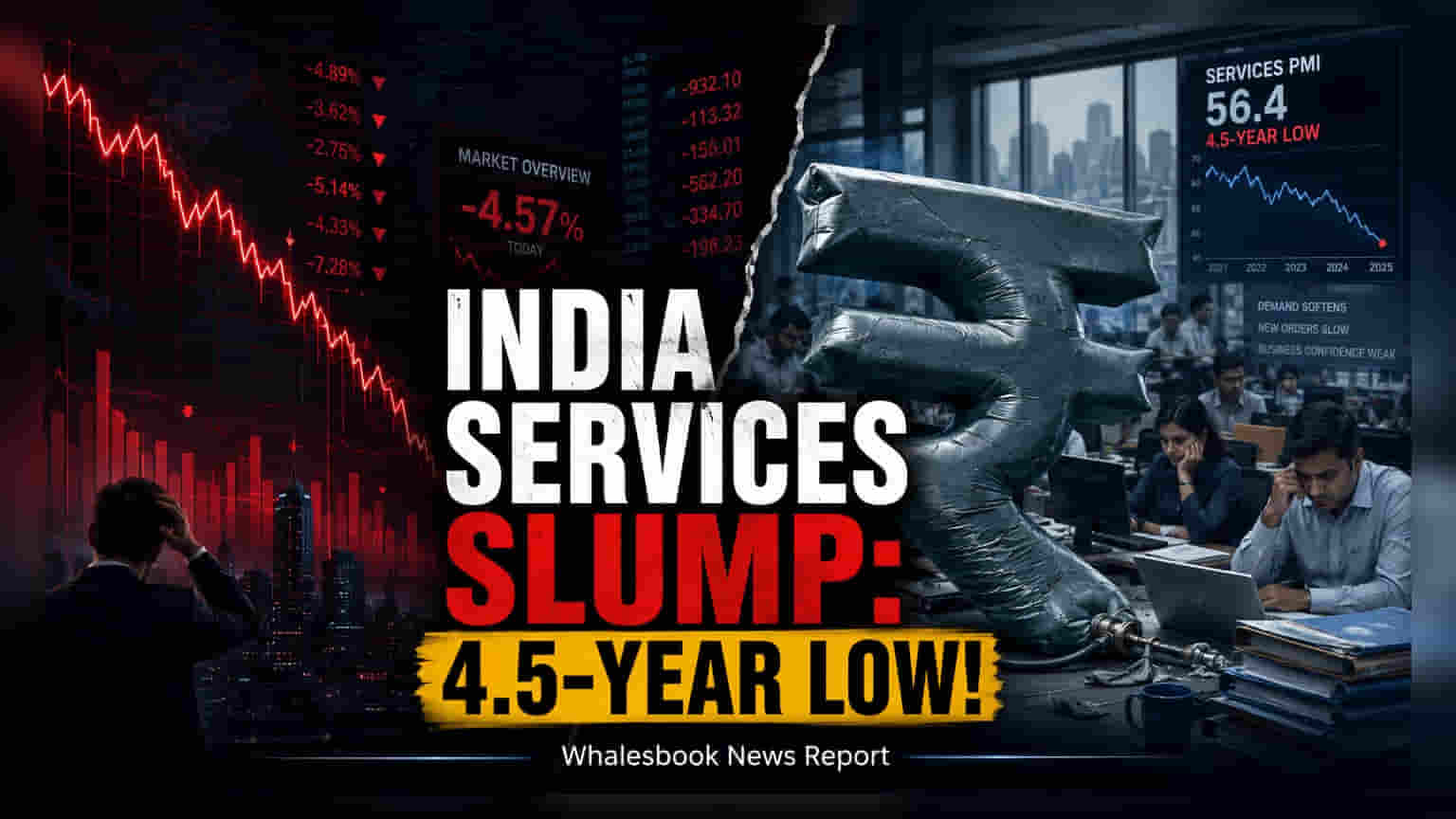
India’s services sector recorded its slowest growth in 53 months during July, with the HSBC India Services PMI falling to 53.3. While the sector remains in expansion territory, cooling domestic demand and weaker business confidence have emerged as challenges. Companies have managed to protect profit margins by raising selling prices, but investors may track whether these higher costs eventually pressure future demand.
India's services sector, a major pillar of the economy, saw its growth slow significantly in July. The HSBC India Services Purchasing Managers' Index (PMI)—a key indicator used to track business activity—dropped to 53.3, down from 57.4 in June. This represents the weakest growth rate for the sector in over four years, or 53 months.
While a PMI reading above 50 still indicates that the sector is growing, the sharp decline in the pace of expansion reflects a cooling environment. The slowdown is primarily linked to softer domestic demand, intense competition, and a rise in postponed orders. Businesses reported that the momentum seen in previous months has eased, particularly in the domestic market.
Despite the broader deceleration, the Finance & Insurance segment stood out as a clear bright spot, continuing to report faster growth in output and new business compared to other areas. Additionally, the sector found support in overseas markets. Export demand remained resilient, with new business coming from key regions including the United Arab Emirates, the United Kingdom, and the United States. This export growth helped buffer the impact of the domestic slowdown.
On the employment front, companies showed a modest increase in hiring. Approximately 6% of firms surveyed increased their workforce, suggesting that despite the drop in business activity, service providers are not yet aggressively cutting staff. However, business confidence among managers has slipped to a seven-month low. This decline in optimism for the coming year is something investors often monitor, as it can signal a more cautious approach toward future expansion and spending.
One interesting trend for investors to observe is the relationship between costs and pricing. While input costs—the money companies spend on fuel, labor, and materials—continued to rise, the pace of these cost increases has eased for the fourth consecutive month. At the same time, companies have raised their selling prices at the fastest rate since April. This strategy of passing higher costs to the consumer has helped businesses protect their profit margins for now. The key question for the coming months will be whether this ability to increase prices can hold up if demand continues to remain soft.
The broader HSBC India Composite PMI, which combines both manufacturing and services, also dipped to 54.3 in July from 57.1 in June. Moving forward, the impact of these pricing strategies on consumer demand and the sustainability of export growth will be the main factors determining whether this slowdown is a temporary phase or a longer-term trend for the Indian services industry.