

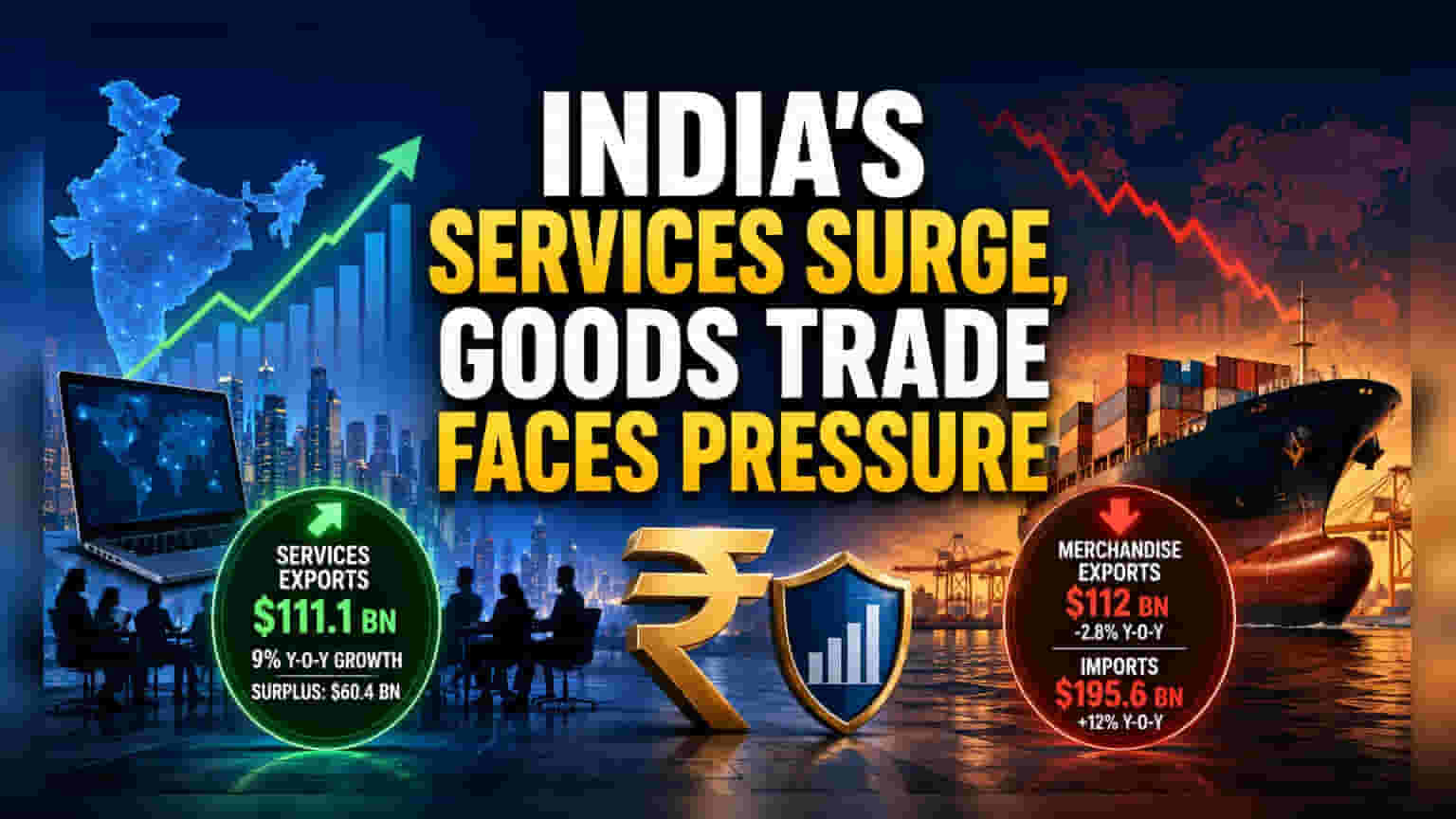
India’s services exports reached $111.1 billion in Q4 FY26, a 9% rise, while merchandise exports slipped 2.8%. This shift highlights the economy's growing reliance on the services sector to balance its trade deficit as goods imports continue to rise.
What Happened
India’s external trade profile saw a notable shift in the January-March quarter of FY26. According to the latest Trade Watch report by NITI Aayog, the services sector continued its strong run, with exports touching $111.1 billion. This represents a 9% year-on-year growth, effectively creating a services trade surplus of $60.4 billion.
In contrast, the merchandise or goods trade sector faced headwinds. Merchandise exports for the same period declined by 2.8% to $112 billion. Meanwhile, the import bill for goods surged by nearly 12%, reaching $195.6 billion. The data underscores a narrowing gap between how much India earns from selling services compared to selling physical goods.
The Shifting Trade Balance
For years, India’s trade narrative was defined by the deficit in physical goods—like fuel, electronics, and machinery—offset by the strength of its services exports, such as IT and consulting. The latest data shows this trend accelerating.
With annual services exports reaching $421 billion against $442 billion for merchandise in FY26, the services sector is rapidly closing in on the scale of goods exports. The ability of the services sector to generate a $60.4 billion surplus in the fourth quarter alone was vital in absorbing some of the shocks from the higher merchandise import costs.
Impact on the Economy and Currency
For investors, this data provides a look into the macroeconomic stability of the country. A strong services surplus helps stabilize the Current Account Deficit, which is the difference between what a country earns from abroad and what it spends on imports. When the services surplus grows, it provides a cushion for the Rupee against volatility.
However, the divergence between services and goods performance is meaningful. A rising services sector generally benefits sectors like IT, financial services, and professional consulting. Conversely, the decline in merchandise exports suggests that certain manufacturing or commodity-linked sectors may be facing softer global demand or domestic production bottlenecks.
The Risk in Merchandise Trade
While the services sector provides a buffer, the merchandise import data presents a risk. A 12% rise in merchandise imports against a 2.8% drop in exports indicates that the trade deficit in goods remains a pressure point.
Factors like changing global commodity prices, such as the drop in mineral fuel imports mentioned in the report, can significantly alter this balance. If imports continue to outpace exports in the goods segment, it could weigh on the balance of payments unless the services sector growth remains robust. Investors should also note the shift in trade partners, such as the increased import flow from Switzerland, which the report links to gold and engineering products.
What Investors Should Track
Moving forward, market participants should watch three key monitorables. First, the sustainability of services export growth, as this is currently the primary stabilizer for India's trade account. Second, the trend in merchandise import bills; if imports of high-value items like gold or fuels remain elevated, it may create persistent pressure on the trade deficit. Third, global demand trends for India’s top export categories, including vehicles and iron and steel, which will determine if the merchandise export sector can recover its momentum.