

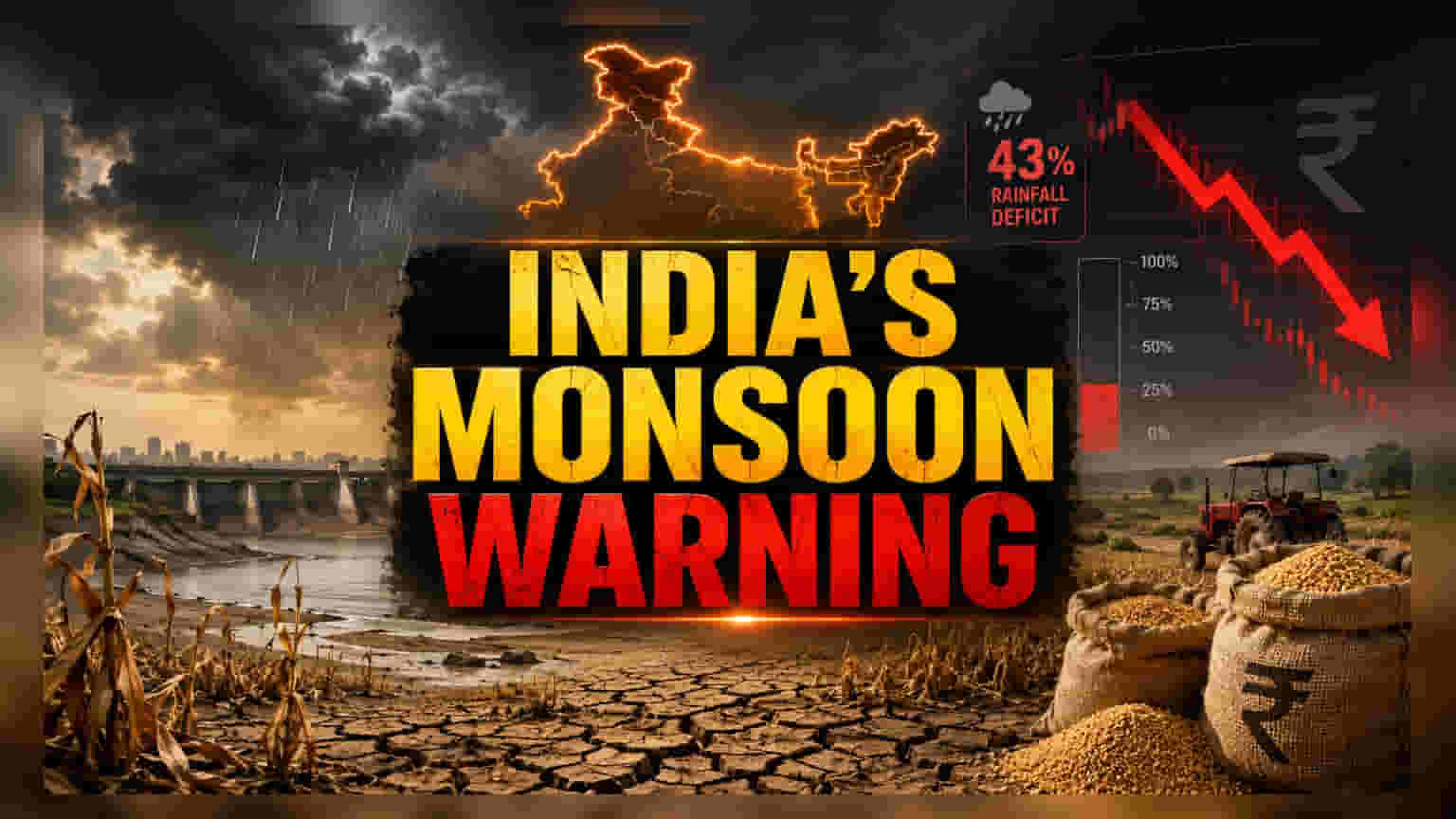
India’s monsoon rainfall is currently 43% below the seasonal average, raising concerns about agricultural output and potential drought conditions in 2026. Investors are evaluating the impact on rural consumption, food inflation, and profit margins for sectors like FMCG, sugar, and agri-inputs. The coming weeks are critical for planting activity and supply chain stability.
What Happened
India is facing a significant rainfall deficiency as the monsoon season progresses, with current data showing precipitation levels at 43% below the long-term average. The monsoon, which is essential for the nation's agricultural cycle and reservoir replenishment, experienced a delayed start in Kerala this year. Government authorities have highlighted the need for immediate water management and infrastructure maintenance, while regional bodies in areas like Mumbai have begun implementing water usage restrictions. The forecast of a strong El Nino weather pattern for the latter half of 2026 has added to concerns about potential drought conditions, which could impact the broader $4 trillion economy.
The Rural Consumption Link
For investors, the monsoon is a proxy for rural economic health. A significant portion of India's population depends on agriculture, and their income levels are directly linked to crop yields. When rainfall is inadequate, rural spending power tends to decline. Companies in the Fast-Moving Consumer Goods (FMCG) sector often face a challenge in such scenarios, as a weak monsoon can translate into a slowdown in demand for discretionary and non-discretionary products in rural and semi-urban markets. Investors typically monitor sales volume data from FMCG majors to gauge if rural consumption is holding up or if buyers are shifting to lower-priced variants.
Risks For Agri-Inputs And Sugar
The monsoon deficit creates distinct pressures for specific business segments. Companies in the agri-input space, including fertilizer and seed manufacturers, depend heavily on timely rainfall to drive demand for their products during the planting season. A prolonged dry spell can lead to delayed planting, which may force these companies to manage inventory levels more aggressively or face pressure on sales volume for the season. Similarly, the sugar industry is closely linked to water availability. A weak monsoon can impact sugarcane yields and sugar recovery rates. Investors in this sector often watch for crop output estimates and potential restrictions on exports or imports that regulators may impose to keep domestic supply stable and control food inflation.
The Inflationary Watch
Beyond individual company performance, a weak monsoon is a macro-level concern for the Indian economy. Agriculture plays a substantial role in determining food price inflation. If rainfall remains consistently below average, there is a risk of a decline in the output of vital crops such as rice, pulses, and oilseeds. This supply-side pressure could drive food inflation higher. Such an outcome typically complicates the environment for policymakers, as the central bank may need to navigate the balance between supporting growth and managing elevated price levels. Persistent inflation often forces companies to pass on higher raw material costs to consumers, which can lead to profit margin pressure if demand remains weak.
What Investors Should Track
In the coming weeks, the most important indicator for the market will be the progress of rainfall across major agricultural belts. Beyond weather reports, investors may look for insights in upcoming quarterly management commentaries. Key monitorables include any updates on inventory levels in rural distribution networks, management views on demand growth, and government statements regarding crop support or export policies. These factors will determine whether the potential impact of the weak monsoon is temporary or whether it will lead to a more sustained period of operational pressure for companies dependent on the rural economy.