

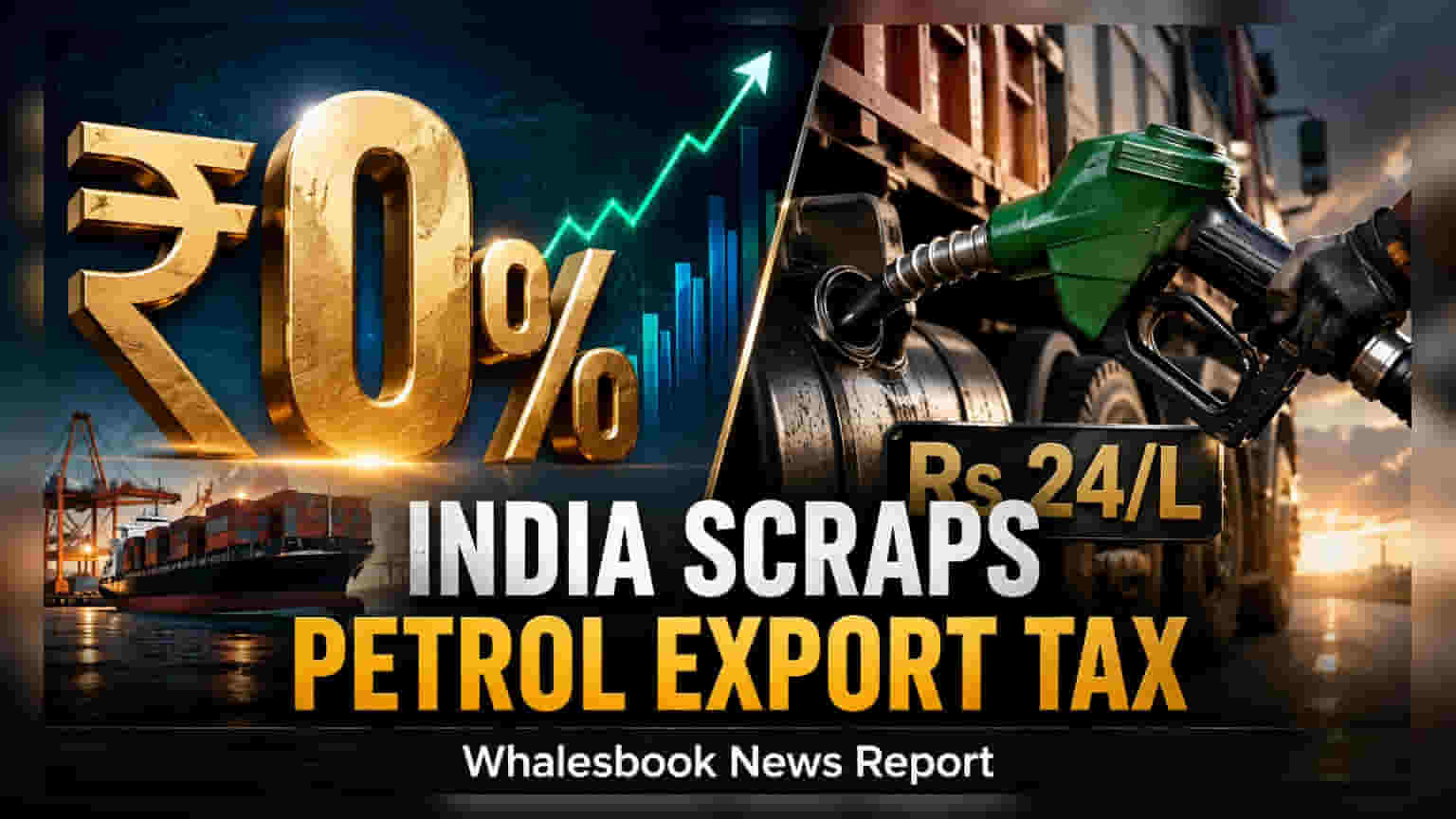
India has removed the export tax on petrol effective August 15, while also lowering levies on diesel and aviation turbine fuel. This move, part of the government’s bi-weekly tax review, aims to balance domestic fuel availability with global market conditions. For investors in oil refinery companies, the reduction in export duties is a positive development, though margins remain sensitive to future tax revisions and international oil price volatility.
The Indian government has eliminated the export levy on petrol, effective from August 15, 2026. In the same bi-weekly review, officials also reduced the special additional excise duty (SAED) on diesel to Rs 24 per litre from the previous Rs 25.5 per litre. Similarly, the export duty on aviation turbine fuel (ATF) has been lowered to Rs 19.5 per litre from Rs 22 per litre. These changes are part of the government’s ongoing strategy to adjust export taxes based on international fuel benchmarks and domestic supply requirements.
Impact on Oil Refiners
For major oil refiners in India, the removal of the export tax on petrol and the reduction in diesel and ATF duties provide immediate relief. Export taxes were originally introduced in March 2026 to ensure that domestic fuel supplies remained sufficient during periods of high global volatility. When the government imposes these levies, it effectively reduces the profit margins that refiners can earn on international sales. By lowering or removing these taxes, the government allows companies to capture better realizations on their export volumes.
However, investors should view this as a dynamic situation rather than a permanent policy change. The government reviews these export levies every fortnight, meaning they can be reinstated or adjusted based on crude oil price movements and the domestic supply situation. This constant monitoring creates a degree of unpredictability for refinery operations, as profitability is directly linked to these government-determined tax rates.
Understanding the Regulatory Environment
This policy mechanism is a tool used by the government to manage the energy sector without imposing full price controls on the entire industry. While export duties are reduced or removed to support refiner margins when global market conditions allow, they remain a potential risk factor. If global oil prices spike or domestic shortages occur, the government could increase these levies again to discourage exports and prioritize local fuel security.
Investors monitoring the sector should look beyond these periodic tax adjustments. The underlying health of oil marketing and refining companies still depends heavily on global refining margins, raw material costs, and the demand for energy products. While this latest update is a favorable signal for short-term export competitiveness, the long-term profitability of refiners will continue to fluctuate with global oil prices and the recurring fortnightly tax review process.