

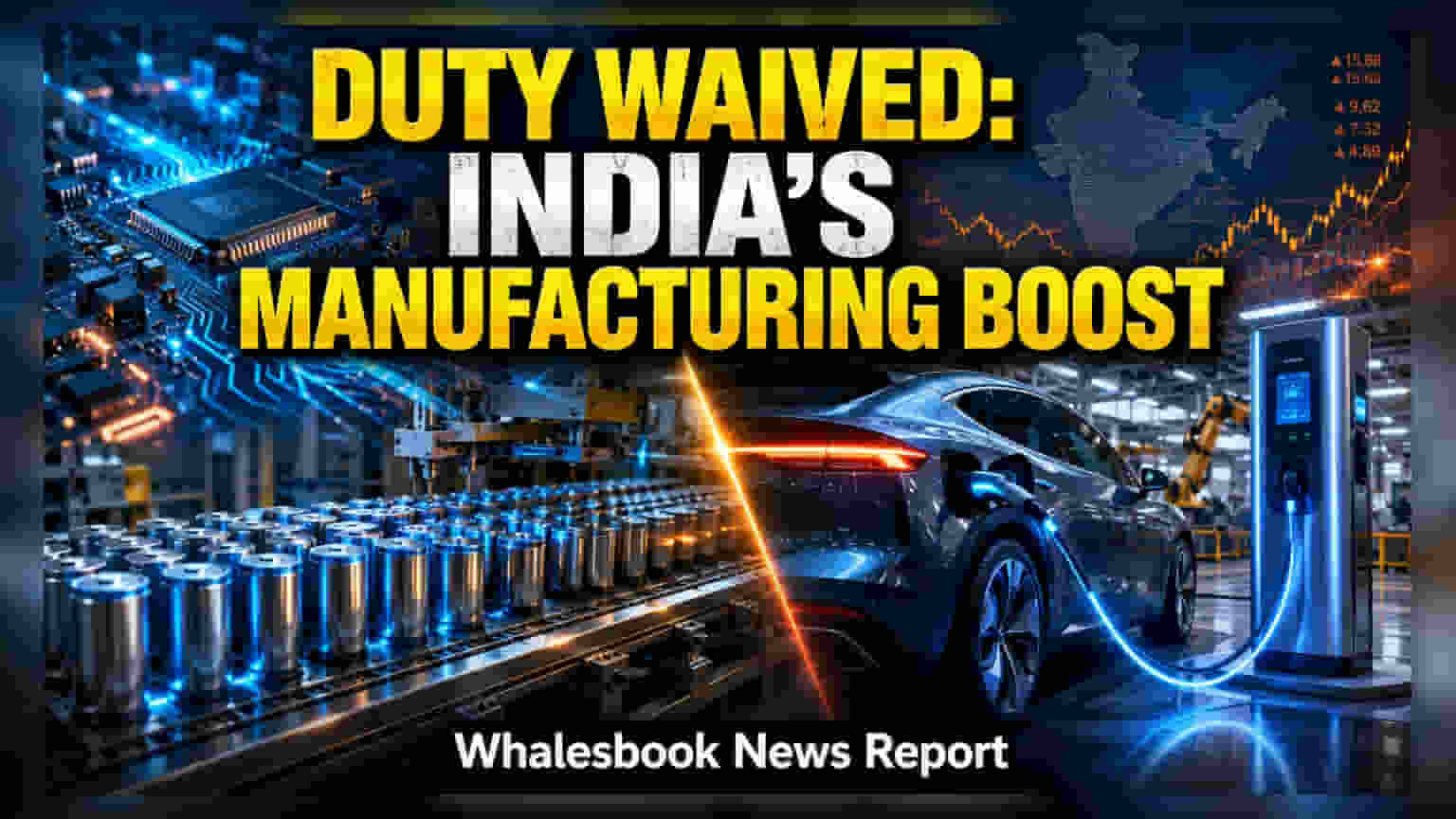
The Indian government has removed basic customs duty on key components for lithium-ion cells, display assemblies, and inductor coils. This policy, effective until March 2029, is designed to lower manufacturing costs for local electronics and electric vehicle makers. Investors should watch for potential margin improvements in companies dependent on imported electronic components.
The Indian government has introduced a major policy shift to support domestic manufacturing by waiving basic customs duties on essential components for electronics and electric vehicles. This tax relief covers critical inputs such as display assemblies, lithium-ion cells, and inductor coil modules. By removing these duties until March 2029, the government aims to lower the high cost of imports that currently impacts manufacturers in India.
Impact on Electronics and EV Supply Chains
For companies in the consumer electronics and electric vehicle (EV) sectors, the cost of raw materials and specialized parts often determines their profit margins. Many Indian manufacturers rely heavily on imports for high-value components like lithium-ion cells and display panels. By reducing the duty burden, these firms may see a reduction in input costs, which could lead to better operating margins over time. This move is a strategic step to help local companies compete more effectively against global players who often benefit from established supply chains in other countries.
Scaling Local Value Addition
This initiative builds on existing government efforts, such as the Production-Linked Incentive (PLI) schemes, which provide financial rewards to companies that increase their local production. While previous efforts to boost battery manufacturing faced hurdles regarding implementation and scale, the current duty waiver is a direct attempt to fix cost-related barriers. The goal is to encourage companies to move beyond simple assembly and invest in deeper localization of high-value electronic components within India.
Market and Operational Considerations
While the duty waiver is a positive signal for manufacturing cost structures, the actual benefit for companies will depend on their ability to integrate these components into their production lines effectively. Investors should monitor how companies adjust their pricing strategies or pass on the cost savings to consumers. Another factor to track is whether this reduction leads to increased capacity utilization, as firms may expand their output to take advantage of the more favorable cost environment.
However, it is important to note that global commodity price fluctuations, particularly for battery-grade lithium and rare earth materials, will continue to play a role in overall cost management. Furthermore, the success of this policy depends on how quickly local component manufacturing ecosystems can mature to supply these items at scale. The next key updates to watch will be quarterly financial reports, where companies may share details on how these duty changes are impacting their margins and production plans for the coming fiscal year.