
Policy Shift and Goals
This performance underscores a significant shift in SEZ policy, moving beyond a purely export-centric model. The intent is to enable Special Economic Zones (SEZs) to tap into India's growing domestic market, offering a new way to use idle capacity amid global trade uncertainty. Yet, the framework itself presents complex conditions for SEZ operators to navigate.
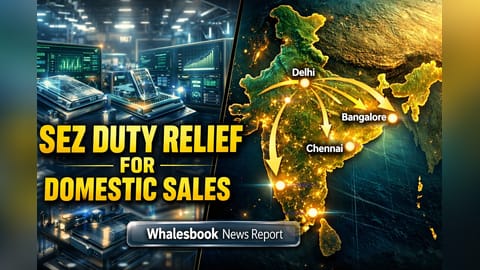
Details of the Domestic Sales Policy
The government's notification, effective for one year from April 1, 2026, allows eligible SEZ manufacturing units to sell goods in the Domestic Tariff Area (DTA) at lower customs duties between 5% and 12.5%. This is a substantial reduction from the full import duties typically levied on SEZ goods entering the domestic market. The initiative, a direct response to demands for greater operational flexibility and for protection against global trade disruptions and higher tariffs, aims to improve capacity utilization, reduce export costs, and boost domestic production and create jobs. By providing a pathway to service domestic demand, the government seeks to enhance the overall strength of the SEZ system and boost investor confidence. However, the amount of such sales is strictly capped at 30% of a unit's highest annual export value (FOB) from the past three years, a limitation designed to ensure exports remain the primary focus.
Industry Context
India's Special Economic Zones have been strong contributors to exports, with overseas sales totaling over ₹11.70 lakh crore in 2025-26 (up to December 2025), marking a 32.02% increase from the previous year. With 368 notified SEZs as of February 2026, these zones represent a significant industrial base. Typically, imports into India face a wide array of duties, including Basic Customs Duty (BCD) which can range from 0% to 100%, along with other levies such as IGST, Social Welfare Surcharge, and potentially Anti-Dumping or Safeguard duties. The concessional rate of 5-12.5% offered to SEZs for domestic sales represents a significant incentive compared to these normal rates. This policy marks a departure from the norm where domestic sales from SEZs were subject to full customs duties, meeting a long-standing industry request. Experts and industry bodies view this as a positive step, particularly for sectors like electronics, automotive, textiles, and leather, which face higher import duties domestically and are currently facing global trade challenges. The move fits broader government goals to boost domestic manufacturing and reduce import dependence, possibly replacing goods previously imported from countries like Vietnam which have duty-free access through FTAs.
Major Limitations and Hurdles
Despite the apparent relief, the policy's effectiveness is heavily limited by strict conditions. The prohibition on availing any benefit of duty drawback or other export incentives under the Foreign Trade Policy for inputs used in the manufacture of goods cleared for domestic sale is a major obstacle. Many SEZ units, particularly those operating on thin margins, heavily rely on duty drawback schemes to offset import duties on raw materials, making their export products competitive. Giving up these benefits to sell domestically, even at a lower duty, could make the entire plan unprofitable for many units. Furthermore, the one-time nature of this policy and the 30% of highest FOB export value cap on domestic sales are restrictive. This suggests the policy may not offer broad market access but only a limited way to clear excess inventory or specific products meeting strict criteria. Units must have started production by March 31, 2025, and show at least 20% value addition, excluding newer or less developed units. Free Trade and Warehousing Zones (FTWZ) and goods removed 'as-is' are excluded, further narrowing the policy's reach. Industry sectors had previously opposed similar proposals, fearing they would disadvantage them against SEZs that enjoyed tax concessions. The lack of a permanent 'duty-foregone' system, which some industry groups want, means businesses cannot plan domestic sales long-term.
Looking Ahead: Guidelines and Reforms
The success of this policy depends on detailed guidelines the government is expected to release within the next few months. Industry stakeholders are awaiting clarity on specific duty rates for sectors, how the FOB value limit will be calculated, and other details about 'export benefits not availed.' While the move is a step towards greater flexibility, its one-time nature and restrictive conditions may prompt many SEZ units to push for more permanent and wider reforms, like a 'duty-foregone' system based on raw material costs instead of final product value, to fully tap into the domestic market. The long-term impact will depend on whether this limited measure can be expanded into a more structural policy that balances SEZ and domestic industry interests while boosting India's overall export competitiveness.