

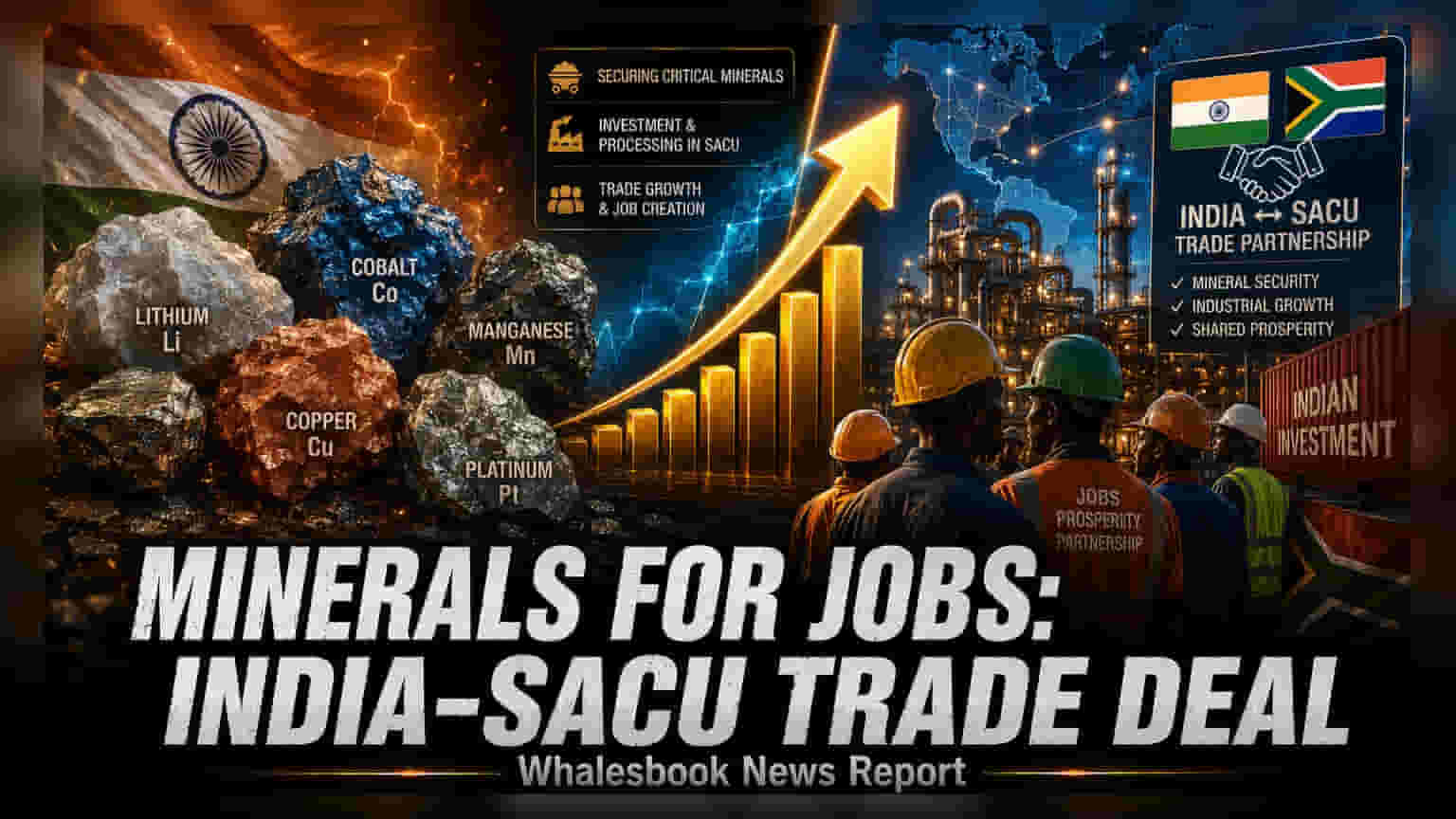
India and the Southern African Customs Union have signed a deal to start negotiations for a Preferential Trade Agreement. The move aims to secure critical mineral supplies for India and protect automotive exports amid potential tariff hikes. The success of these talks, which failed in the past, will be a key monitorable for investors interested in the auto and manufacturing sectors.
India has officially set the stage for a new Preferential Trade Agreement (PTA) with the Southern African Customs Union (SACU). On August 12, 2026, the two sides signed the Terms of Reference to begin formal negotiations. This development is significant because the SACU bloc, which includes South Africa, Botswana, Namibia, Lesotho, and Eswatini, is home to vast natural resources that India is eager to secure for its growing manufacturing and clean energy ambitions.
For Indian investors and businesses, the primary focus is two-fold: securing reliable access to critical minerals and protecting existing export markets. India is seeking a steady supply of resources such as lithium, cobalt, manganese, copper, and platinum, which are essential for industries ranging from electronics to electric vehicles. In return, the SACU nations are looking for investment in local mineral processing. By setting up processing units within the SACU region, Indian firms could potentially gain a more stable supply chain, reducing reliance on other global sources.
Automotive exporters are watching these negotiations closely for a different reason. South Africa, which accounts for the vast majority of the bloc's economic activity, has been considering an increase in import duties on foreign vehicles, with potential hikes moving from 25% to 50%. India is a major exporter of automobiles and auto components to the region, with these exports totaling $1.7 billion in the fiscal year 2025-26. A successful trade pact could help shield Indian automotive companies from these higher tariff barriers, ensuring their products remain competitive in the African market.
However, investors should remain cautious as negotiations of this scale often face significant hurdles. A primary risk factor is the historical record; previous attempts to reach a similar trade agreement between India and SACU between 2002 and 2010 ultimately failed to produce a deal. Furthermore, while India seeks lower tariffs for its goods, it may face pressure to open its own sensitive domestic markets to competition, which could trigger concerns for certain local industries.
The overall trade balance also adds context to these talks. In fiscal year 2025-26, India’s trade with the SACU bloc saw $7.5 billion in exports—led by petroleum, autos, and pharmaceuticals—and $9.2 billion in imports, dominated by gold, coal, and minerals. Whether the final agreement can balance India's need for industrial inputs with SACU’s desire for local job creation and manufacturing growth will be the most important monitorable for stakeholders in the coming months.