 Whalesbook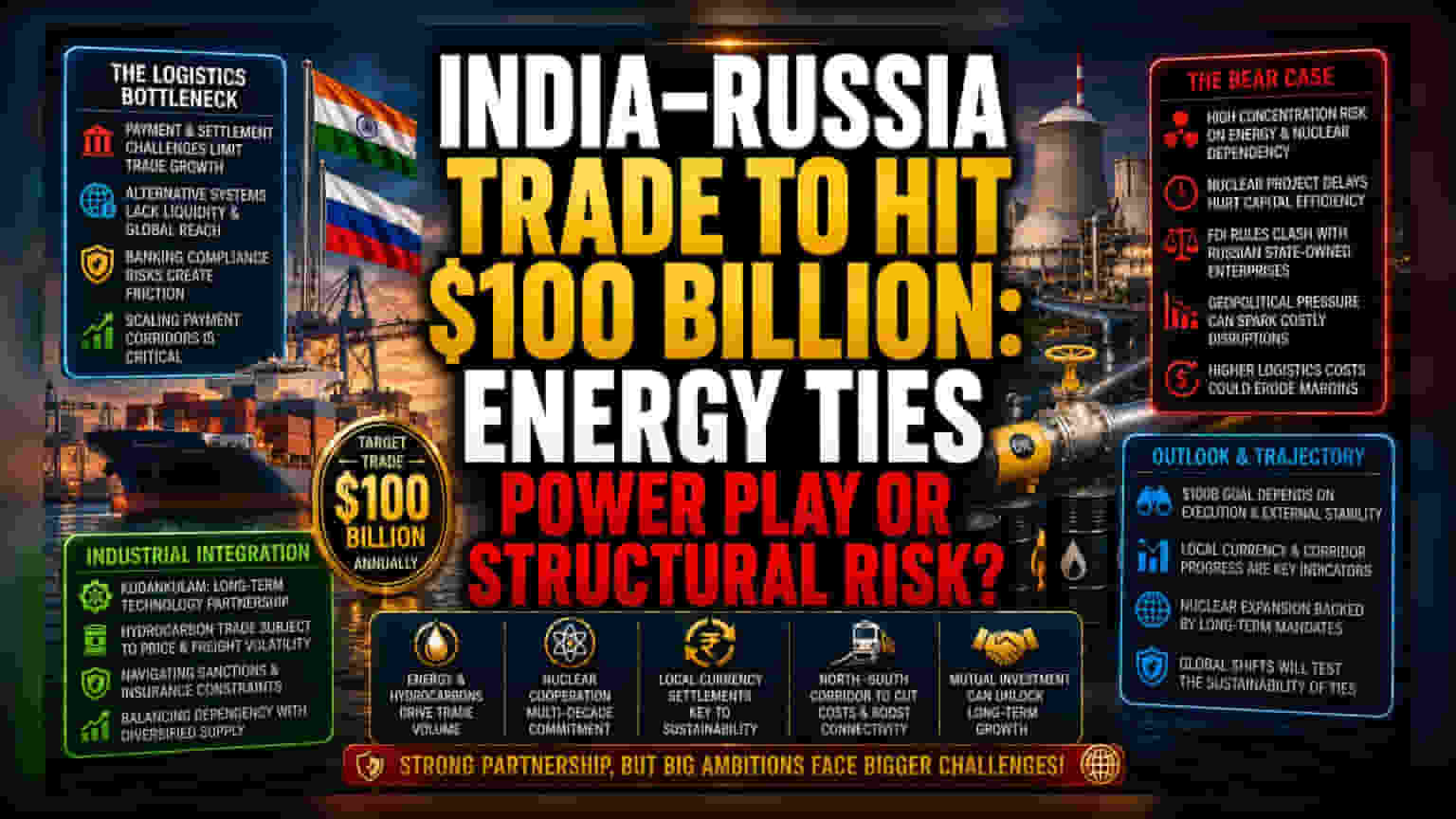


The Logistics and Settlement Bottleneck
The ambitious target of $100 billion in annual trade between New Delhi and Moscow rests upon a foundation of energy cooperation, yet the structural realities of global finance create a significant friction point. While high-level forums emphasize expanded volumes in hydrocarbons and nuclear infrastructure, the practicalities of settling these transactions remain entangled in complex cross-border payment mechanisms. The move away from traditional reserve currencies has necessitated reliance on alternative settlement platforms, which lack the liquidity and global acceptance required for a surge of this magnitude. Analysts note that unless these payment corridors see substantial scaling, physical trade growth will likely face a ceiling dictated by banking compliance risks rather than actual demand.
Industrial Integration and Market Realities
The reliance on the Kudankulam Nuclear Power Plant as a symbol of this partnership masks broader supply chain challenges. Integrating Russian nuclear technology into the Indian grid is a multi-decade commitment that requires stable diplomatic and technological synchronization. Unlike smaller-scale energy projects, these reactors represent a form of long-term economic lock-in that must be balanced against India's broader requirements for diverse technology suppliers. From a competitive standpoint, the hydrocarbon component of this trade surge is subject to intense volatility in global crude pricing and shifting freight insurance costs. As India scales its refining capacity, it must navigate the dual pressures of maintaining favorable procurement terms from Russian suppliers while avoiding potential secondary sanctions that could disrupt its access to wider international capital markets.
The Forensic Bear Case: Structural Dependencies
From a risk-management perspective, the current trajectory introduces notable concentration risk. Russia’s dominance in India's nuclear and energy procurement cycles creates an asymmetric dependency that could become a liability during periods of extreme global instability. Institutional observers point to the historical difficulties in project management timelines for large-scale nuclear installations as a potential drag on long-term capital efficiency. Furthermore, the push for increased mutual investment is complicated by India’s strict regulatory framework for foreign direct investment, which historically conflicts with the centralized corporate structure typical of Russian state-backed energy giants. Should geopolitical pressure from Western trade blocs escalate, the operational costs of maintaining these specialized logistics channels could result in margin compression for participating Indian energy firms, effectively turning a strategic partnership into a persistent fiscal burden.
Future Outlook and Sectoral Trajectory
Industry consensus remains cautious regarding the timeline for the $100 billion goal. While nuclear capacity expansions are backed by clear, multi-year government mandates, the broader trade volume is highly sensitive to external shocks. Market participants are watching the progress of the North-South Transport Corridor and the evolution of local currency clearing systems as the primary bellwethers for whether these bilateral ambitions will manifest as tangible economic activity or remain stalled by persistent systemic obstacles.