

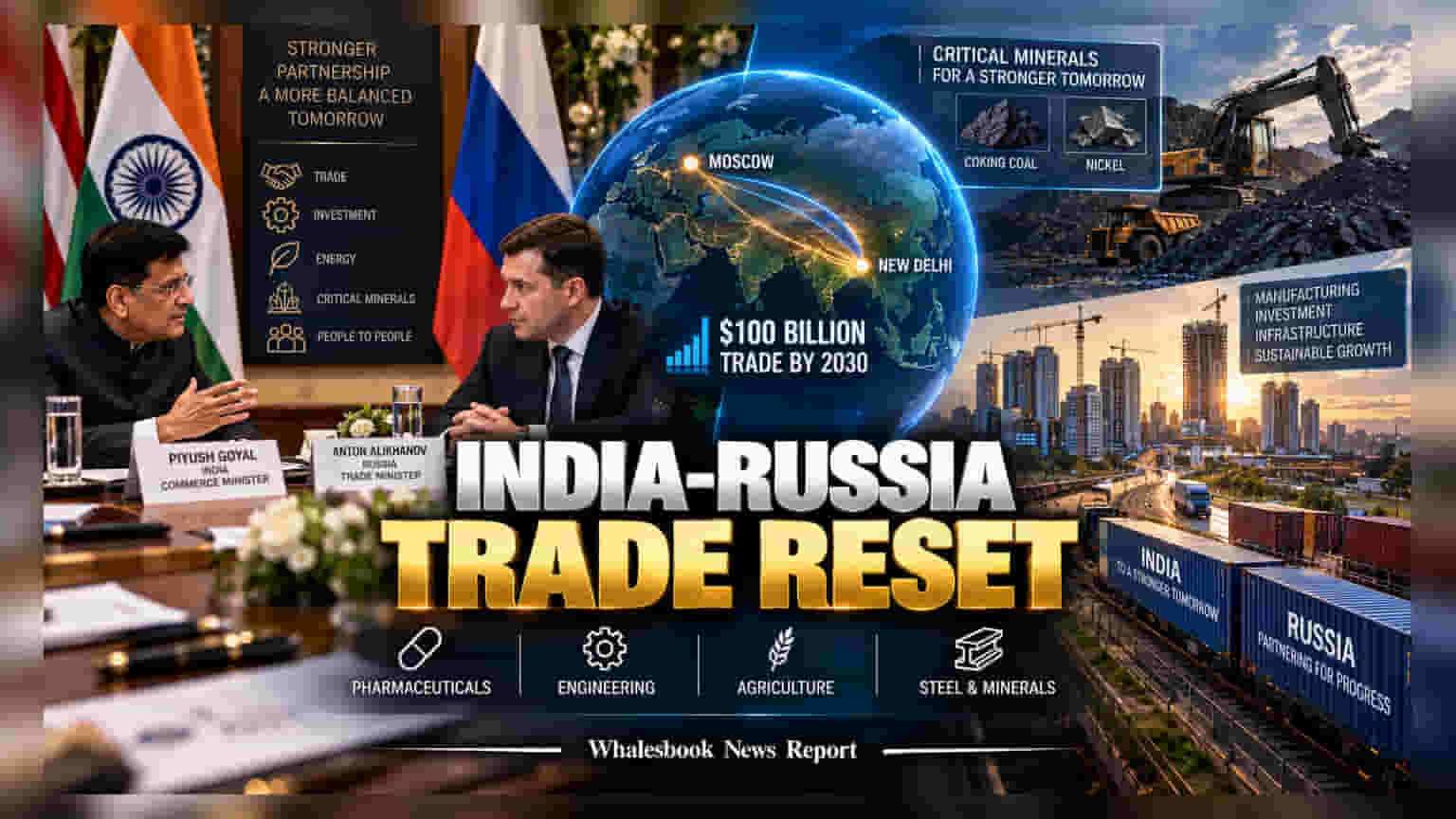
Indian and Russian ministers are meeting in New Delhi to address a widening trade deficit and align on a $100 billion trade target by 2030. Discussions at the INNOPROM exhibition focus on easing payment hurdles and securing critical minerals like nickel and coking coal to support domestic industry. The strategy aims to balance the ledger by boosting Indian pharmaceutical, agricultural, and engineering exports.
Indian Commerce Minister Piyush Goyal and Russian Trade Minister Anton Alikhanov are meeting in New Delhi to address a significant trade imbalance and advance the bilateral goal of reaching $100 billion in trade by 2030. The discussions, taking place during the INNOPROM India exhibition, are centered on finding ways to narrow the deficit caused primarily by India’s large-scale energy imports from Russia. The proposed solution involves a concerted push to increase Indian exports in sectors such as pharmaceuticals, engineering, and agriculture, which could help create a more sustainable trade flow between the two nations.
For investors, the most significant aspect of these talks is the push for industrial integration. The two nations are exploring ways to reduce reliance on third-party banking systems, which has been a persistent bottleneck for bilateral trade. By refining payment mechanisms and setting up joint ventures, the governments aim to lower the transaction costs and time delays that have previously hampered trade activities. This development is crucial for companies that rely on predictable cross-border settlements to maintain their supply chains.
Strategic engagement is also expanding into the critical minerals sector, which is essential for India’s long-term manufacturing and energy transition goals. Indian public sector undertakings, including the Steel Authority of India (SAIL) and NMDC, are actively collaborating with Russian counterparts to secure access to essential materials like coking coal and nickel. These resources are vital for India’s steel production and the burgeoning electric vehicle battery manufacturing ecosystem. By localizing manufacturing and joint exploration of these materials, the government hopes to provide a more stable supply chain for domestic industries.
However, this diplomatic and economic rapprochement faces notable challenges. Geopolitical sanctions against various Russian entities remain a complex issue, potentially creating logistical and financial hurdles for joint ventures. Investors should be aware that while the intent to cooperate is clear, the implementation is subject to global geopolitical pressures, which could impact the pace of these projects. Furthermore, the technological gap in processing complex raw ores locally remains an area that needs significant capital investment and expertise.
The real test for this partnership will be the speed at which the two countries can streamline payment systems and move from initial discussions to the operational stage for mining and manufacturing projects. Investors may track progress on these fronts, as the successful execution of these joint ventures could offer significant cost advantages and resource security for major Indian industrial players over the coming years.