

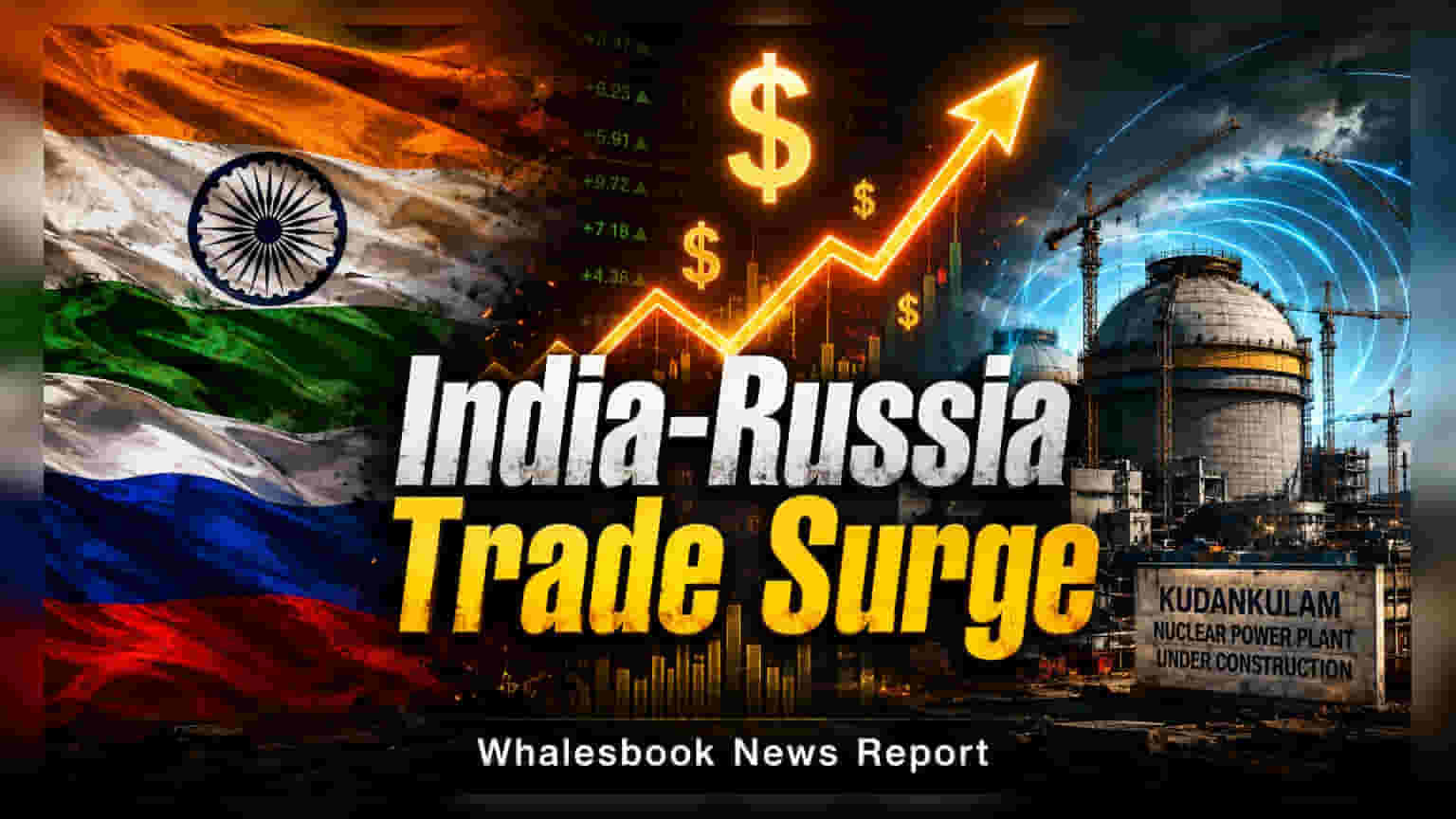
India and Russia have set an official goal to reach $100 billion in trade by 2030, driven largely by energy and infrastructure projects. While the collaboration is deepening, with projects like the Kudankulam nuclear plant advancing, the partnership faces challenges, including geopolitical sanctions and rising infrastructure costs that investors should monitor.
India and Russia have reaffirmed their commitment to boosting bilateral trade to $100 billion by 2030, a goal centered on expanding energy ties and economic cooperation. This objective, supported by the leadership of both nations, relies heavily on large-scale infrastructure projects and a significant increase in professional engagement between the two countries.
Energy remains the most critical pillar of this strategic relationship. The Kudankulam Nuclear Power Project in Tamil Nadu continues to be a focal point for this collaboration. Construction on Units 3 and 4 is moving forward, and Unit 5 has reached a major milestone with the installation of its reactor pressure vessel. This unit is expected to be operational by the end of 2026, marking a significant step in India's energy infrastructure development.
Beyond energy, there has been a notable rise in the number of skilled Indian professionals working in Russia. Official estimates indicate this number has grown from a range of 10,000 to 15,000 just a few years ago to over 100,000 as of August 2026. This trend highlights the deepening integration of talent across sectors as both nations look to diversify their economic engagement ahead of the upcoming Intergovernmental Commission session.
While the growth plans are ambitious, there are material risks and challenges that investors and market observers are tracking. A major concern is the rising cost of the Kudankulam nuclear project. Costs for the remaining units have increased by nearly 55 percent since the start of the Russia-Ukraine conflict, which may eventually lead to pressure on electricity tariffs if these costs are passed on. Furthermore, the trade balance remains heavily tilted in Russia's favor, which creates a need for India to identify new export avenues to ensure a more sustainable economic relationship.
Geopolitical complexities continue to pose a significant hurdle. Ongoing international sanctions related to the Russia-Ukraine war have created complications in banking, cross-border payments, and logistics, which can disrupt the smooth flow of goods and services. For businesses operating in this space, these issues create uncertainty regarding supply chains and capital movement.
Looking ahead, the market will be watching the outcomes of the 18th BRICS Summit, which India is hosting in New Delhi on September 12-13, 2026. This event, along with the scheduled session of the India-Russia Intergovernmental Commission, will provide clearer updates on how both nations plan to navigate these economic and geopolitical hurdles while working toward their 2030 trade target.