

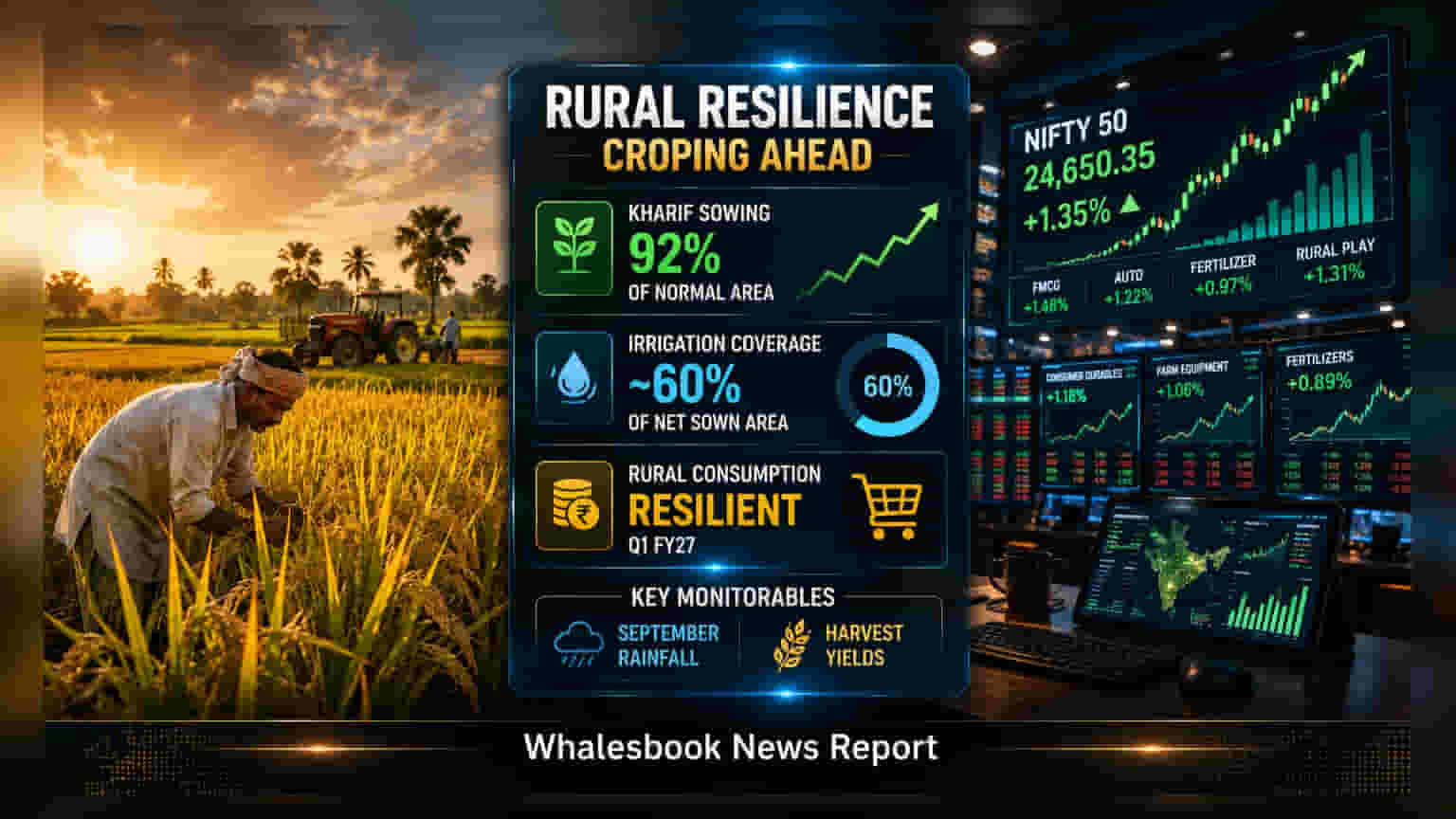
India’s rural economy shows surprising resilience as kharif sowing reaches 92% of normal levels despite monsoon rains tracking 14% below average. While structural support keeps consumption stable, investors should monitor risks such as potential yield impairment, rising food inflation, and higher farming input costs in the coming months.
The Indian rural economy is demonstrating unexpected stability even as the monsoon season faces a rainfall deficit of approximately 13 to 14 percent below the long-period average. While earlier concerns focused on whether deficient rain would halt planting, latest data shows kharif sowing has reached 92 percent of the normal area. This suggests that farmers have effectively managed moisture gaps through crop selection and faster planting schedules.
Investors tracking rural-focused sectors such as fast-moving consumer goods, two-wheeler auto, and farm equipment may note that consumption has largely held up during the first quarter of the fiscal year. Several structural changes have likely acted as a buffer for the rural household budget. Irrigation coverage has improved significantly to nearly 60 percent of the net sown area, reducing dependence on rainfall. Additionally, income diversification into livestock and fisheries, alongside government welfare programs like PM-KISAN, has provided a degree of protection against weather-induced volatility.
However, the focus for the remainder of the season has shifted from planting acreage to yield quality. The India Meteorological Department has signaled a risk of below-normal rainfall for September. A dry spell during the critical grain-filling stage could lead to lower yields for rain-fed crops, particularly in regions like Punjab, Bihar, and parts of Maharashtra. This presents a potential risk to rural liquidity if harvest output is lower than expected.
Another challenge involves inflationary pressure. Rising food prices, particularly in pulses and oilseeds, have become a point of concern. Higher expenses for farmers, such as increased spending on diesel for irrigation pumps and fertilizer, may also narrow net farm incomes. While current consumption remains resilient, the sustainability of this demand will depend on how successfully the economy navigates these cost pressures through the rest of the harvest cycle.
The next important update for market observers will be the final harvest output figures and September rainfall data. Investors may also track management commentary from companies with high rural exposure to see if inflationary trends or input costs begin to impact volume growth in the coming quarters.