

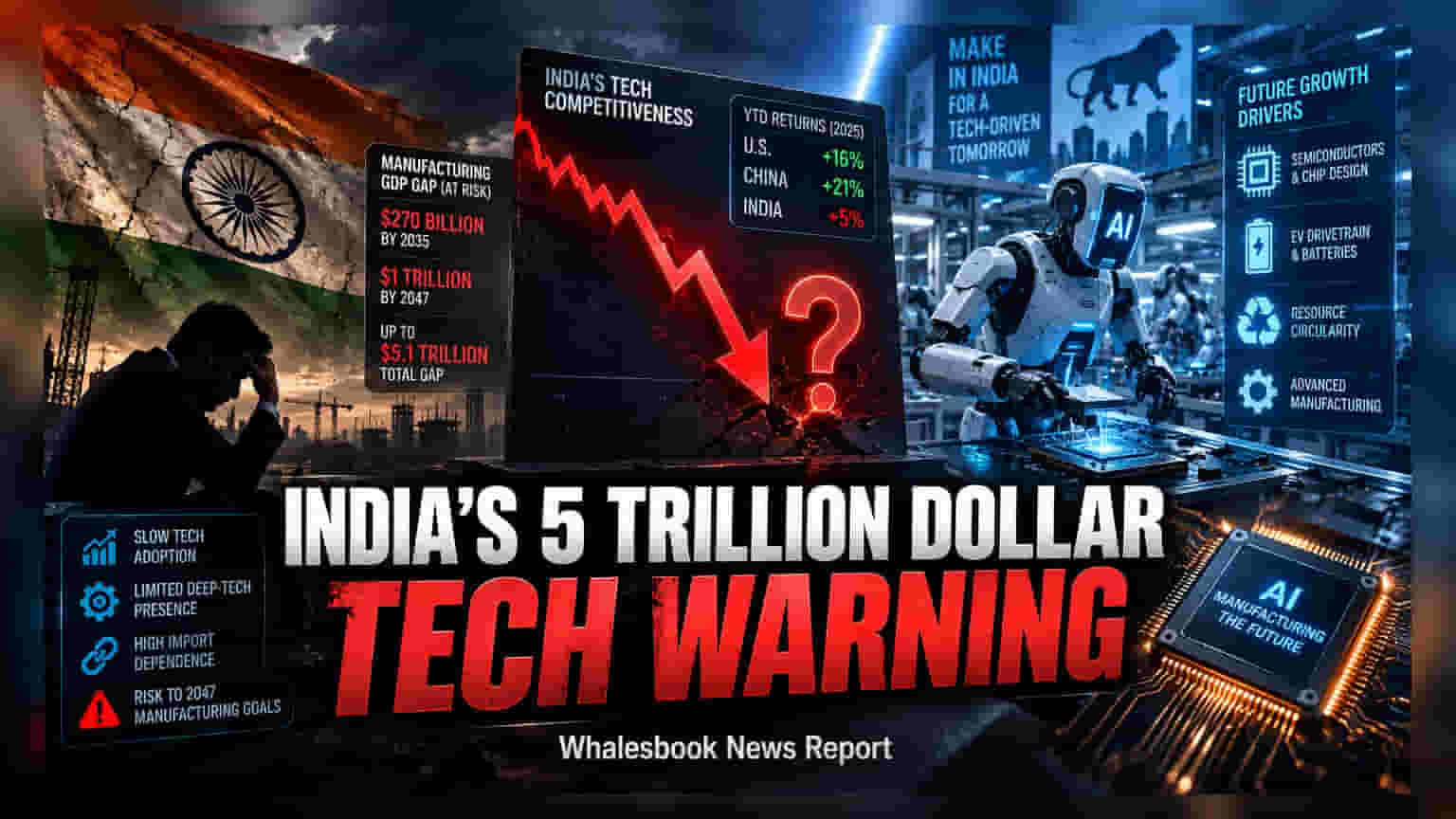
A report indicates India could miss out on USD 5.1 trillion in manufacturing GDP by 2047 if it fails to adopt advanced technologies like AI and automation. For investors, this highlights the long-term importance of companies that integrate digital innovation and cutting-edge manufacturing to stay globally competitive.
India faces a significant economic challenge in the coming decades, with a potential manufacturing GDP gap of up to USD 5.1 trillion by 2047 if the country does not accelerate the adoption of advanced manufacturing and frontier technologies. A recent analysis by Angel One highlights that the nation could miss out on USD 270 billion in additional manufacturing GDP by 2035 and USD 1 trillion by 2047 under current trends.
At the core of this risk is the speed at which Indian industries adopt artificial intelligence, industrial automation, and digitization. While global markets have seen significant growth driven by tech-led innovation, India’s current representation in deep-tech sectors remains limited. This is reflected in broader market performance data, where India’s year-to-date returns for 2025 were reported at 5%, trailing behind major markets like the U.S. at 16% and China at 21%.
Strategic Sectors for Future Growth
The report identifies several key areas where India could bolster its manufacturing capabilities and reduce reliance on imports. These strategic growth drivers include electric drivetrain and battery systems, semiconductor chip design, and advanced resource circularity and component recycling. For investors, these sectors represent the potential backbone of the next phase of industrial growth. The wider adoption of these technologies is estimated to have the potential to add USD 1.1 trillion to India’s manufacturing GDP by 2047.
Investor Perspective on Tech Adoption
For investors, this shift toward frontier technology changes how company performance should be evaluated. Moving forward, the traditional focus on physical capacity expansion may need to be balanced with an assessment of a company’s "tech intensity." Investors may look for businesses that are actively investing in R&D, automation, and digital integration rather than those relying solely on legacy manufacturing models.
Key monitorables for stakeholders include management commentary on long-term digital transformation strategies and the actual allocation of capital toward these emerging areas. Companies that successfully navigate this transition to higher-value products and more efficient, automated processes may be better positioned to close the competitive gap with global peers in the long run.