

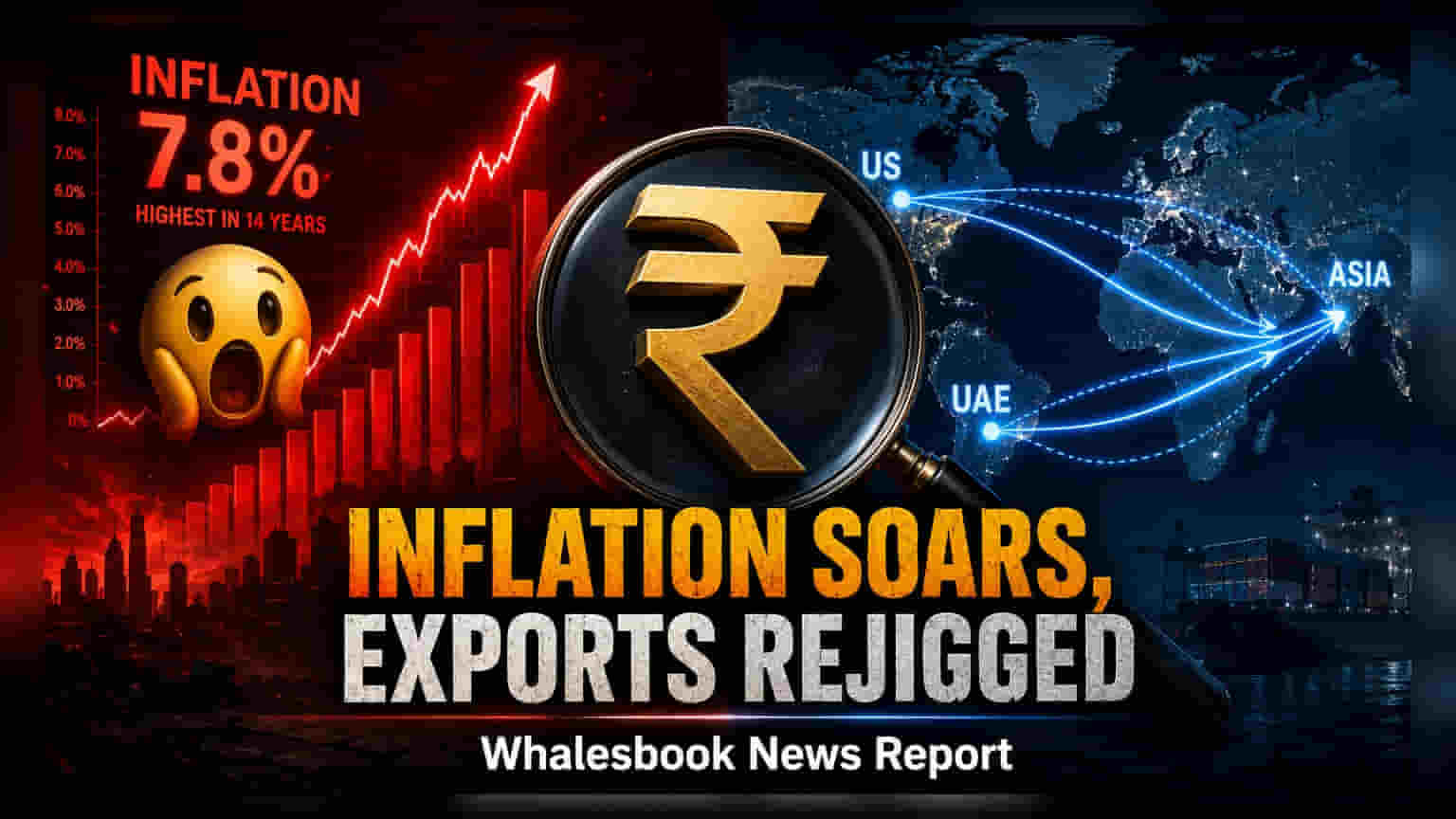
India's retail inflation rose to 4.4% in June 2026, crossing the Reserve Bank of India’s 4% target for the first time since January 2025. The increase was largely driven by higher food and fuel costs. Meanwhile, Indian exporters are shifting focus toward markets like Singapore and China amid trade uncertainties in the U.S. and UAE.
India’s retail inflation crossed the Reserve Bank of India’s (RBI) medium-term target of 4% in June 2026, reaching 4.4%. This is the first time inflation has exceeded the target level since January 2025. The rise is primarily linked to sharp increases in food and fuel costs. Food inflation specifically climbed to 5.3% in June, up from 4.8% previously. Certain kitchen staples saw significant price volatility, with ginger inflation jumping to 50.4% and garlic prices rising by 17.9% compared to earlier months this year.
Investors may note that the outlook for inflation remains uncertain. Potential risks include weather-related disruptions to food supply and the possibility of rising fuel costs due to ongoing geopolitical tensions in West Asia. Higher inflation can sometimes influence future monetary policy decisions, as the central bank aims to keep prices stable.
Export Trade Shifts
India’s trade landscape is also undergoing a change. Exports to traditional partners like the United Arab Emirates saw a 12% decline between April and June 2026, and growth in shipments to Saudi Arabia remained muted at 1.2%. Exports to the United States have also slowed, partly due to trade uncertainties and a high base effect from the previous year.
To manage these pressures, Indian exporters have redirected trade toward other markets. Exports to Singapore have more than doubled, while shipments to South Africa and China grew by 76.5% and 27.6% respectively. This reorientation highlights how Indian businesses are adapting to global geopolitical shifts to maintain trade momentum.
Services Sector Performance
Despite inflationary pressures, the services sector has shown resilience. Trial estimates for the Index of Services Production (ISP) for April 2026 show strong growth across many areas. Notably, nine sub-sectors reported growth between 10% and 20%, while three sectors expanded by 20% to 30%. The accommodation and food services sector led with 37.2% growth, followed by retail trade at 30.8% and administrative services at 28.6%.
However, not all segments performed well. Air transport contracted by 14% and railway transport saw a minor dip of 0.4%, potentially due to disruptions stemming from the West Asia conflict. As this ISP data is currently a trial series starting from fiscal year 2026, investors should watch for future reports to identify long-term trends in services sector output. Future updates on monthly inflation data, food supply stability, and export growth patterns in emerging markets will remain key areas for investors to monitor.