

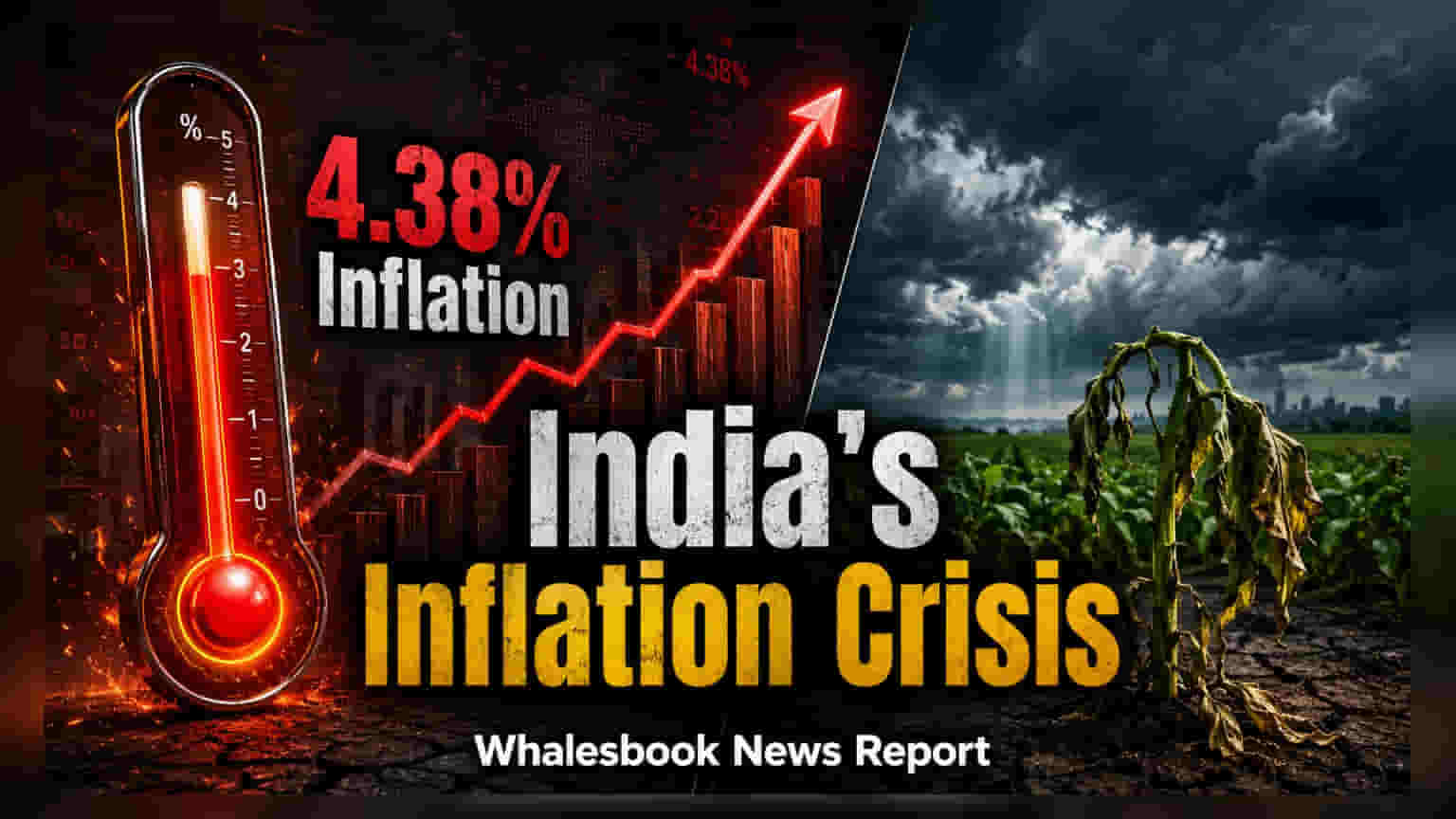
India's retail inflation rose to 4.38% in June, crossing the RBI's 4% target for the first time since early 2026. Higher food prices and uncertain monsoon patterns are the primary drivers, raising concerns about potential impacts on consumer spending and future monetary policy decisions.
India’s retail inflation, measured by the Consumer Price Index, climbed to 4.38% in June 2026, marking a notable shift in the country's economic landscape. This figure represents the first time inflation has moved above the Reserve Bank of India’s 4% target since January 2026. The increase from May's 3.93% level indicates that pricing pressure is building within the economy, largely centered on essential goods.
Food Price Pressures and Monsoon Concerns
The jump in June was driven largely by food prices, which accelerated to 5.32% compared to 4.78% in the previous month. Specific commodities, including tomatoes, ginger, and raisins, saw price increases that directly impacted household budgets. These food price movements are particularly sensitive to weather patterns, and the current monsoon season has been uneven. The India Meteorological Department has reported lower rainfall in key agricultural areas across central and southern India, which are vital for kharif crop sowing. If this lack of rainfall continues, it could lead to smaller harvests, potentially keeping food prices elevated for an extended period.
Risks from Global Energy Costs
Beyond domestic agricultural factors, external risks are also influencing the inflation outlook. Tensions in West Asia have introduced uncertainty regarding global supply chains and the cost of crude oil. Because India imports a significant portion of its oil requirements, any sharp rise in global prices creates a dual problem: it increases the cost of imported inflation and raises operational costs for companies across various sectors, such as transportation and manufacturing. Analysts have pointed out that higher fuel costs are already beginning to show up in the latest data, adding a layer of complexity to the broader economic picture.
Economic Outlook and Policy Expectations
For investors, the primary concern is how these inflationary pressures affect consumer demand. Inflation reduces the purchasing power of households, which may slow down consumption—a key engine of India's economic growth. While some international institutions have already moderated their growth forecasts for the country, economists suggest that the Reserve Bank of India’s Monetary Policy Committee will likely maintain a status quo approach in its August meeting. Market watchers anticipate that the RBI will continue to monitor the situation closely before making any changes to interest rates. Looking ahead, investors may track upcoming monthly inflation prints and the progress of the monsoon, as these will be critical factors in determining whether the current price pressure is a temporary fluctuation or a more persistent trend.