

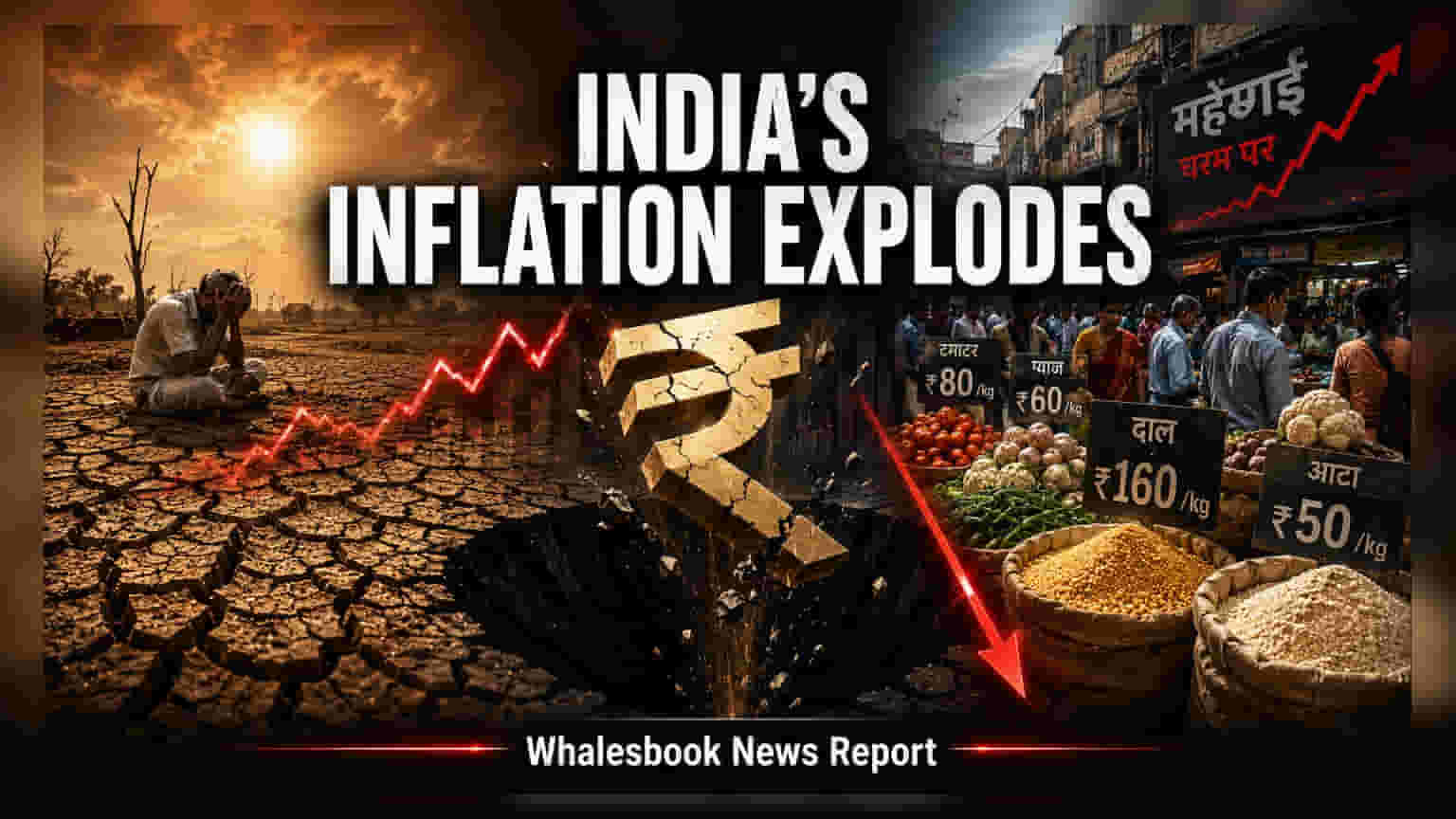
India's retail inflation rose to a 17-month high of 4.38% in June, exceeding the RBI’s 4% target. Driven by higher food and fuel costs, this trend suggests interest rates may remain stable for longer, impacting borrowing costs for consumers and businesses.
India’s retail inflation, measured by the Consumer Price Index, climbed to 4.38% in June 2026, up from 3.93% in May. According to data released by the Ministry of Statistics and Programme Implementation, this is the highest level observed in 17 months and sits above the Reserve Bank of India’s medium-term target of 4%.
Drivers of Price Pressure
The primary contributor to this increase is food inflation, which reached 5.32% in June. A combination of domestic supply chain disruptions—linked to heatwaves and uneven monsoon patterns—and higher global energy costs have created a difficult environment for price stability. While essential items like cereals, pulses, and vegetables saw price hikes, non-food items also contributed to the trend. For instance, silver and gold jewellery saw significant price increases of 133.21% and 36.82% respectively, while transport inflation stood at 4.31%.
Regional differences were also noted, with rural inflation at 4.74% outpacing urban inflation at 3.92%. Telangana reported the highest retail inflation rate at 6.36%, while Mizoram registered the lowest at 1.63%.
Impact on Monetary Policy and Business
The persistence of these price pressures, coupled with a Wholesale Price Index inflation rate of 9.87%, presents a challenge for the Reserve Bank of India. Analysts from major brokerages suggest that with inflation remaining elevated, the central bank is likely to maintain a cautious stance on monetary policy. The benchmark repo rate, currently at 5.25%, may see no immediate cuts. For businesses and consumers, this indicates that the cost of borrowing—including interest rates on home, auto, and corporate loans—is likely to remain elevated for the foreseeable future.
Additionally, manufactured products inflation remained steady at 7.48%. This indicates that price pressures are not limited to food but are spreading across the broader economy. High energy costs, linked to global crude oil prices around $85 per barrel for Brent crude, further complicate the outlook.
What Investors Should Monitor
Moving forward, investors will be looking for management commentary from companies regarding their ability to pass on these input costs to consumers without hurting demand. Profit margins across sectors that rely heavily on logistics, energy, or imported raw materials will be particularly sensitive to these inflationary trends. The next major update will be the Reserve Bank of India's upcoming monetary policy meeting, where officials will provide guidance on interest rate expectations and their outlook for price stability throughout the fiscal year.