

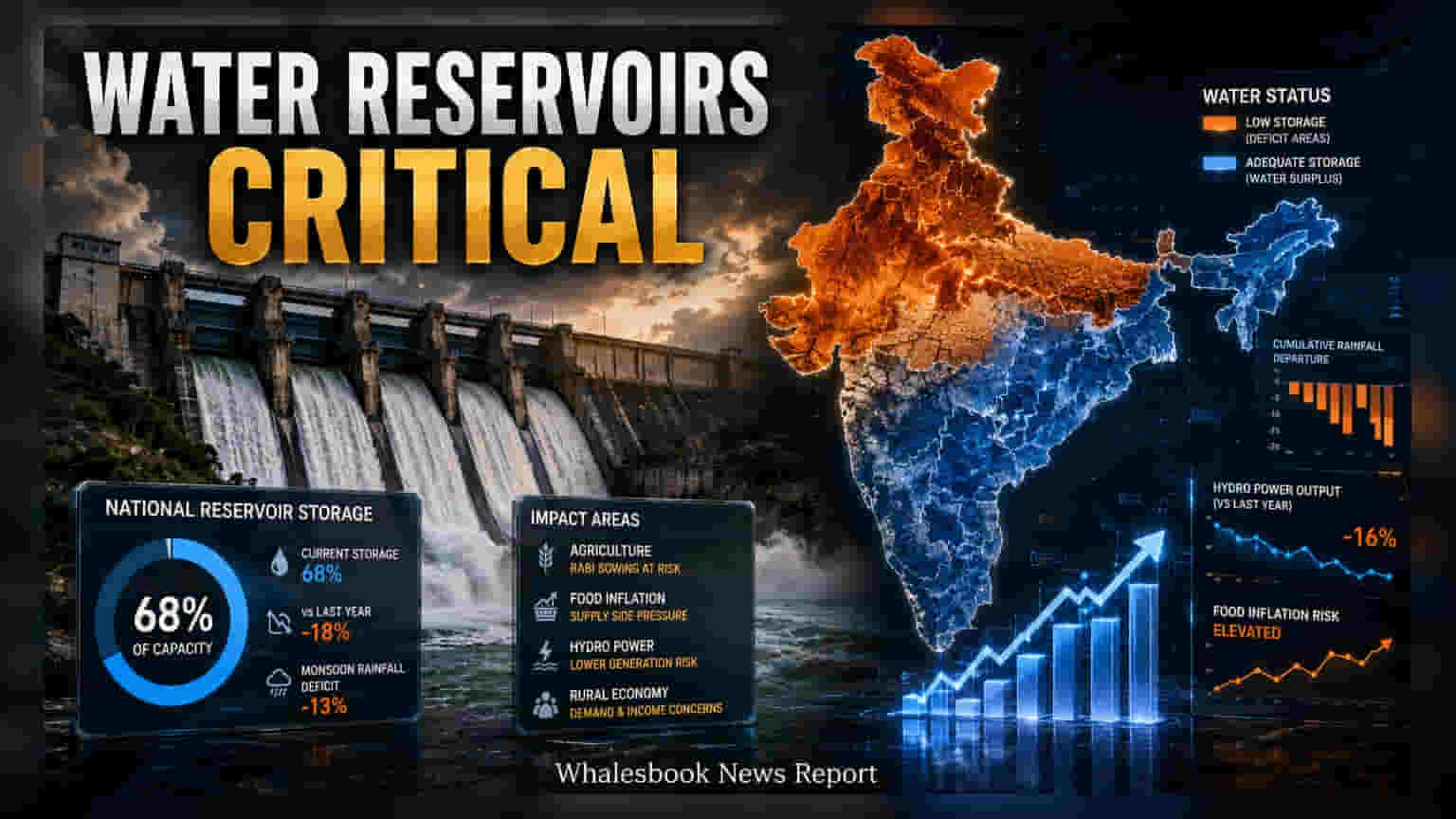
India’s 166 major reservoirs are at 68% capacity, yet a 13% monsoon rainfall deficit keeps storage below historical averages. This shortfall poses risks for rabi crop sowing, hydroelectric power output, and potential food inflation. The situation creates significant uncertainty for rural-dependent sectors and electricity producers as the monsoon season nears its end.
The latest data from the Central Water Commission indicates that national reservoir storage in 166 major dams has reached 68% of total capacity. While this reflects a recovery in water levels since the start of the season, the figure remains roughly 18% lower than the same period last year and below the 10-year historical average. The ongoing shortfall is primarily tied to a 13% deficit in cumulative monsoon rainfall recorded between June and late August.
Impact on Agriculture and Inflation
The water levels are a critical indicator for the agricultural sector, particularly for upcoming rabi crop sowing. Adequate water availability is essential for irrigation in several regions, and a significant deficiency can lead to lower crop yields. For investors, this creates a potential risk for food inflation, as supply-side constraints often drive up prices. Additionally, companies in rural-dependent sectors—such as manufacturers of fertilizers, tractors, and fast-moving consumer goods (FMCG)—may face pressure if agricultural income remains unstable due to water shortages.
Power Sector and Regional Disparities
Beyond agriculture, the current water situation affects power generation. India’s reliance on hydroelectric power makes the sector sensitive to reservoir levels. A sustained deficit can reduce hydropower output, forcing reliance on other energy sources and potentially impacting costs for power-intensive industries. The crisis is not uniform across the country; significant regional disparities exist, with southern and eastern India reporting the most severe rainfall deficits. This uneven distribution means that while some areas have sufficient water, others are facing urgent stress.
Future Outlook and Risks
Looking toward the final months of the year, weather uncertainty remains a major variable. Meteorologists are monitoring the potential strengthening of the El Niño phenomenon, which could further limit rainfall and exacerbate water scarcity. If the current monsoon deficit persists, the limited water cushion may lead to tighter control over irrigation and industrial water usage.
Investors may monitor key updates on rabi sowing progress, food inflation trends, and hydroelectric output data in the coming weeks. These factors will likely influence the broader economic outlook, especially regarding rural demand and energy costs for industrial players.