

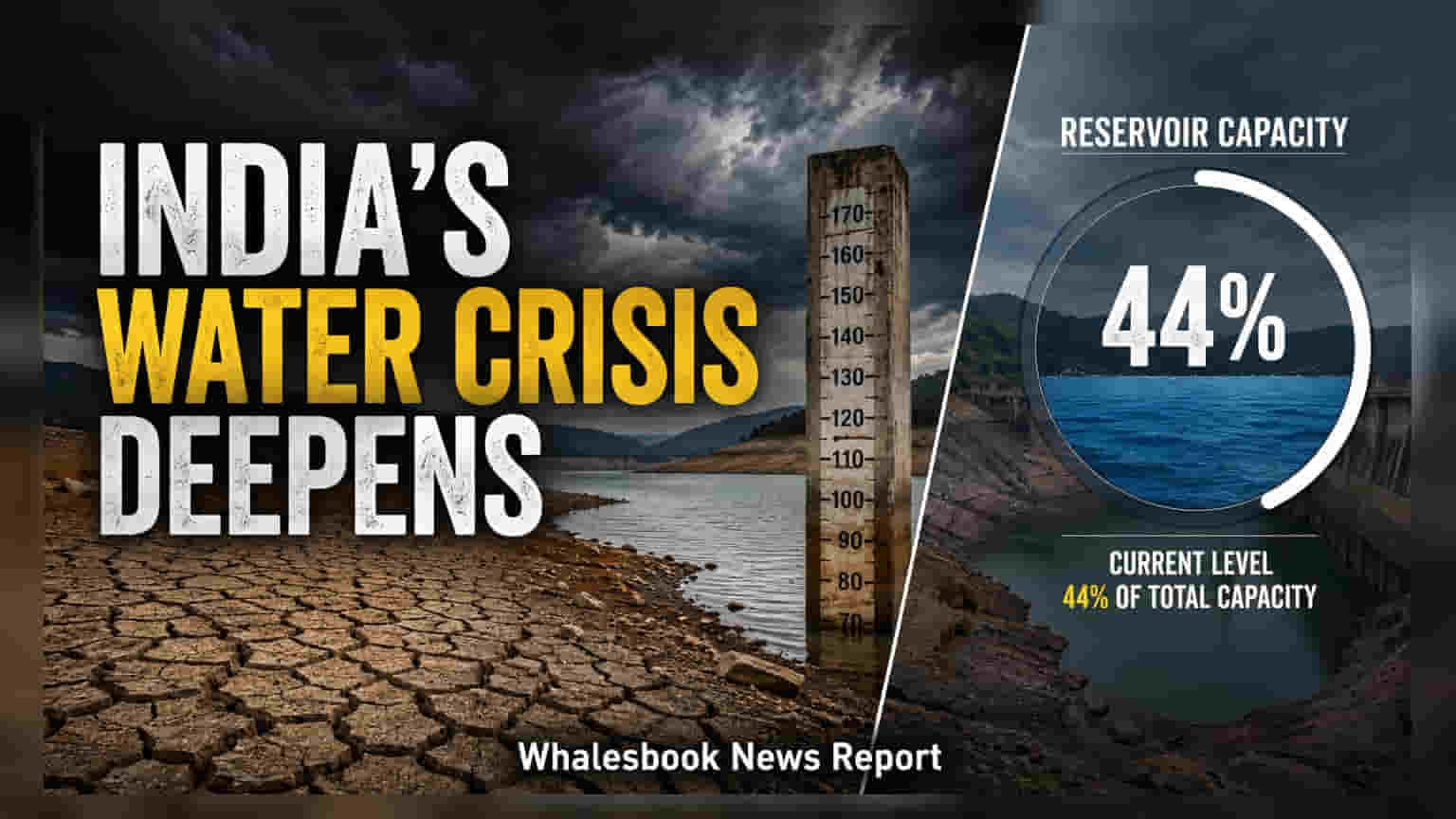
India’s major reservoirs currently hold only 44% of their total capacity, with the southern region particularly affected at 34%. Despite a recent revival in monsoon activity, the 14% rainfall deficit continues to threaten agricultural output and water security. Investors should monitor how these water levels impact power generation and irrigation-dependent companies in the coming quarter.
India’s water storage situation remains a significant concern for the economy as of July 31, 2026. Data shows that the nation’s 166 major reservoirs are collectively holding only 44% of their total capacity, which amounts to 81.479 billion cubic meters (BCM) out of a total 183.565 BCM. The situation is more severe in specific pockets, with 71 of these reservoirs currently filled to less than 40% of their storage potential.
Regional Water Stress in the South
Regional data reveals a sharp divide in water availability. The western region is the only area currently reporting storage levels above 50% of capacity. Conversely, the southern region is facing critical water stress, with reservoirs filled to only 34% of their capacity. This disparity is particularly important for the agricultural sector and hydroelectric power producers, as lower water levels directly limit irrigation capabilities and electricity generation capacity during the peak Kharif sowing season.
Impact of Persistent Monsoon Deficit
The South-West monsoon, which is vital for filling these reservoirs, has failed to recover fully. While there was a notable revival following a 37% rainfall deficit in June, the cumulative rainfall for the current period remains 14% below normal levels. This sustained deficit creates pressure on the rural economy and may lead to higher demand for groundwater, which carries long-term sustainability risks for agricultural yields.
Outlook for Power and Agriculture
Looking ahead, the primary monitorable for the market is the performance of the monsoon in August and September. Meteorological forecasts have indicated that a deep depression is forming over central India, which is expected to bring heavy rainfall to parts of the country. If this rainfall materializes as predicted, it could provide a necessary buffer for reservoir levels. Investors should track how this trend influences regional power distribution companies, agriculture-input firms, and FMCG companies that rely on rural demand. Should the rainfall deficit continue, the resulting stress on irrigation and power costs could weigh on the profit margins of companies heavily exposed to the rural market.