

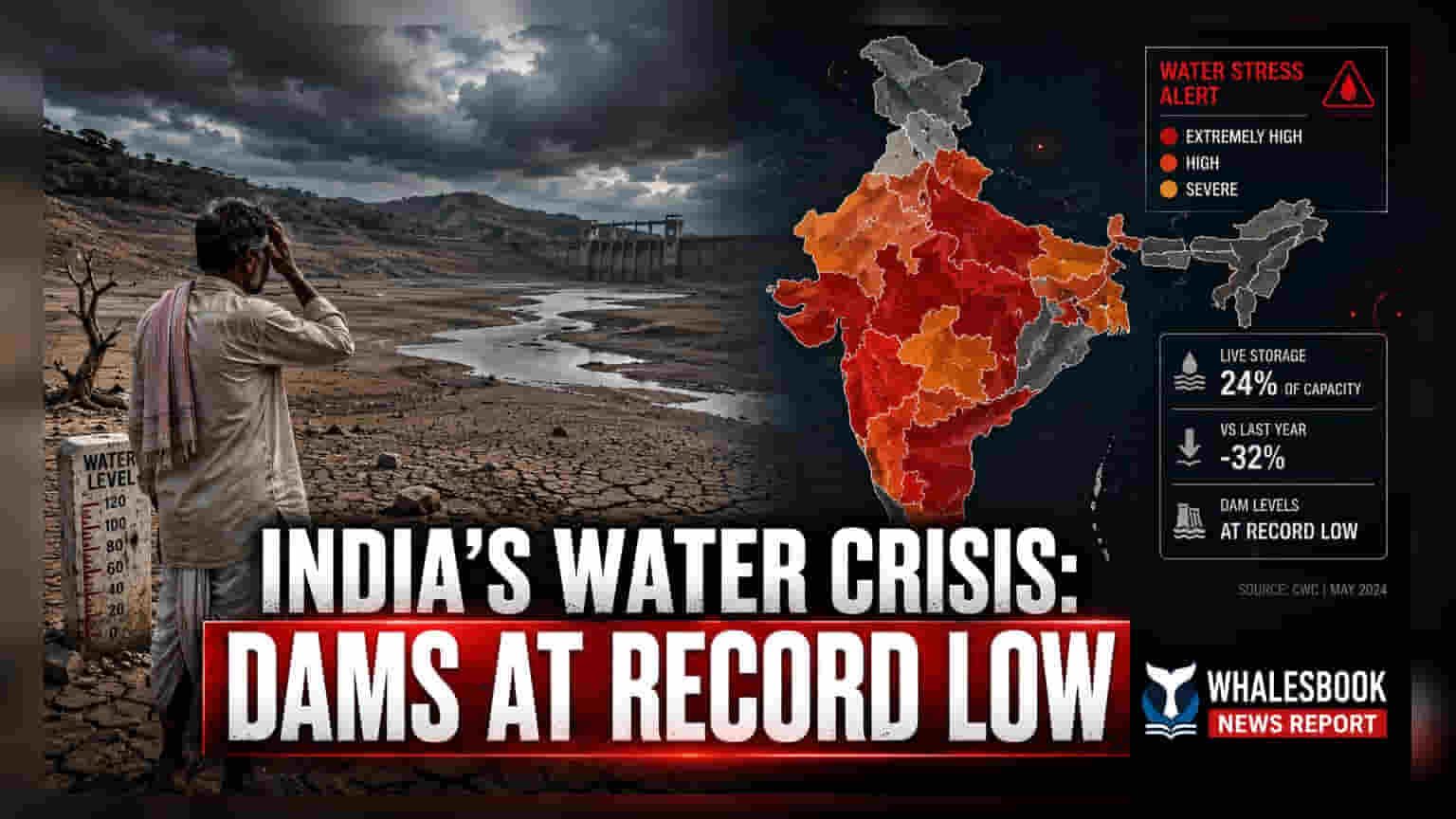
Major Indian reservoirs now hold only 26% of their live storage capacity, lagging behind long-term averages. This water scarcity across 13 states threatens irrigation, drinking water supplies, and hydropower generation, with 44% of districts reporting rainfall deficits.
What Happened
As of July 2, 2026, data from the Central Water Commission (CWC) shows that 166 of India’s major reservoirs contain 47.725 billion cubic meters of water. This volume accounts for only 26% of the nation's total live storage capacity. The current levels are notably lower than in previous years, standing at 61% of the storage recorded during the same period in 2025 and 1.4% below the ten-year average. This data points to a significant hydrological challenge following an uneven start to the monsoon season across several key regions.
Impact on Agriculture and Hydropower
The water deficit directly affects vital sectors, most notably agriculture and power production. Irrigation depends heavily on reservoir water, particularly for the Kharif crop season. When storage levels drop significantly, states often face constraints in providing water for farming, which can lower crop yields. Furthermore, hydropower plants rely on consistent water flow for electricity generation. Reduced water levels in river basins, such as those between the Krishna and Cauvery, limit the operational capacity of these power plants, potentially forcing a greater reliance on thermal power, which uses coal.
State-Level Stress and Deficits
Water stress is concentrated in specific regions. Karnataka, Tamil Nadu, Odisha, and Jharkhand report storage levels significantly lower than their ten-year averages. Some reservoirs, such as Bhima-Ujjaini in Maharashtra and Aliyar in Tamil Nadu, have reported near-zero storage levels. The India Meteorological Department (IMD) highlights that 44% of Indian districts are currently rainfall-deficient, while 22% face severe deficiency. This broad geographical spread of low rainfall makes it difficult for authorities to manage water distribution effectively across state borders.
Why This Matters for Investors
For investors, the water crisis acts as a hidden risk factor for several sectors. Companies in the agriculture, fertilizer, and FMCG sectors may face headwinds if crop production suffers from water scarcity, as lower farm income reduces rural demand for goods. Additionally, industrial companies that require high volumes of water for manufacturing may face supply restrictions if state governments prioritize drinking water and irrigation over industrial usage. Investors should be aware that extended periods of low reservoir levels often lead to higher operational costs for affected companies and could impact regional economic growth.
What Investors Should Track
Moving forward, the primary monitorable is the progress of the southwest monsoon over the next few weeks. Consistent, widespread rainfall is necessary to replenish these critical reserves. Investors should track CWC weekly bulletins for improvements in storage percentages and watch for government updates on water management policies in states like Karnataka and Maharashtra. Additionally, monitoring the price of essential commodities may provide early signs of supply chain tension resulting from agricultural stress.