

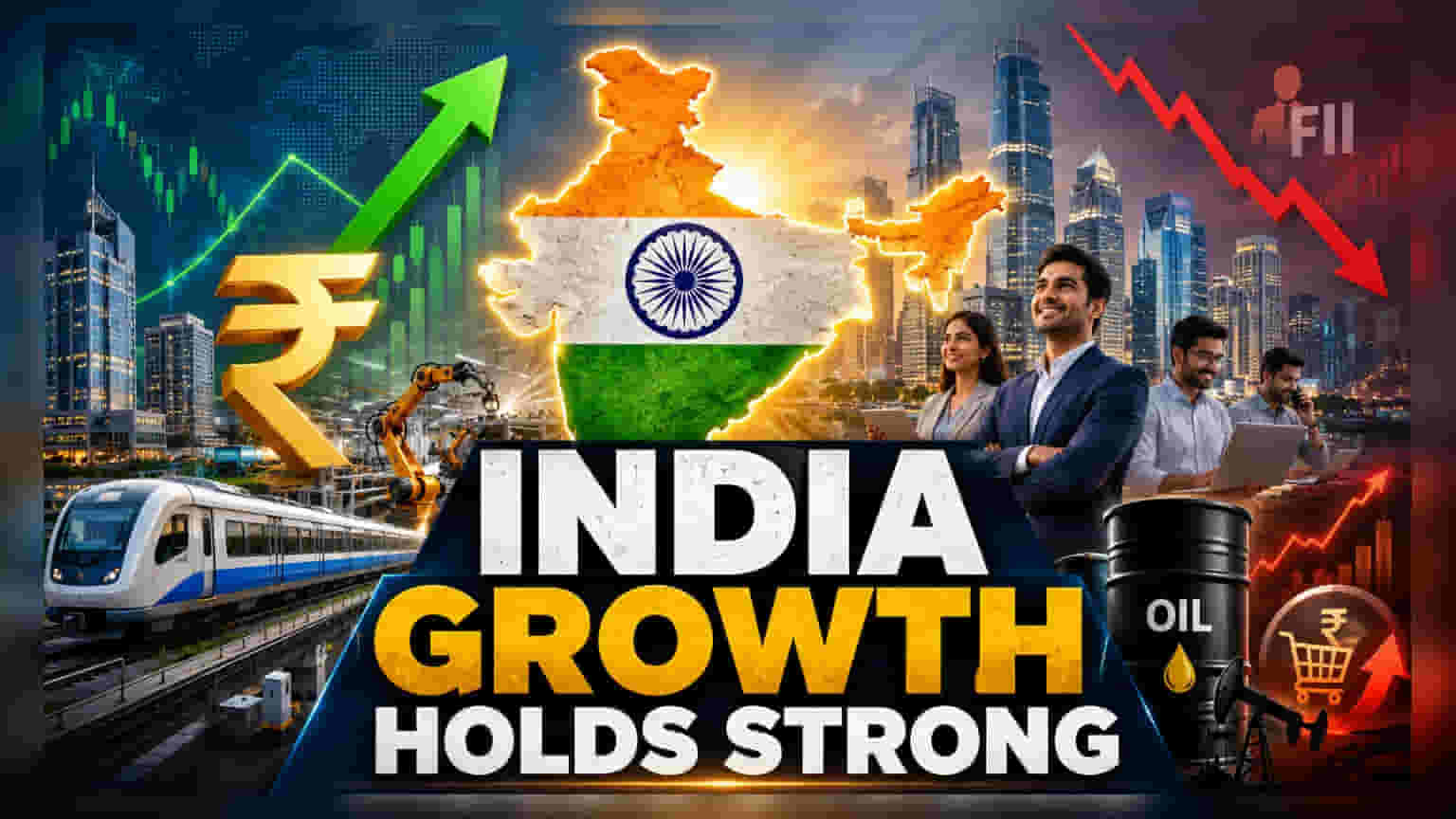
India continues to outperform major economies driven by strong domestic demand and resilient manufacturing, even as global challenges persist. While foreign investors have been selling, domestic buying has provided market stability. Investors are now navigating volatility risks tied to rising energy prices and inflation.
What Happened
India has maintained its position as one of the fastest-growing large economies globally, despite facing significant global challenges. A recent market outlook report from PL Wealth highlights that India’s economic growth is holding steady, supported by strong internal demand, solid credit growth, and healthy manufacturing and services activity. This performance comes even as the country faces persistent hurdles like rising inflation, higher oil prices, and continuous selling by foreign institutional investors (FIIs).
Why India’s Domestic Engine Matters
One of the most important factors currently stabilizing the Indian market is the strength of domestic capital. While international investors have been selling Indian stocks, domestic institutional and retail investors have stepped in to buy. This shift has prevented a sharp decline in equity markets, acting as a buffer against foreign outflows. The report notes that consumption, production, and infrastructure spending remain the primary engines driving this growth, which helps India stand out as an outlier compared to other major global economies that are seeing slower growth.
Understanding the PMI Numbers
To gauge the health of the economy, analysts often look at the Purchasing Managers' Index (PMI). These numbers are based on surveys of company managers regarding their business outlook. An index value above 50 indicates expansion or growth in business activity. In May 2026, India recorded a manufacturing PMI of 55 and a services PMI of 59.8. These figures indicate that both the factory sector and the services sector are expanding at a healthy pace, far outpacing the performance of many other nations struggling with stagnant growth.
Risks to Watch in the Coming Months
While the growth story is strong, the report points out several risks that could cause market volatility. Energy costs, specifically crude oil prices, are a major concern. Because India imports a large portion of its oil, rising prices directly increase production costs for companies and contribute to inflation. Additionally, political instability in West Asia continues to be a factor that could disrupt global supply chains and energy markets.
Currency depreciation, or the weakening of the Rupee against the dollar, is another area that could put pressure on company earnings in the short term. When production costs rise due to these factors, it may squeeze profit margins for many businesses, causing the market to trade within a specific range rather than showing a one-sided trend.
How Investors May Navigate Volatility
Given the current mix of growth and uncertainty, the report suggests that investors remain cautious about short-term swings. The financial landscape for fixed income has become tougher due to rising interest rates and inflation expectations, which generally make existing fixed-income investments less attractive. Investors are often re-evaluating their portfolios, with some considering gold as a strategic reserve to hedge against geopolitical tensions and inflation. For stock market participants, the focus remains on quality large-cap companies and balanced portfolios that can handle market ups and downs.