

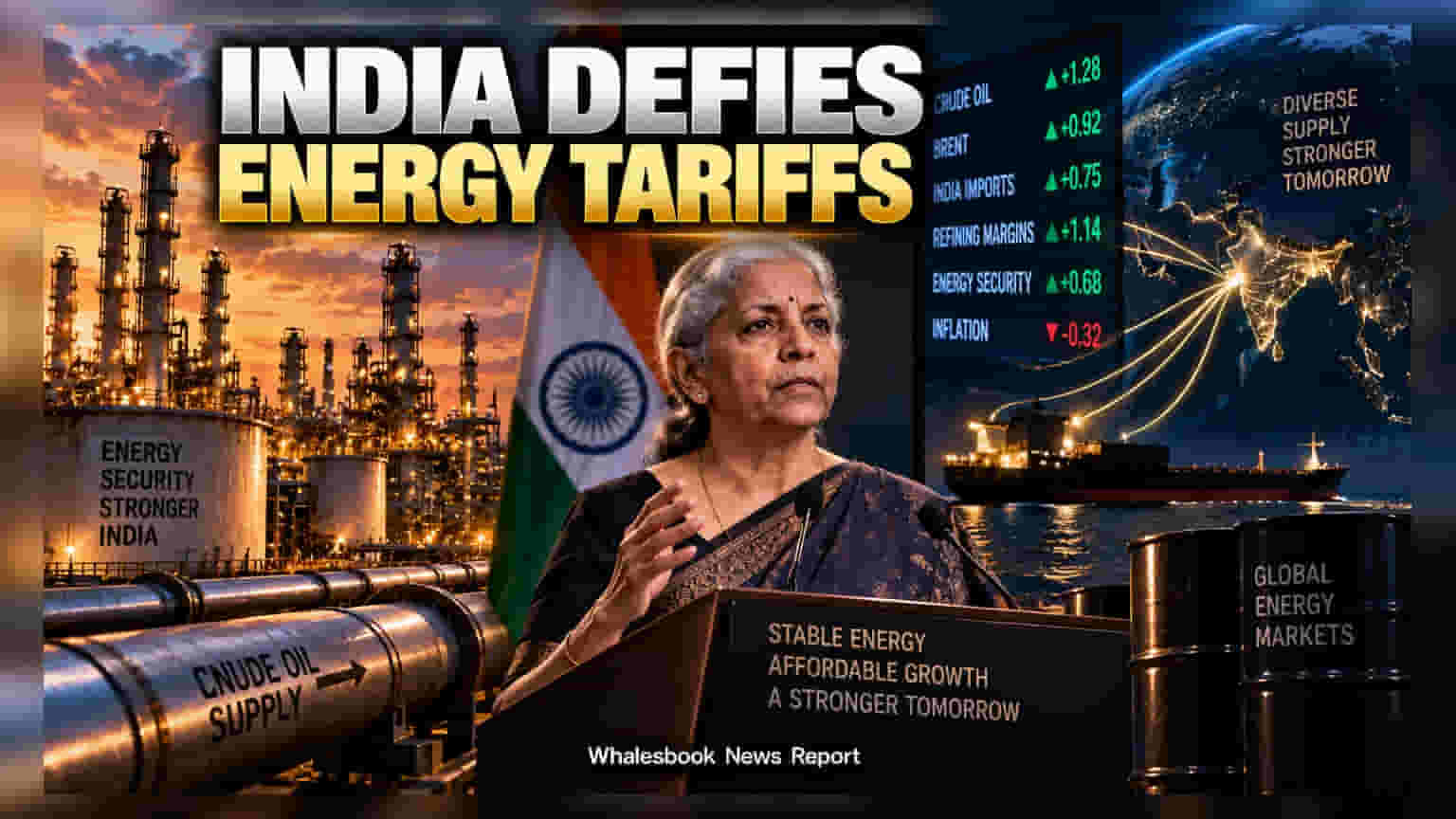
Finance Minister Nirmala Sitharaman stated India will maintain its energy sourcing strategy to ensure domestic stability despite new US legislation allowing 100% tariffs on Russian imports. The government aims to protect consumers from price shocks and keep refinery operations efficient. Investors may monitor how potential trade changes affect import costs and refinery margins.
Finance Minister Nirmala Sitharaman has signaled that India will remain focused on its national energy security, rejecting concerns over new US legislation that could allow for 100% tariffs on countries importing Russian energy. The government’s priority is to maintain an affordable and steady supply of crude oil to meet the needs of India’s 1.4 billion citizens. This stance reflects a practical approach to managing India’s import-dependent energy sector while avoiding sudden shifts that could disrupt the economy.
At the core of the government's position is the specific technical requirement of Indian refineries. A large portion of India’s refining infrastructure is built to process medium-density, sour crude. Shifting to alternative suppliers would not only require expensive upgrades to refinery setups but could also lower operational efficiency. The Finance Minister noted that moving away from current suppliers could cause unnecessary cost spikes, ultimately increasing fuel prices for consumers and creating inflationary pressure across the economy.
For the Indian economy, energy is a critical input cost. With India importing over 85% of its crude oil needs, price stability is vital for keeping the trade deficit in check and controlling inflation. Any global disruption in oil supply or a forced change in sourcing geography could impact the financial performance of state-run and private oil marketing companies. These businesses rely on predictable input prices to maintain their gross refining margins, which is a key metric for investor tracking.
Despite global geopolitical friction, the government remains confident in India's macroeconomic outlook. Recent interactions with international institutional investors and sovereign wealth funds suggest that global capital continues to view India’s fiscal management and economic reforms positively. The current budget provides a buffer to help the economy handle volatile commodity prices and changes in international trade policies.
The most important monitorable for investors going forward is the balance between geopolitical pressure and trade realities. The market will track whether international trade policies shift toward more restrictive tariffs on Russian energy and how that affects the price of crude available to Indian refineries. Sustaining energy security remains a priority, and the government’s ability to navigate these diplomatic and economic challenges will be critical for long-term domestic stability.