

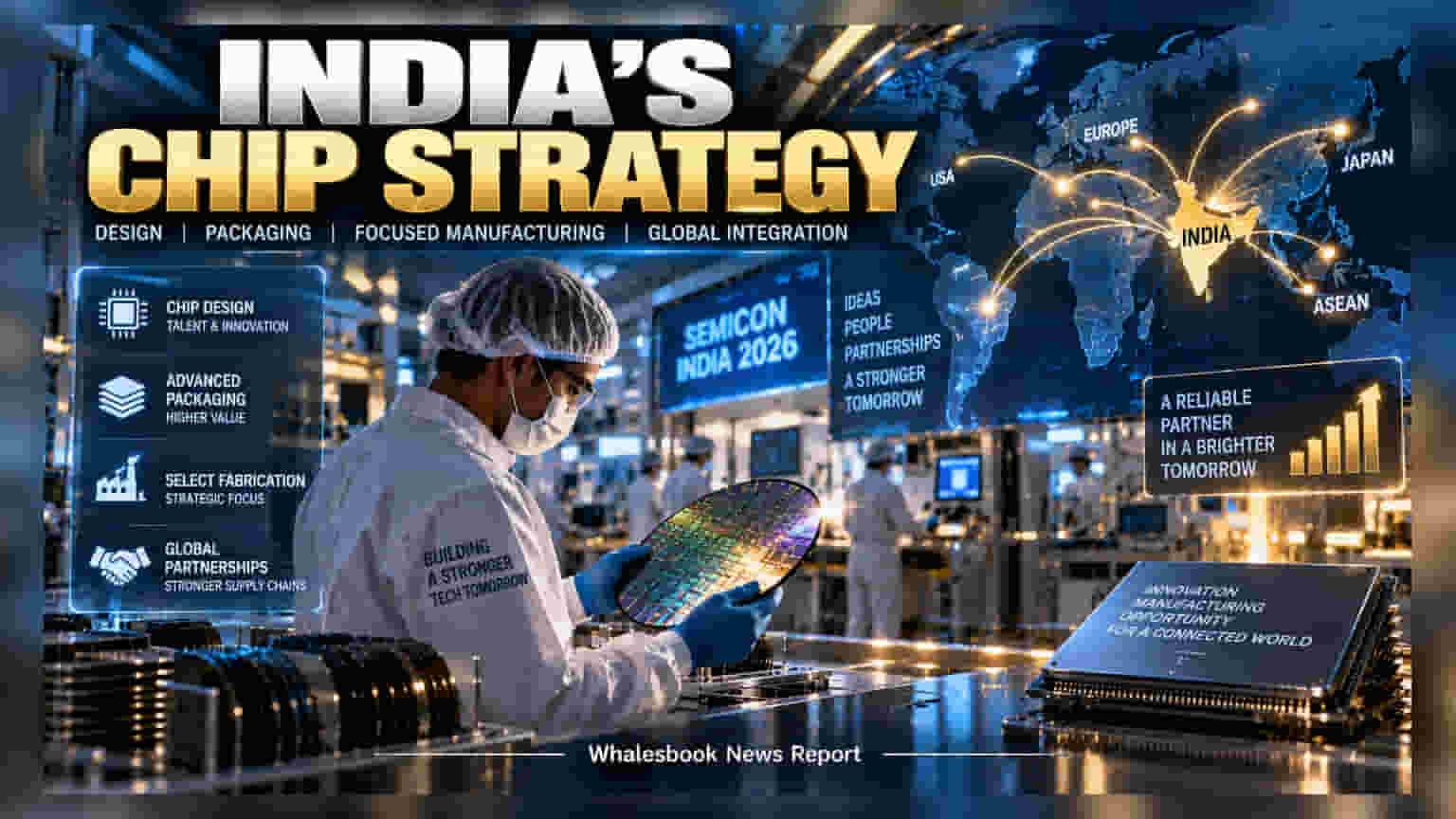
At SEMICON India 2026, the government signaled a shift in its chip strategy, prioritizing specific areas like design and packaging over total local manufacturing. This approach aims to attract global partners by leveraging India’s engineering talent and regulatory stability. Investors are tracking how this focus on high-value segments impacts capital allocation for domestic companies involved in the semiconductor value chain.
Foreign Secretary Vikram Misri’s address at SEMICON India 2026 marks a shift in how New Delhi plans to build its domestic chip industry. The government is moving away from the goal of localizing the entire semiconductor supply chain. Instead, officials are focusing on specific segments where India can gain a competitive edge, such as chip design, advanced packaging, and select fabrication processes.
This change in approach addresses the high costs and technical complexity of manufacturing chips from start to finish within one country. By focusing on niche areas, the government aims to integrate India more efficiently into the global supply network rather than trying to replicate it entirely at home. This strategy is intended to attract deeper collaboration with multinational firms that provide equipment and materials.
The government is emphasizing stability to attract long-term investments. Rather than chasing the lowest immediate manufacturing costs, officials are positioning India as a reliable destination based on its democratic stability, large pool of English-speaking engineers, and growing internal demand. The government believes this stability is a stronger selling point for global technology firms that are wary of supply chain disruptions in other regions.
For Indian investors, this policy direction highlights the role of domestic players across the semiconductor value chain. Companies like Kaynes Technology are building capacity in assembly and testing (OSAT), while groups like Tata Electronics are working on fabrication and assembly. Dixon Technologies has also expanded its electronics manufacturing services to include components. These companies often operate in specialized areas that align with the government's focus on design and packaging.
However, the semiconductor industry involves significant risks. Setting up chip manufacturing requires massive capital spending and involves very long project timelines before profits are realized. Companies in this space face pressure to maintain high utilization rates to keep costs manageable. Additionally, Indian firms remain dependent on technology transfers from global partners. Any delay in accessing this technology or failure to execute complex projects could affect future earnings.
Investors should monitor how these companies manage their debt levels as they invest in new capacity. The ability to secure and maintain technology partnerships with global giants will also be critical for long-term success. Success in this sector will depend on sustained demand for high-end electronics and the company’s ability to remain cost-competitive while delivering quality products. Watching updates on government incentive disbursements, project commissioning dates, and the securing of major customer orders will be important for understanding the progress of these firms in the coming quarters.