

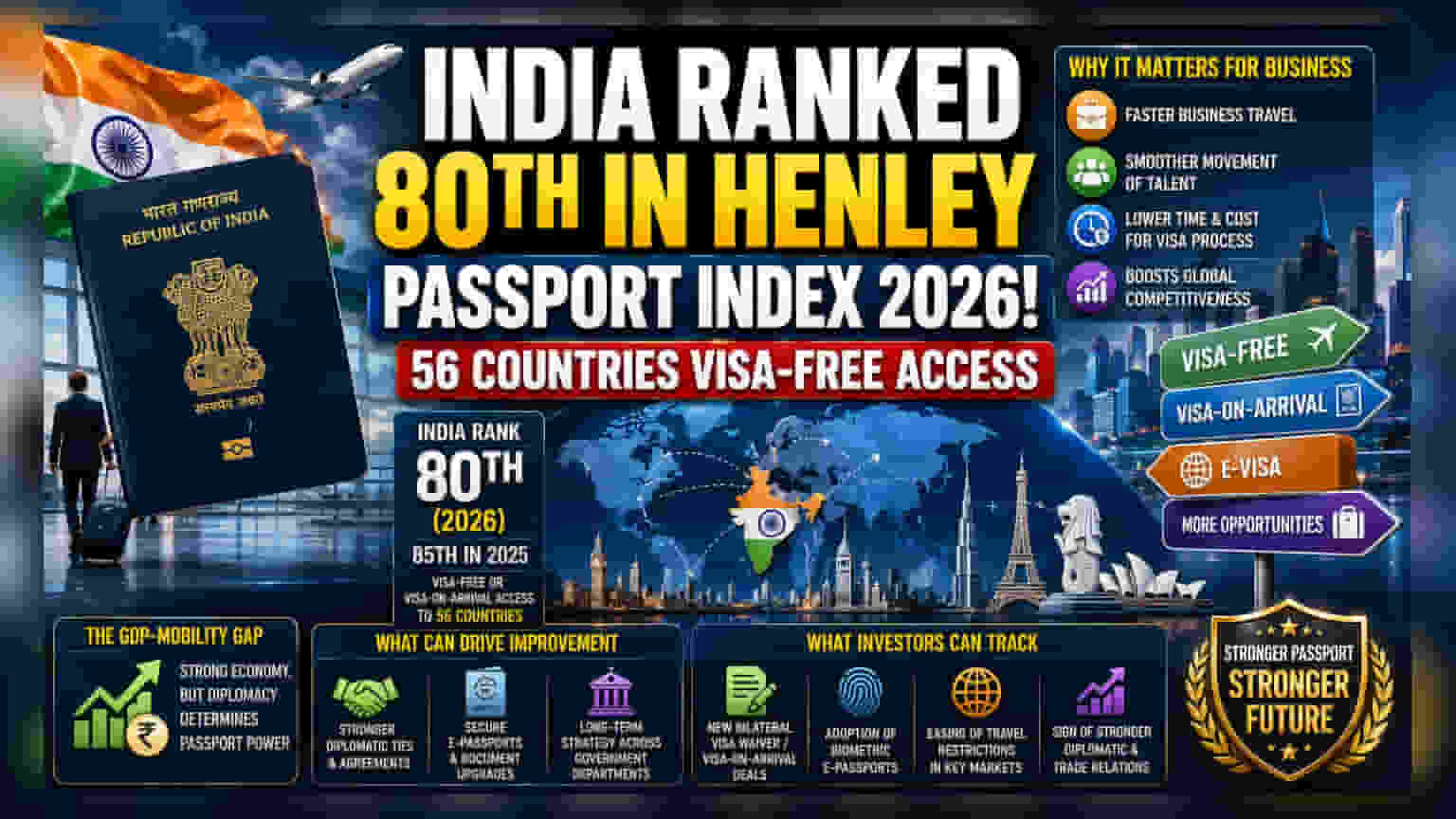
India holds the 80th position on the 2026 Henley Passport Index, granting visa-free or visa-on-arrival access to 56 nations. While the country’s GDP has surged, its global mobility remains restricted compared to economic peers. This gap between economic growth and passport power affects international business travel, trade partnerships, and diplomatic ease, highlighting the need for stronger reciprocal visa agreements.
What Happened
India has been ranked 80th in the latest Henley Passport Index for 2026, granting its citizens visa-free or visa-on-arrival access to 56 countries. This ranking, which measures the travel freedom of passports based on data from the International Air Transport Association, places India behind many of its economic peers. The position represents a modest shift from the 85th rank recorded in 2025, continuing a trend where India's mobility has fluctuated between the 70th and 90th range over the past two decades.
Why This Matters For Business
For the Indian economy, passport strength is more than just a metric for tourism; it directly impacts international business dynamics. Easier mobility facilitates faster execution of trade deals, allows for smoother movement of management and technical talent, and reduces the administrative time and cost associated with obtaining visas for international business delegations. As Indian companies expand their global footprint, the ease with which professionals can travel to key markets becomes a crucial factor in maintaining operational agility.
The Disconnect Between GDP And Mobility
There is a notable gap between India's standing as a rapidly growing global economy and its passport ranking. While the nation has seen significant GDP growth, passport power is largely determined by diplomatic ties, reciprocal visa policies, and international trust rather than economic size alone. The index reflects how easily a nation’s citizens can enter other countries without prior authorization. Unlike the Schengen Area, which benefits from regional agreements that boost passport strength for member nations, India’s path depends heavily on building bilateral, reciprocal relationships with individual countries.
What Could Drive Improvement
Improving passport mobility typically requires sustained diplomatic engagement to secure visa-waiver or e-visa agreements. There is also a structural component; enhancing document security, such as the rollout of biometric e-passports, is viewed as a necessary step to build international confidence in the travel documents. Experts point out that moving up in the rankings is often a result of long-term diplomatic strategy rather than immediate economic milestones, making it a slow-moving process that requires coordination across various government ministries.
What Investors Can Track
Investors and market participants often look for signs of improving trade relations and diplomatic breakthroughs that could correlate with broader economic integration. Key monitorables include the signing of new bilateral visa-free or visa-on-arrival agreements, the successful and widespread adoption of secure e-passport systems, and the easing of travel restrictions in major business hubs. These developments, while administrative in nature, are often proxies for stronger international relations and a more globally integrated business environment.