

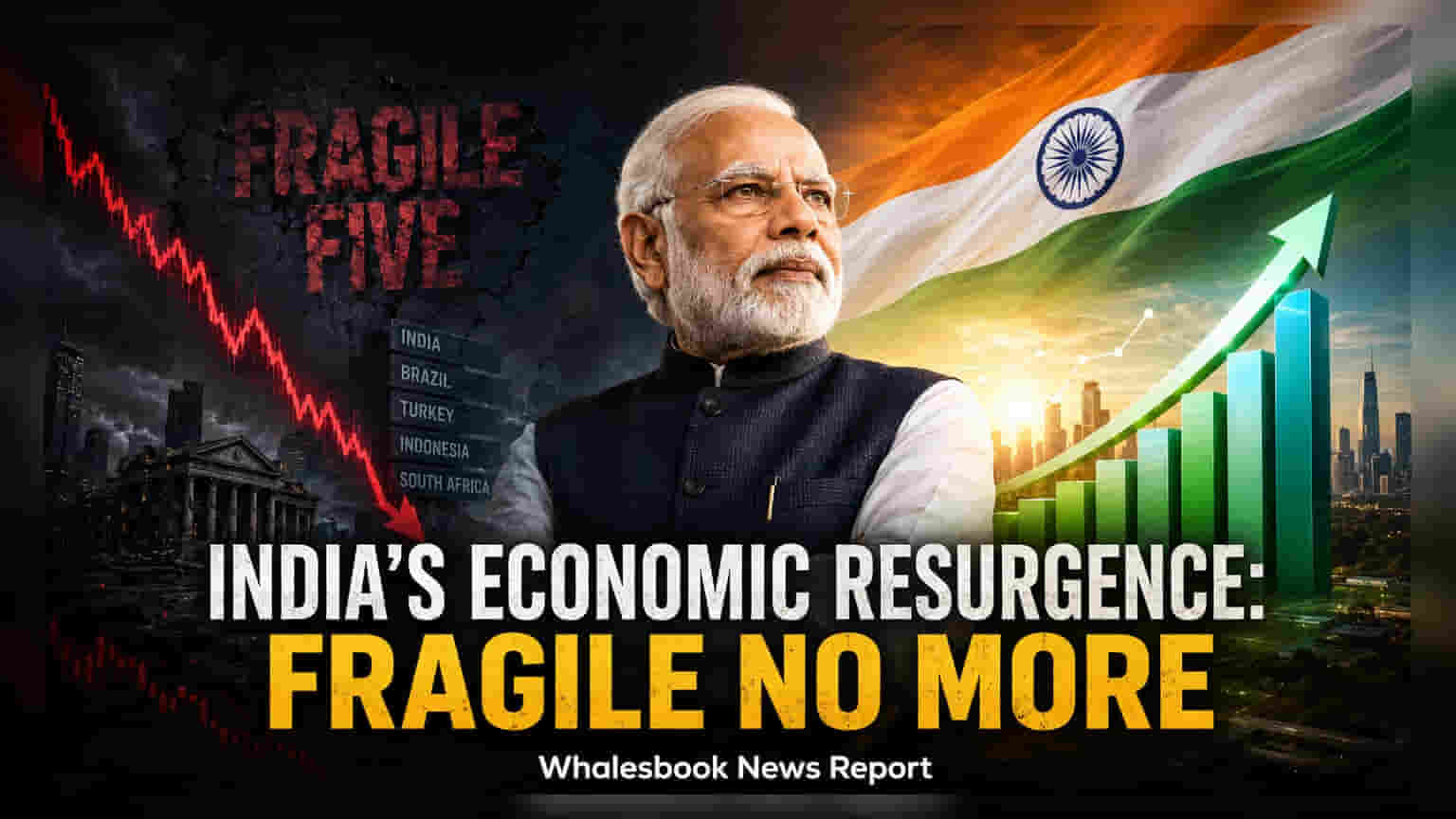
On the 80th Independence Day, Prime Minister Narendra Modi announced that India has moved from being labeled one of the 'Fragile Five' to the world's fourth-largest economy, surpassing Japan. While this reflects strong GDP growth, economic data remains sensitive to exchange rate fluctuations and global trade conditions.
Prime Minister Narendra Modi addressed the nation on Saturday, August 15, 2026, marking India’s 80th Independence Day. During his speech, the Prime Minister highlighted the country's economic journey, noting that India has officially moved out of the 'Fragile Five' category—a tag used to describe nations vulnerable to external financial shocks—to become the world's fourth-largest economy.
The government reported that India surpassed Japan to secure this position in late 2025, with nominal GDP figures reaching approximately $4.18 trillion. Recent Ministry of Finance data from the current fiscal year (FY26) estimates the GDP at around $3.92 trillion. This growth marks a distinct change from 2013, when global financial institutions like Morgan Stanley grouped India with Brazil, Indonesia, South Africa, and Turkey as economies susceptible to global volatility.
While the shift in GDP ranking is a milestone, economic data is often dynamic. Global rankings are frequently impacted by currency exchange rates, revisions in national accounting methods, and the varying growth speeds of other large economies like the United States, China, and Germany. Because the Indian Rupee’s value against the US Dollar changes daily, fluctuations in ranking can occur based on how nominal GDP is calculated and converted.
Beyond the headline numbers, economists often point to the distinction between total economic size and individual wealth. While India’s total output has increased, the country continues to work on narrowing the gap in GDP per capita when compared with developed nations. This means that while the overall economic engine has expanded, the wealth distributed per person is still significantly different from that of Japan or Germany.
Looking ahead, the government aims to reach the status of a developed nation by 2047, a vision often referred to as 'Viksit Bharat.' Achieving this target will depend on several factors, including managing fiscal health, navigating global trade uncertainties, and controlling the impact of volatile international oil prices. The economy also faces the challenge of sustaining this growth trajectory while balancing infrastructure needs and creating employment opportunities for a large, young workforce.
For market participants and citizens, the next important updates will come from quarterly GDP releases and Ministry of Finance reports. These will clarify how domestic growth, export performance, and global commodity price trends influence the country’s actual ranking in the global economy during the remainder of the fiscal year.