 Whalesbook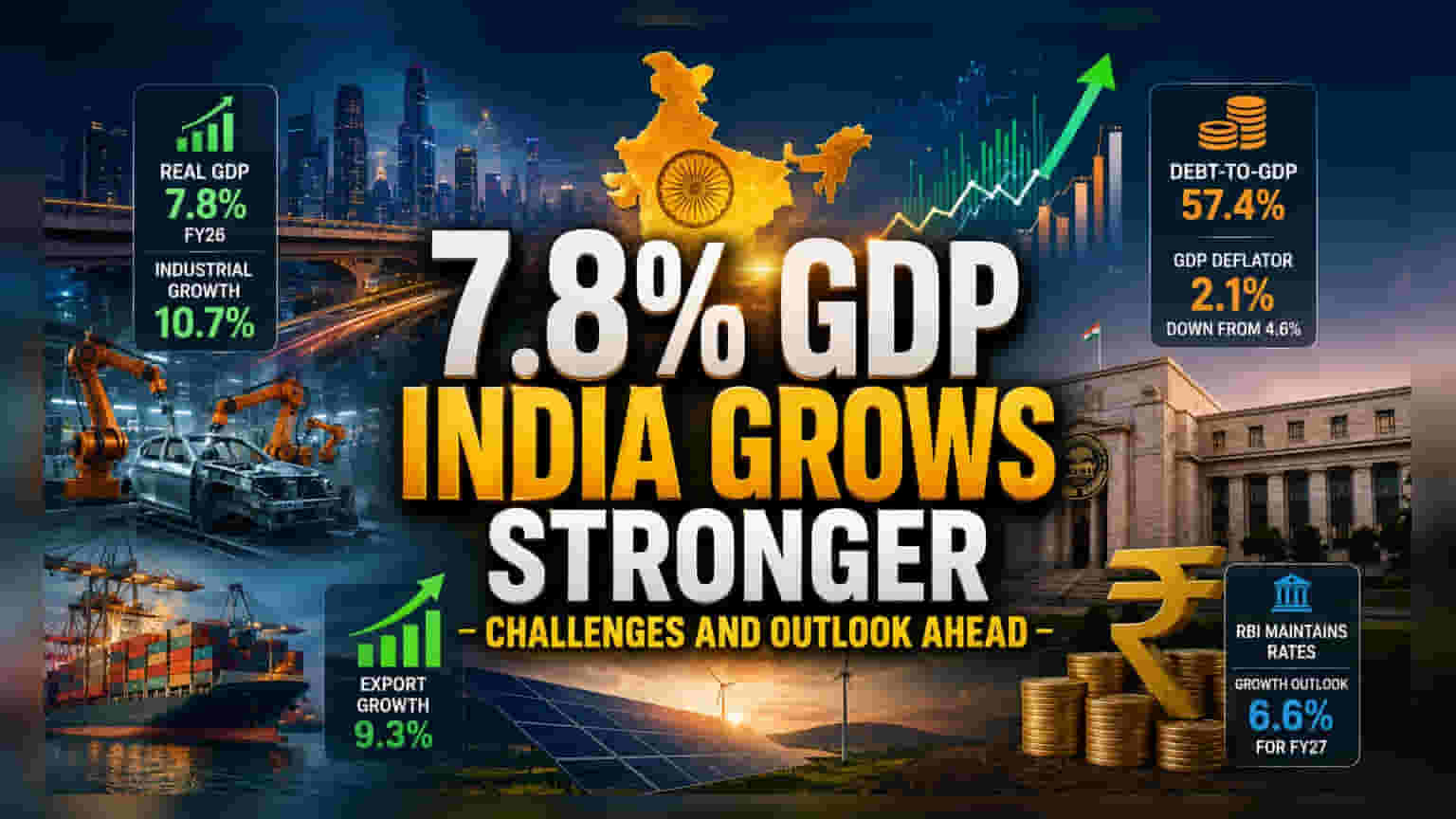


The Valuation Gap: Real vs. Nominal Reality
While the 7.8% real GDP print provides a clear narrative of industrial vitality, the underlying mechanics reveal a divergence between output volume and price realization. The significant moderation of the GDP deflator—sliding from 4.6% in the previous fiscal year to 2.1%—indicates that while the economy is producing more goods and services, the pricing power embedded within that production has softened. This trend places upward pressure on debt-to-GDP ratios, which climbed to 57.4%, as the nominal denominator fails to keep pace with government borrowing costs and debt servicing requirements.
Industrial Momentum and The Export Pivot
Manufacturing growth at 10.7% has become the engine of the current cycle, signaling that capacity utilization is nearing levels that typically precede significant private sector capex cycles. Unlike previous periods where exports remained volatile, the current 9.3% expansion indicates that Indian firms have effectively navigated the shift in United States tariff policy through aggressive market diversification. This structural change in export composition suggests that the industrial base is more decoupled from specific regional trade headwinds than previously assumed by market observers.
The Forensic Bear Case: Supply-Side Constraints
The Reserve Bank of India’s decision to maintain current policy rates reflects an acute awareness of a tightening trap. The central bank faces a dilemma: headline inflation remains sensitive to imported commodity volatility, yet the domestic economy is showing early signs of transition-related fatigue. If global tensions in the Middle East persist, the resulting supply-side shocks to energy prices will not be addressable through traditional interest rate maneuvering. Furthermore, the reliance on high-frequency indicators like GST collections masks potential liquidity stress in the micro-enterprise sector, which does not benefit from the same fiscal capitalization as the large-cap infrastructure-heavy industries currently driving the index.
Future Outlook and Policy Stance
Market consensus is shifting toward a period of consolidation as the economy moves into FY27. With the Reserve Bank of India adjusting its growth expectations to 6.6%, the narrative has moved from rapid expansion to sustainable efficiency. Investors should monitor the current account deficit closely; any depreciation in the rupee, driven by higher global commodity prices, will likely force the central bank to prioritize currency stability over growth-oriented liquidity, potentially cooling the momentum seen in the construction and services sectors.