

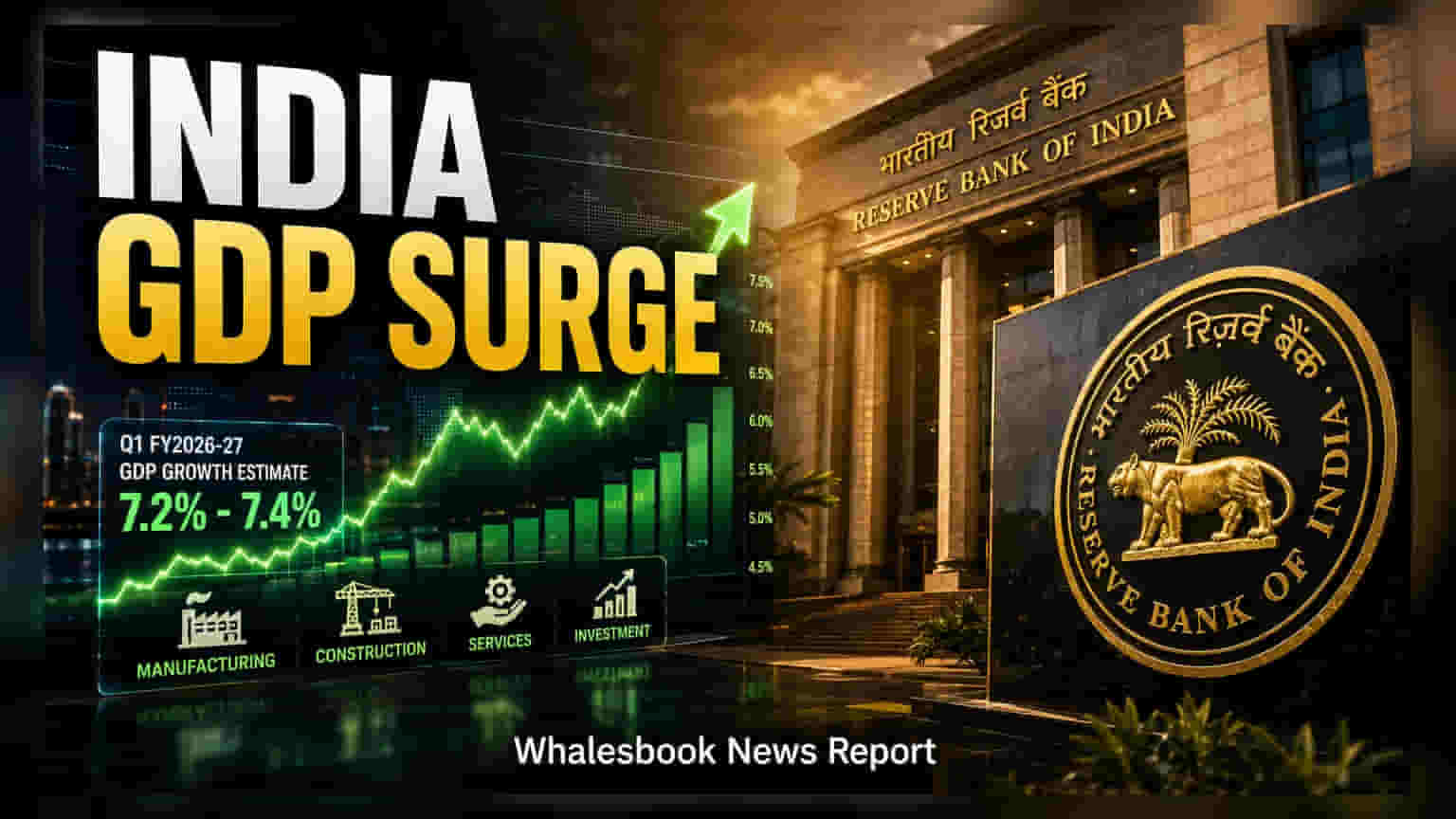
India’s economy is expected to post a resilient GDP growth rate of 7.2-7.4% for the first quarter of fiscal year 2027, with official data due on August 31. Strong performance in manufacturing and services continues to drive activity, though investors are keeping an eye on rising oil costs and potential interest rate adjustments that could impact profit margins.
As the Indian economy prepares for the official release of first-quarter GDP figures on August 31, 2026, analysts and investors are bracing for a growth rate estimated between 7.2% and 7.4%. This projection suggests that despite ongoing global uncertainty, the domestic economy has maintained a steady pace of expansion. The primary drivers for this performance continue to be the manufacturing, construction, and services sectors, which have shown resilience even as the global environment remains challenging.
Drivers of Domestic Activity
Unlike previous cycles that relied heavily on consumer spending, the current economic momentum is supported by a more balanced mix of public and private investment. Data from the April-June quarter indicates that infrastructure projects and industrial capacity expansion have remained robust. GST collections and e-way bill generation have been steady, serving as proxies for active domestic trade and logistics. Furthermore, the services sector, which encompasses everything from IT and banking to hospitality and retail, continues to be a major contributor to total economic output.
However, the story is not entirely one-sided. While urban demand has remained firm, rural markets have faced mixed signals. The performance of the agricultural sector, which is heavily influenced by the monsoon, remains a key factor. A delayed or uneven monsoon can influence purchasing power in rural areas, which in turn affects the sales volume of consumer staples, two-wheelers, and tractors.
Risks to Corporate Margins
Investors are particularly focused on how these macroeconomic conditions translate into corporate profitability. One of the most significant headwinds currently impacting the market is the rise in crude oil prices. Higher oil prices directly increase the cost of logistics and raw materials. This creates a challenging environment for sectors that are sensitive to energy costs, such as oil marketing companies, transportation, and chemical manufacturers.
Companies in these sectors are finding it increasingly difficult to pass on the full impact of higher input costs to customers without hurting demand. This pressure on profit margins is a primary concern for shareholders as they analyze upcoming quarterly reports. Additionally, the depreciation of the rupee has made imports more expensive, adding another layer of cost pressure for businesses that rely on global supply chains.
The Interest Rate Factor
Beyond production and consumption, the Reserve Bank of India’s monetary policy remains a focal point. With inflation management being a priority, the central bank’s decision-making process is under constant observation. While the current domestic economic strength gives the regulator some flexibility, any persistent inflationary trends or global volatility could lead to tighter monetary conditions. Market analysts are currently factoring in the possibility of interest rate adjustments, which could impact borrowing costs for both businesses and households.
As the official GDP data is released, the most important update for market participants will be the detailed sectoral breakup. Investors will likely look for evidence of sustained capital spending by companies and whether private consumption is strong enough to offset the risks posed by volatile commodity prices and external global pressures.