

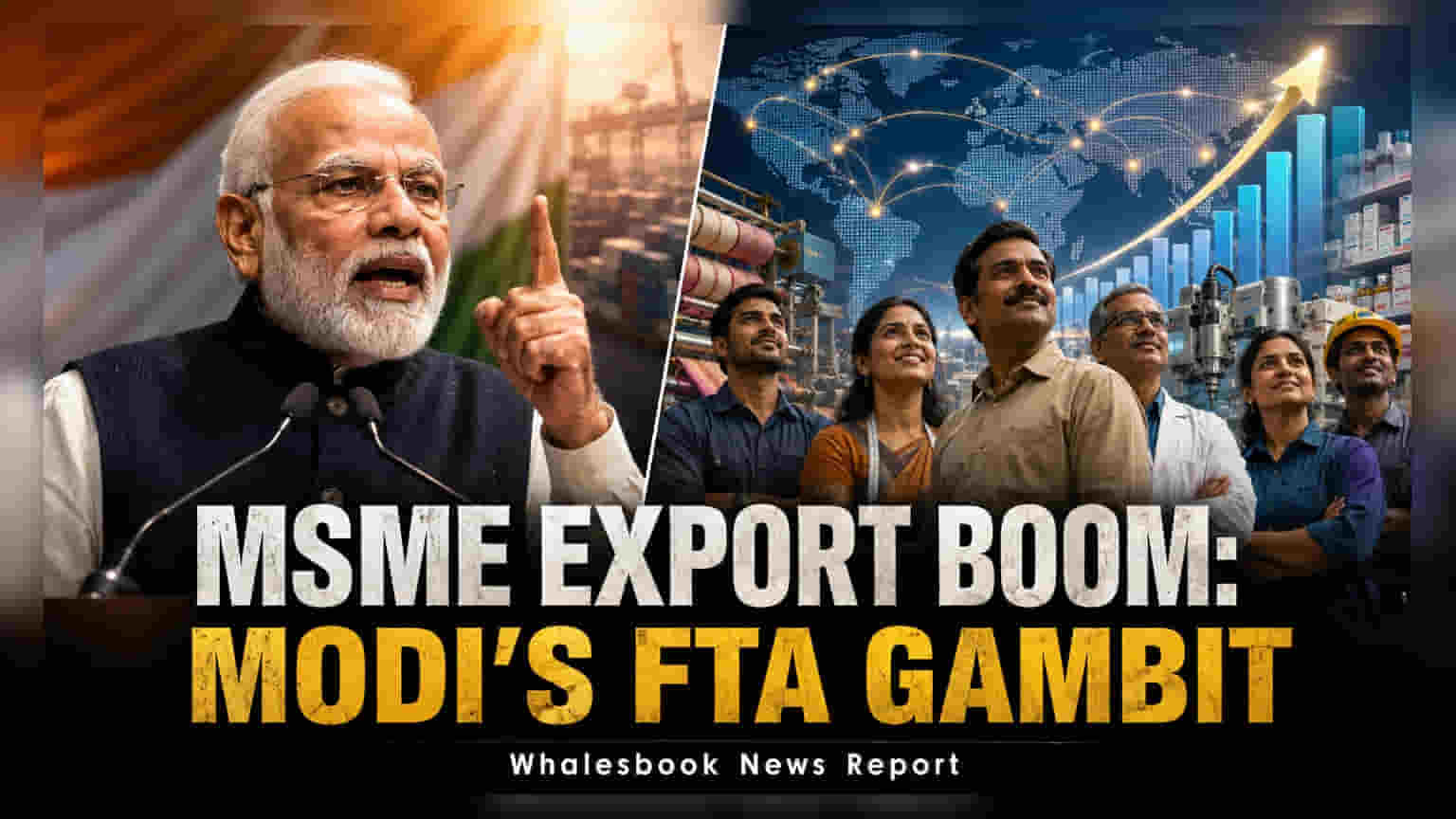
Prime Minister Narendra Modi has urged Indian small businesses to utilize the nation's growing network of Free Trade Agreements to increase exports. While these trade pacts lower tariff barriers, the primary challenge remains converting these opportunities into actual orders through improved quality and logistics. The MSME sector currently accounts for nearly 48% of India's total exports, making its global integration vital for the economy.
In his 80th Independence Day address on August 15, 2026, Prime Minister Narendra Modi called upon the country's micro, small, and medium enterprises (MSMEs) to aggressively use India's expanding network of Free Trade Agreements (FTAs). Since 2014, India has signed or finalized FTAs with approximately 40 nations, creating a platform for local businesses to gain preferential market access. The government's objective is to shift the MSME sector from being primarily domestic-focused to becoming an integral part of the global supply network.
The Economic Weight of MSMEs
The MSME sector is a cornerstone of the Indian economy, contributing approximately 31.1% to GDP and 35.4% to manufacturing output. Most significantly, it accounts for about 48.58% of India's total exports. With over 7.47 crore enterprises, the sector is also the country's second-largest employer. Because of this scale, the government views the success of these smaller businesses in international markets as a critical factor for achieving broader economic export targets.
From Tariff Perks to Export Orders
While FTAs provide the advantage of lower import duties, industry experts and exporters point out that tariff benefits alone are not enough. The immediate hurdle for many small businesses is converting these paper advantages into concrete sales. This requires navigating complex requirements like 'rules of origin,' which determine if a product qualifies for lower duties, as well as meeting stringent international quality and packaging standards.
Furthermore, industries such as textiles, machinery, pharmaceuticals, and seafood are being highlighted as key areas with high export potential. However, to compete effectively, companies must overcome significant hurdles, including high logistics costs and the need for standardized regulatory compliance. The Federation of Indian Export Organisations (FIEO) has indicated that it plans to support businesses by providing guidance on these technical processes to help them enter larger markets.
Structural Support and Risks
To address structural issues in the sector, the government has introduced measures such as the Micro, Small and Medium Enterprises Development (Amendment) Bill, 2026. This legislation aims to address liquidity problems and delays in payments, which are often the biggest operational risks for small exporters. Investors and stakeholders should monitor how effectively these policy changes improve cash flow for the sector.
Looking ahead, the success of this initiative will depend on how quickly MSMEs can upgrade their manufacturing capabilities to meet global benchmarks. The key monitorable for the coming quarters will be export data from the manufacturing sector and how effectively companies can utilize the newly signed trade pacts to drive volume growth, as relying solely on tariff advantages without addressing quality and logistics constraints may limit the actual impact.