

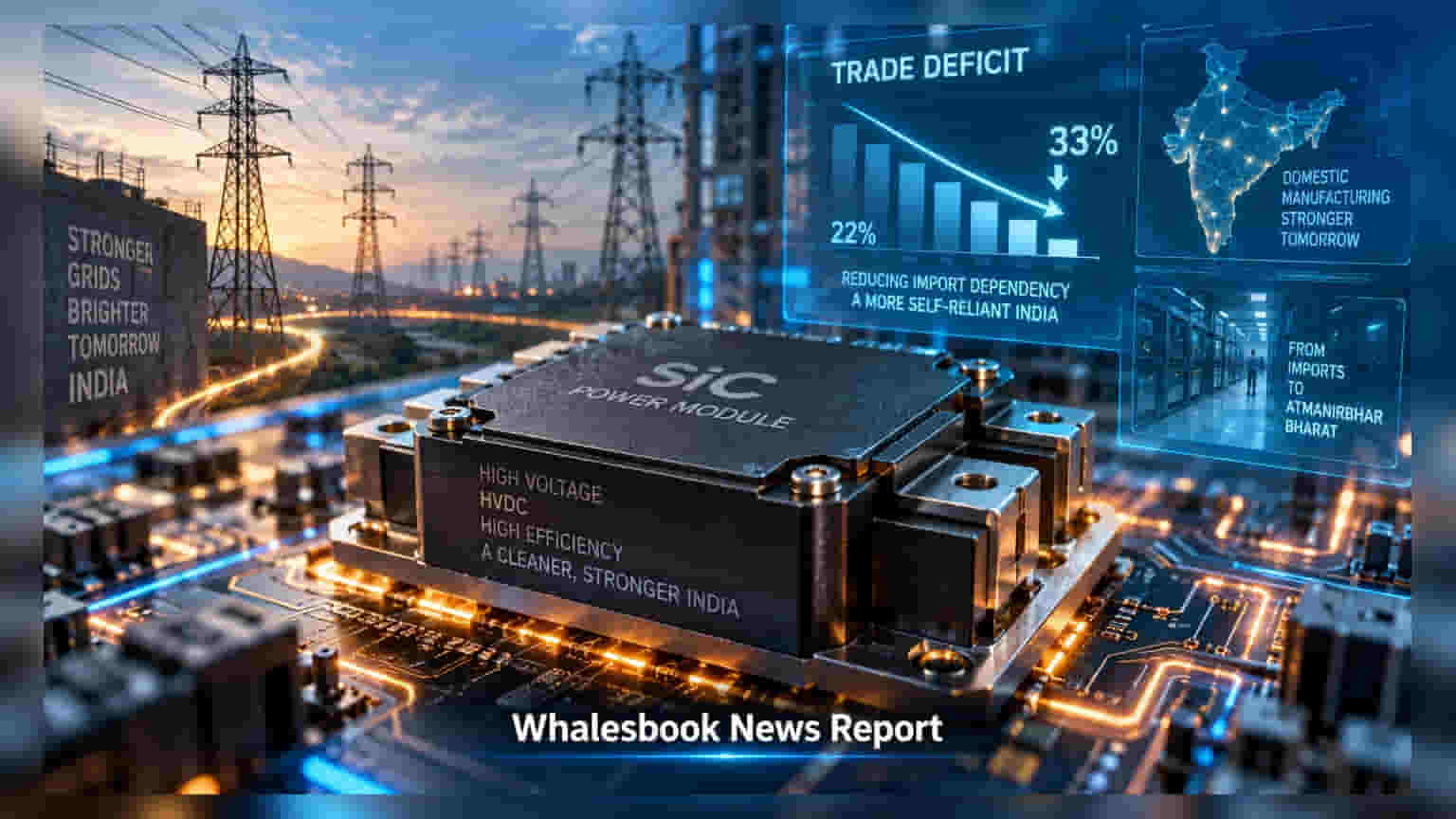
The government is consulting with the industry to manufacture high-tech silicon carbide (SiC) modules locally to secure the power grid. These chips are vital for modern power transmission, and the push aims to lower the rising dependence on imported electrical equipment.
The Ministry of Electronics and IT and the Ministry of Power have launched a move to bring the design and production of silicon carbide (SiC) power modules within India. These specialized chips are the brain of modern electricity networks, specifically for high-voltage direct current (HVDC) transmission lines that move power efficiently across long distances.
Currently, India relies heavily on imports for these advanced components. As the country expands its power infrastructure, the demand for sophisticated electrical equipment has surged, reaching $59 billion in 2025. However, data indicates that the country’s reliance on imported components has grown from 22% to 33% over the last five years. Government authorities are concerned that without local production, the power sector could face similar supply chain risks seen in other critical industries.
Why this Matters for Infrastructure
The shift to local manufacturing is about more than just supply; it is about building a secure chain for India’s power backbone. Power Grid Corporation of India is collaborating on this project to ensure that the country can design and build these modules domestically. If successful, this could reduce the long-term cost of maintaining and upgrading the national grid by moving away from volatile global supply chains.
However, the path to localization involves significant hurdles. Silicon carbide technology is complex, as it is a type of compound semiconductor that is more difficult to manufacture than standard silicon chips used in consumer electronics. The sector faces intense competition from global manufacturers who have already achieved scale and cost efficiency. For Indian companies, moving into this space requires heavy upfront spending on research, specialized factories, and talent. Investors should watch for the timelines of these projects, as creating a fabrication ecosystem takes several years to reach commercial viability.
What to Watch Next
The government has set a clear schedule to gather input from the industry. Stakeholders must submit their queries by October 8, with a formal meeting regarding the Request for Proposal (RFP) scheduled for October 14. The structure of this RFP and the incentives offered will determine which companies are willing to invest in setting up this specialized manufacturing capability. Monitoring the participation of major power equipment firms in this consultation process will be the next key step for stakeholders to assess the industry's commitment to this domestic push.