

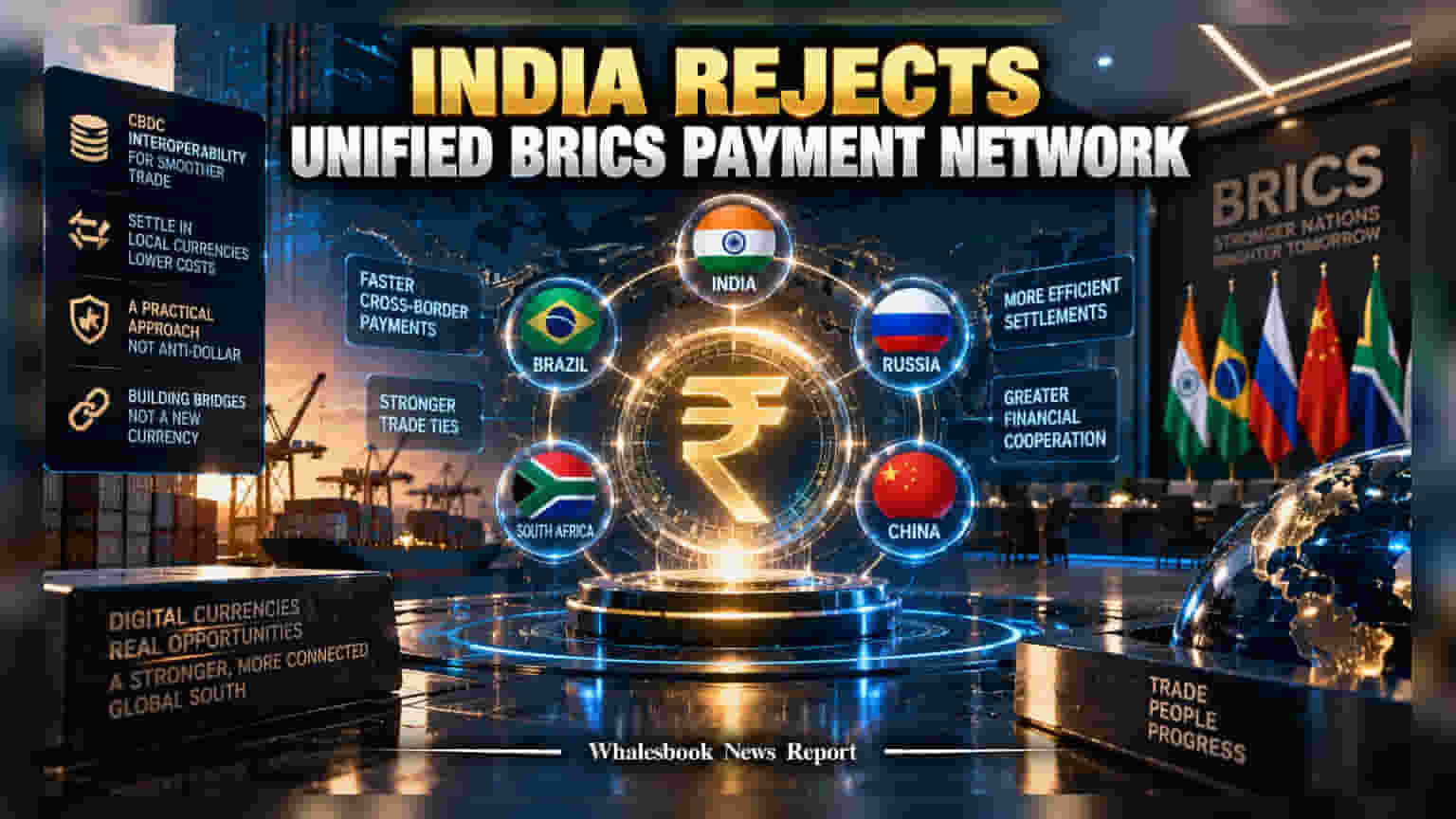
India is advocating for the use of central bank digital currencies (CBDCs) to simplify trade between BRICS nations. While aiming to lower transaction costs using local currencies, New Delhi has clarified that it does not support a unified payment network designed to challenge the US dollar, focusing instead on technical digital connectivity.
India is set to shape the agenda at the upcoming BRICS summit, pushing for the use of Central Bank Digital Currencies (CBDCs) to streamline cross-border trade. Rather than building a new, centralized system to replace the current global financial order, India is proposing a framework to connect the existing digital currencies of BRICS nations. This move aims to improve trade efficiency and lower transaction costs by using local currencies, reducing the need to rely on third-party currencies like the US dollar for routine settlements.
The Reserve Bank of India (RBI) has put forward a proposal that focuses on "interoperability." This simply means making the digital currency systems of different countries work together smoothly. For businesses, this could simplify cross-border transactions and help conserve dollar reserves for strategic imports. This approach follows India’s successful efforts to link its Unified Payments Interface (UPI) with payment systems in other countries, demonstrating a preference for practical financial bridges over symbolic political initiatives.
New Delhi has maintained a clear position regarding the bloc's direction: it is not interested in creating an "anti-dollar" network. The government is steering the conversation away from the idea of a single BRICS currency or a system built specifically to bypass Western-led financial networks like SWIFT. Officials believe that framing the grouping as an explicitly anti-Western entity could create unnecessary geopolitical tension, which would not align with India’s broader global trade strategy.
While the proposal is viewed as a pragmatic step to improve trade efficiency, it is not without challenges. Connecting the digital financial systems of multiple countries is technically complex. It requires robust cybersecurity to protect sensitive data and ensure that each nation retains control over its financial information. There are also concerns regarding scalability, as linking diverse systems across different economies involves significant regulatory hurdles. Furthermore, if any proposed system were to rely too heavily on the digital currency of one specific member nation, it could potentially create trade imbalances or dependencies that other members might find risky.
These discussions are expected to be a major focus during the BRICS summit, which takes place in New Delhi on September 12–13. Market observers will be watching the summit for any agreements on these digital frameworks, as they could influence the long-term adoption of the Indian rupee in international trade and the future of cross-border payment connectivity.