

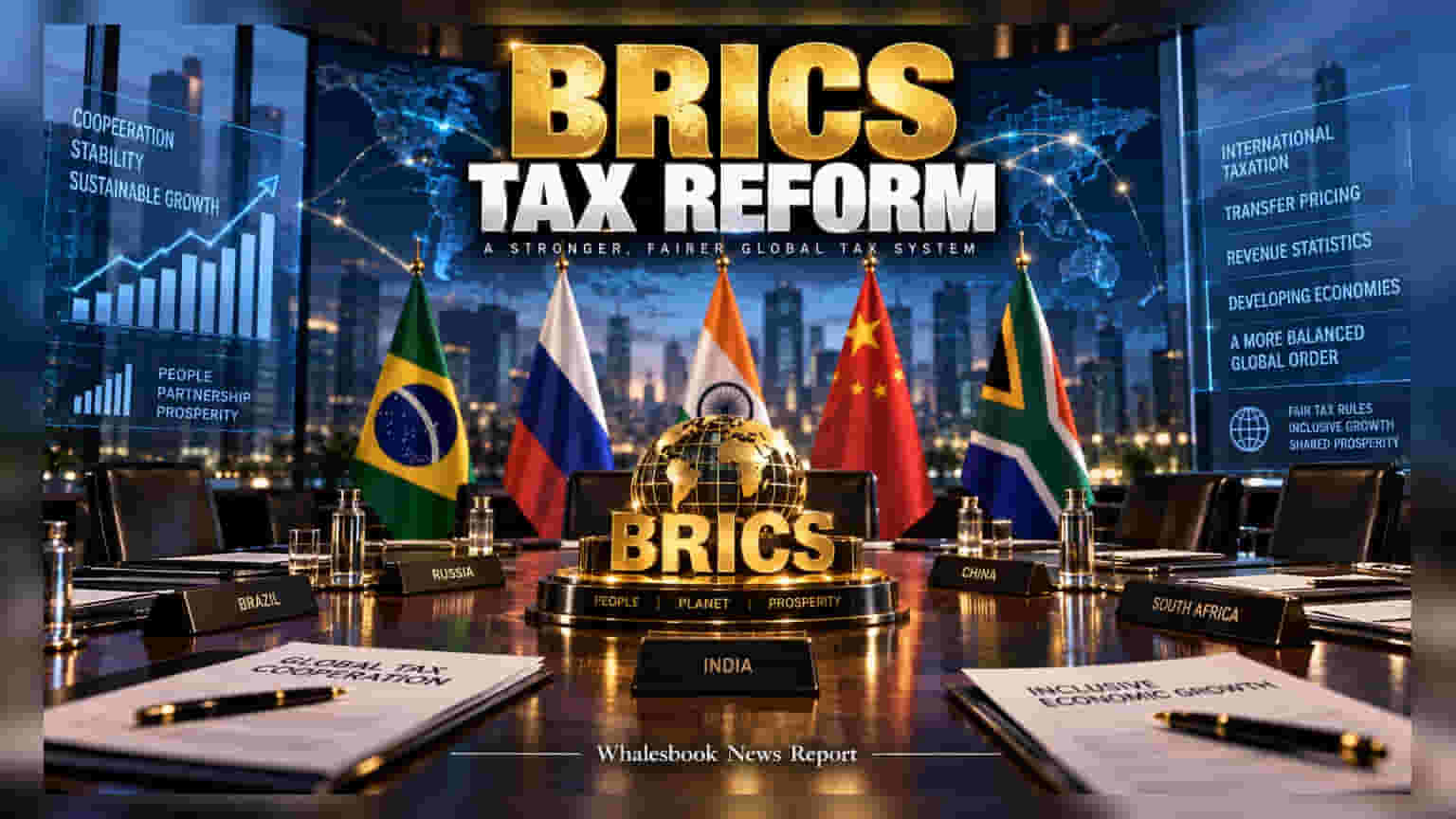
Finance Minister Nirmala Sitharaman has proposed two new working groups to harmonize tax rules and transfer pricing across BRICS nations. The move aims to give emerging economies a stronger voice in global tax policies. For investors, this could lead to more predictable tax norms for multinational firms operating in these regions, though it may also shift the balance against existing international frameworks.
Finance Minister Nirmala Sitharaman has initiated a plan to unify the approach of BRICS nations regarding international tax rules. During the ongoing BRICS presidency, India has proposed the creation of two permanent working groups. The first group will focus on international taxation and transfer pricing, while the second will work toward standardizing revenue statistics across member countries. Revenue Secretary Arvind Shrivastava indicated that the objective is to build a long-term platform that survives beyond India’s current chairmanship in 2026.
For investors and multinational companies, this development is significant. Currently, many cross-border tax disputes involve transfer pricing, where companies are taxed on transactions between their own subsidiaries in different countries. By aligning how these disputes are managed and how revenue is measured, India hopes to create a more consistent environment for businesses operating across the BRICS bloc. This is a direct response to global frameworks, such as those led by the OECD, which are often perceived as being designed by and for advanced economies.
The push for a unified BRICS tax strategy is part of a broader effort to ensure that the economic realities of developing nations are reflected in international agreements, such as the United Nations Framework Convention on International Tax Cooperation. If implemented, these working groups would aim to standardize treaty interpretations and audits, which could reduce the time and cost businesses spend on resolving tax-related disagreements. However, it also introduces a layer of complexity for global firms. If BRICS nations adopt standards that differ significantly from global norms or OECD-led rules, companies may face a more fragmented regulatory environment, requiring them to manage two distinct sets of tax protocols.
While the proposal seeks to defend the interests of emerging markets, the practical outcome will depend on how effectively these groups can harmonize rules among nations with diverse economic systems. Investors should monitor whether these groups successfully create binding frameworks or if they remain advisory in nature. The key monitorable will be the level of cooperation between members on sensitive issues like tax audits and advance pricing agreements, which directly impact the profit margins of cross-border companies. The Ministry of Finance is expected to provide further updates on the operational status of these groups as negotiations progress under the BRICS chairmanship.